
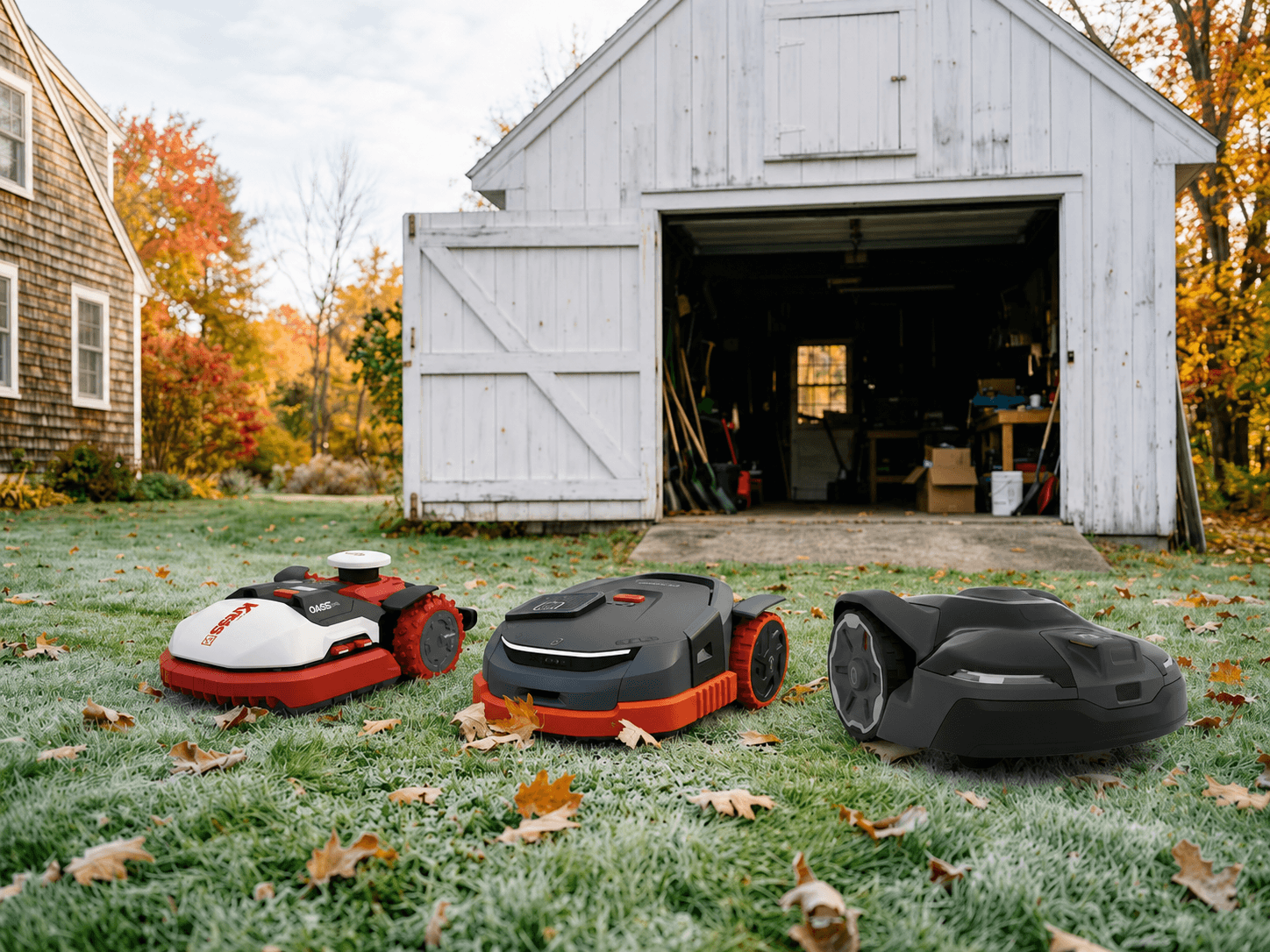
A robotic mower is built to handle a New Hampshire lawn all season without you thinking about it much. Winter is the one time of year that changes. Freezing temperatures are hard on batteries and electronics no matter which brand is parked in your shed, and the shutdown steps matter more than most owners expect the first time they own one.
We carry robotic mowers from Husqvarna, Kress, and Segway Navimow, and owners ask us some version of the same question every October: does my mower need anything different than my neighbor’s? The honest answer is mostly no. All three of the lines we sell run without a buried boundary wire, guided by GPS and onboard sensors instead, which means the winterizing process looks similar across brands. The differences that do exist are worth knowing before the first hard frost.
What All Three Brands Have in Common
Before getting into brand-specific notes, here’s the shutdown routine that applies no matter which mower is in your garage. This covers the fall shutdown specifically; if you want the full year-round schedule, our robotic mower maintenance checklist walks through spring startup and mid-season care too.
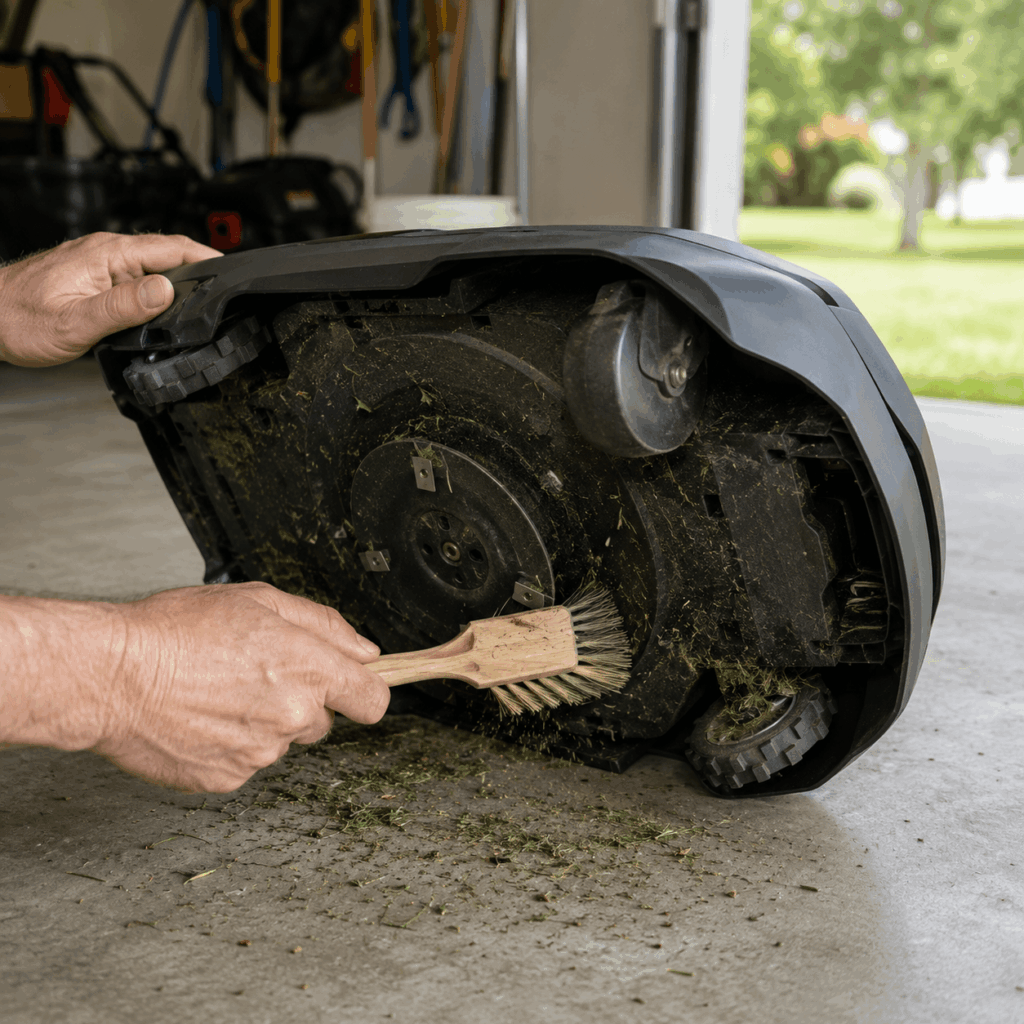
Clean it thoroughly before storage. Grass clippings and dirt trap moisture against the housing and blade disc over winter, which is exactly the kind of slow corrosion you don’t notice until spring. A soft brush or cloth on the exterior, undercarriage, wheels, and blade disc handles most of it.
Bring the battery to a partial charge, not a full one, before long-term storage. Lithium-ion batteries degrade faster if they sit fully charged or fully drained for months. Check your specific model’s manual for the exact recommended storage charge level, since this can vary slightly between manufacturers.
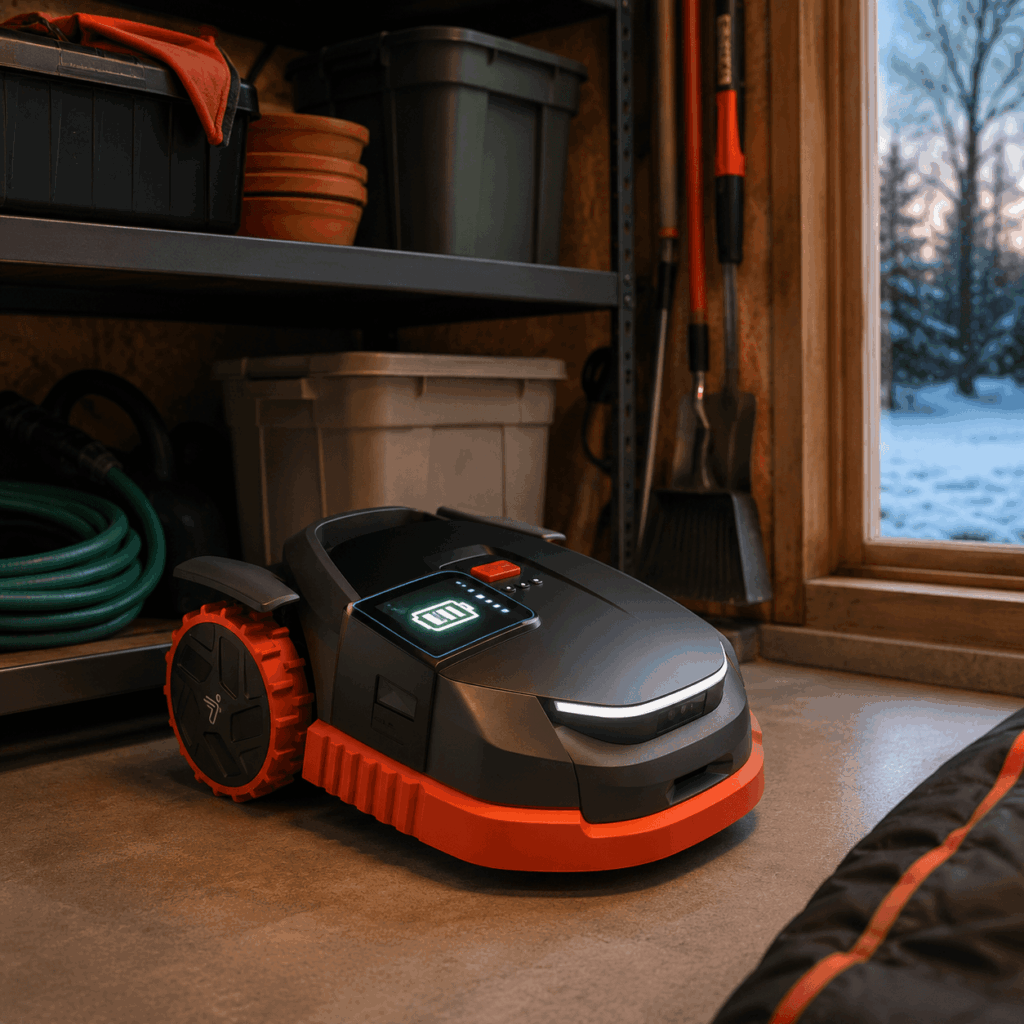
Store the mower indoors, somewhere that stays above freezing. An unheated shed that dips below freezing overnight isn’t adequate. Freezing temperatures damage both the battery and the internal electronics, and this is the single most common mistake we see: owners assume “under cover” is the same thing as “frost-free.” It isn’t.
Disconnect it from the charging station for the winter. Leaving a mower connected to a dock that’s also shutting down for the season doesn’t help the battery and can create its own issues if the dock isn’t rated for winter power draw.
Husqvarna EPOS iQ Series
Husqvarna’s EPOS models navigate by satellite positioning rather than a boundary wire, and the shutdown process follows the general routine above closely. Battery care matters more here than on most equipment we sell, since replacement batteries are a real cost if one degrades early from being stored the wrong way. If you’re not sure what your specific iQ model’s manual recommends for storage charge level, bring it in and we’ll check it against the current manufacturer guidance rather than guessing.
It’s worth mentioning here that Husqvarna also sells traditional boundary-wire robotic mowers alongside the EPOS line, and the two don’t winterize identically. A wire-guided model has a physical boundary wire buried or pinned around the lawn that stays in the ground over winter and doesn’t need any special attention, while an EPOS model has no wire at all to think about. If you’re not certain which type you own, check your model documentation or ask our team, since the two lines get lumped together more often than they should. If you’re comparing options before next season, we carry the 410 iQ, 420 iQ, 440 iQ, and 435 iQ AWD.
Kress EyePilot Models
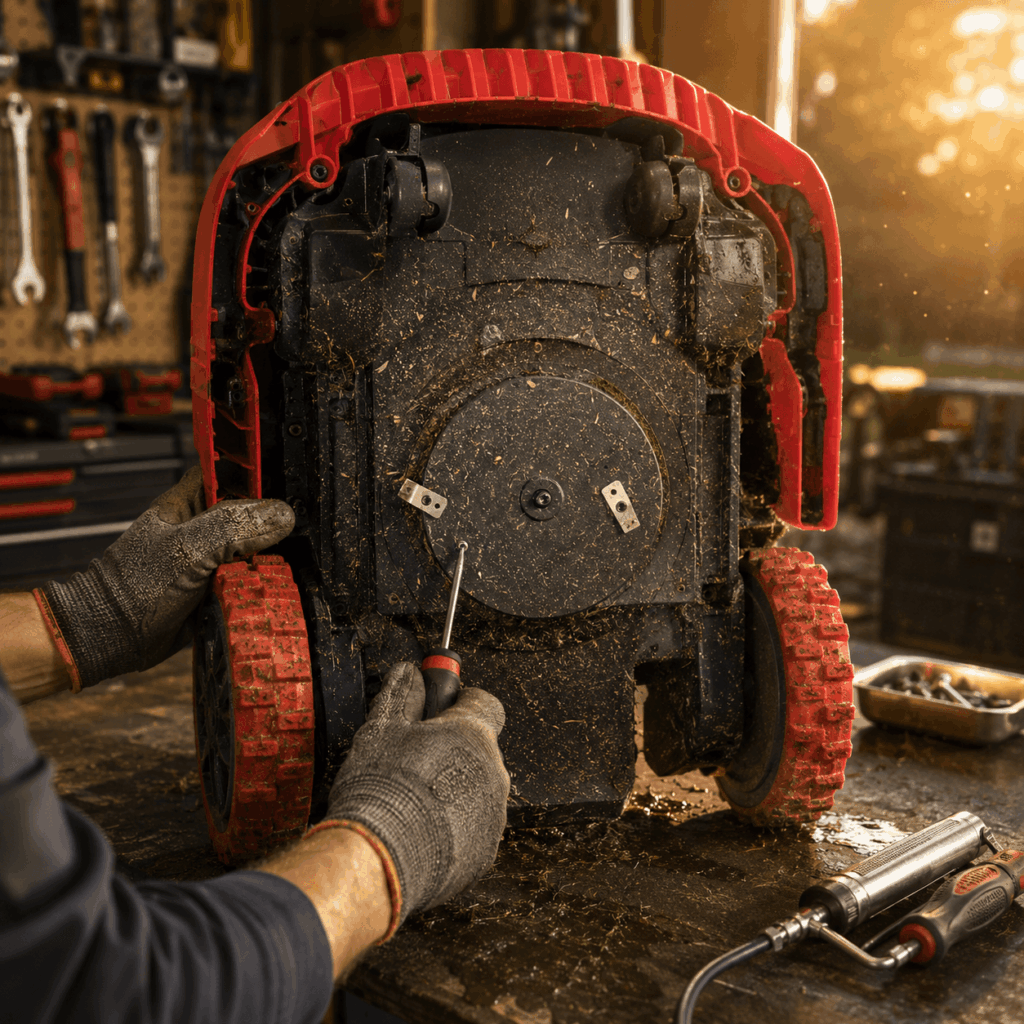
Kress’s residential lineup uses EyePilot vision-based navigation, also without a boundary wire, and the winterizing steps are close to identical to the Husqvarna EPOS process. The one thing worth double-checking on a Kress unit specifically is the AWD drivetrain components on four-wheel-drive models, since drivetrain parts that sit unused and unlubricated for months can seize or corrode faster than the mower deck itself.
Kress units also tend to have companion apps that track mowing schedules and battery health year-round. It’s worth opening that app once mid-winter just to confirm the mower is still holding its stored charge level rather than slowly draining, which can happen if a software update triggers unexpectedly while the mower is in storage. See the full spec sheet on our Kress EyePilot page if you’re comparing the standard and 4×4 versions.
Segway Navimow
Segway Navimow models need essentially the same seasonal shutdown as the other two lines: indoor frost-free storage, a partial battery charge before disconnecting, and a full cleaning first. If you’re comparing series before deciding which one fits your lawn, the Navimow X series, H series, and i series pages break down the differences between each.
Don’t Forget the Charging Dock
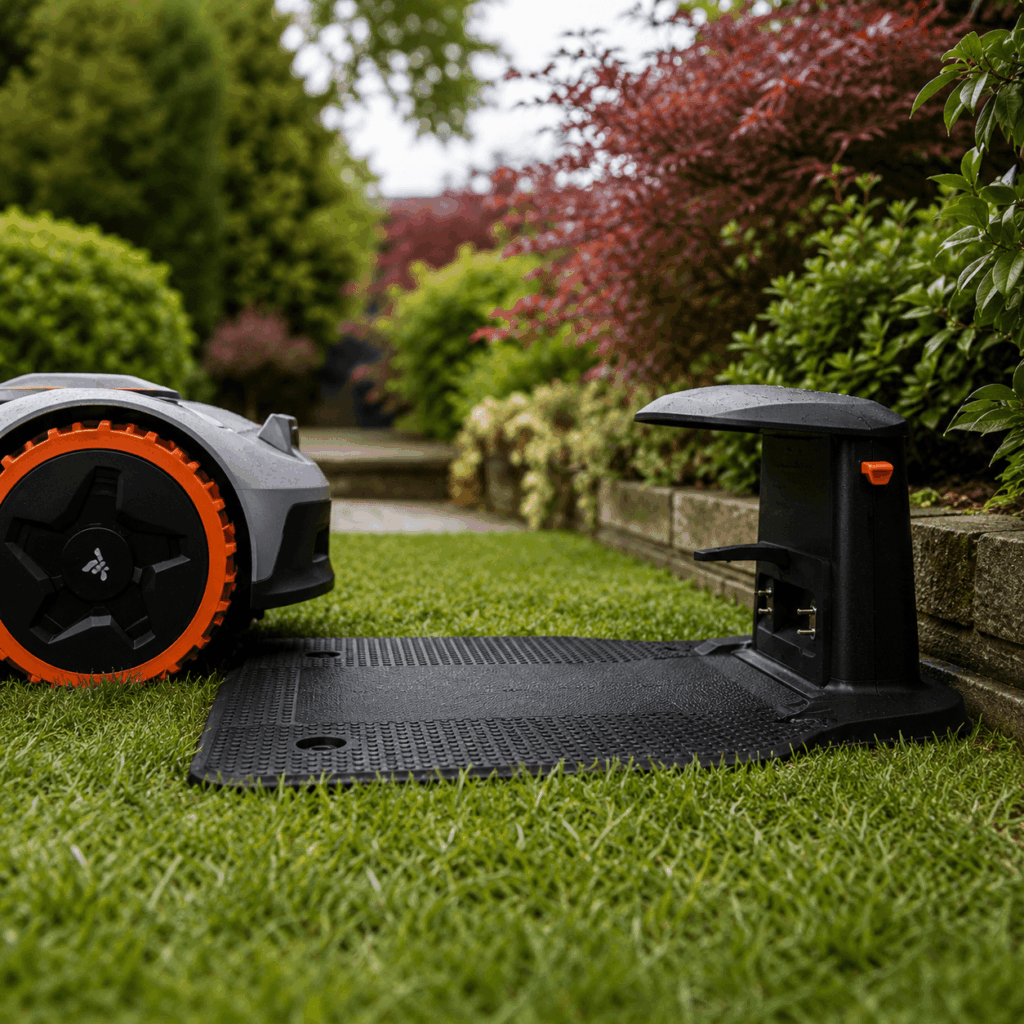
Every brand’s charging dock or base station is designed to live outside year-round, but “designed to survive outside” and “should just be ignored all winter” aren’t the same thing. Clear snow and ice buildup around the dock periodically rather than letting it accumulate all season, and check that the dock’s power connection is protected from moisture. A dock that’s iced over or sitting in standing water come spring can cause startup issues even if the mower itself was stored perfectly.
When to Bring It In
For most of the seacoast region, the first hard frost typically arrives sometime in October, and that’s the point to have your mower cleaned, charged to the right storage level, and indoors rather than waiting for the first real cold snap to catch you off guard. Waiting until a mower has already been rained on and left out through a frost adds cleanup and risk that a September or early October shutdown avoids entirely. If you’ve got other equipment to prep for the season too, our fall to winter equipment maintenance checklist covers the rest of the yard beyond just the robotic mower.
Keeping Your Robotic Mower Running for Years, Not Just This Season
Seacoast Power Equipment has served the NH seacoast since 1965, and our factory-trained technicians handle winterization, spring reactivation, and everything in between for the robotic mowers we sell. If you’d rather not manage the shutdown yourself, we offer seasonal storage service through our service department that covers the cleaning, proper battery storage, and spring software updates and testing before the mower goes back out in your yard.
Parts and battery sourcing for the brands we carry typically turns around in 24 to 48 hours if something needs replacing before storage, backed by a $150,000-plus parts inventory on hand. And if next season has you thinking about upgrading rather than just winterizing, our guide to buying your first robotic lawn mower walks through what to look for, and remember you can always try a robotic mower on your own lawn before you buy, so you know it fits your yard before it’s parked in your shed for the winter.
Pickup and delivery are available throughout the NH seacoast and into southern Maine if getting the mower to us is the inconvenient part.
Frequently Asked Questions
Can I just leave my robotic mower in an unheated shed for the winter?
Not safely. An unheated shed that dips below freezing overnight can damage the battery and electronics the same way leaving it outside would. It needs to be somewhere that stays above freezing.
Should I charge my robotic mower to 100 percent before storing it for winter?
No. Most manufacturers recommend a partial charge, not a full one, for long-term storage, since lithium-ion batteries degrade faster sitting at either extreme for months. Check your specific model’s manual or ask our team for the current guidance.
Do Husqvarna, Kress, and Segway Navimow all winterize the same way?
The core steps (clean it, partial charge, disconnect from the dock, store above freezing) are nearly identical across all three. The small differences are mostly around drivetrain components on AWD models and battery-specific guidance per manufacturer.
Does the charging dock need to come inside too?
No, docks are built to stay outside year-round, but they still need periodic snow and ice clearing and moisture protection at the power connection.
Can Seacoast handle the whole winterizing process for me?
Yes. Our seasonal storage service covers fall shutdown, indoor storage, and spring reactivation with software updates and testing.
What happens if I forget and leave my robotic mower outside all winter by accident?
It depends on how cold it got and for how long. A short cold snap before you catch the mistake usually isn’t fatal, but repeated freeze-thaw cycles over a full winter can permanently damage the battery and internal electronics. If this happens, bring the mower in for an inspection before assuming it’s fine, rather than waiting to find out the hard way come spring.
Not sure your mower’s ready for winter, or want us to handle it? Stop by our North Hampton location or contact us to schedule seasonal storage service before the first hard frost arrives.