

Winter storms in New Hampshire can change quickly. One moment the sky is clear, then heavy snow begins to fall, ice forms on trees, and wind gusts push branches into power lines. Outages that last only minutes in other seasons may stretch for hours during winter due to frozen roads, limited access, and dangerous repair conditions. A home generator turns those long outages into manageable situations, but only if it has been cared for before the storm arrives.
Emergency generator prep is the foundation of safe and steady backup power. It removes the guesswork by confirming that your generator has fresh fuel, clean filters, safe electrical cords, and enough starting strength to run during freezing temperatures. These simple steps protect your home’s heat, food safety, and essential devices. When handled early in the season, you gain confidence that your generator will perform when you need it most.
New Hampshire’s winters bring a mix of heavy snow, sleet, and freezing rain that strain the electrical grid. Preparing your generator is not only a matter of convenience. It is one of the most important ways to protect your home’s comfort and safety.
Understanding Why Emergency Generator Prep Matters
Generators often fail for reasons that could have been prevented. Cold weather slows fuel ignition, thickens oil, and makes engines work harder. Without preparation, even a high quality generator may stall or refuse to start.
New Hampshire Faces Frequent Winter Outages
Storm conditions often lead to:
- Heavy icing on lines
- Branches snapping under the weight of snow
- Blown transformers
- High winds near the coast
- Delayed repair crews due to ice covered roads
Because power loss is unpredictable, emergency generator prep ensures your home does not depend fully on the grid during harsh weather.
Cold Weather Raises Safety Risks For Homes
During winter outages, temperatures inside a home can fall quickly. Without a generator, homeowners face risks such as:
- Frozen pipes
- Loss of heating systems
- Limited lighting
- Spoiled food
- Unsafe walking areas due to insufficient outdoor lighting
Generator readiness keeps these risks manageable, especially when combined with safety habits. You can review our cold weather engine maintenance guide to learn how low temperatures affect starting, oil flow, and overall performance.
Many Generator Problems Start With Old Fuel or Poor Storage
The most common winter generator issues include:
- Fuel that sat too long
- Clogged air filters
- Worn spark plugs
- Weak batteries in electric start units
- Dirty carburetor jets
For long off-season storage, follow the steps in our winter equipment storage guide to protect fuel systems, batteries, and critical components.
Emergency generator prep addresses these issues long before the snow falls.
Check Fuel Systems and Fuel Quality Before Winter
Fuel is the heart of any generator. Without high quality fuel, even a well maintained generator may fail to start on winter mornings. Fuel that sits too long becomes unstable, thick, and less effective in cold temperatures.
Use Fresh Fuel for Better Cold Weather Starting
Gasoline begins to break down after a few months. Old fuel can:
- Lose volatility
- Form sticky deposits
- Cause hard starts
- Lead to stalling
- Reduce engine power
Old fuel is one of the top causes of generator failure during winter outages.
Emergency generator prep begins with:
- Draining stale fuel
- Adding fresh gasoline
- Labeling fuel containers with dates
- Rotating stored fuel regularly
These habits align with the seasonal care strategies taught in other Seacoast Power Equipment resources, especially those explaining the right way to prepare equipment for long term winter storage.
Use Fuel Stabilizer for Long Storage Periods
If your generator sits unused for several weeks at a time, stabilizer helps preserve fuel quality. Add stabilizer at the recommended ratio, then:
1. Fill the tank
2. Run the generator for a few minutes
3. Let treated fuel cycle through the carburetor
This reduces varnish and keeps internal parts clean. Stabilizer is essential during winter months, when cold temperatures slow fuel flow and increase strain on the engine.
Follow Safe Fuel Storage Habits
Store fuel in:
- Approved containers
- A dry, ventilated space
- A stable location where containers cannot tip
- An area a safe distance away from furnaces, water heaters, open flames, or other ignition sources
Consider winter access when selecting a storage spot. During a storm, you want to reach fuel safely without crossing slippery paths or deep snow.
Inspect the Engine, Filters, and Electrical Cords
A visual inspection catches many hidden issues. This step is easy and prevents failures during real emergencies.
Do a Full Engine Inspection Before Each Storm Season
Look closely at:
- Fuel lines for cracks
- Carburetor area for leaks
- Oil level and oil color
- Air filter housing
- Wheels and frame
- Battery terminals
- Starter cord condition
Many of these checks match the recommendations found in Seacoast Power Equipment’s general winter storage guidance, which teach homeowners how to protect small engines during freezing months.
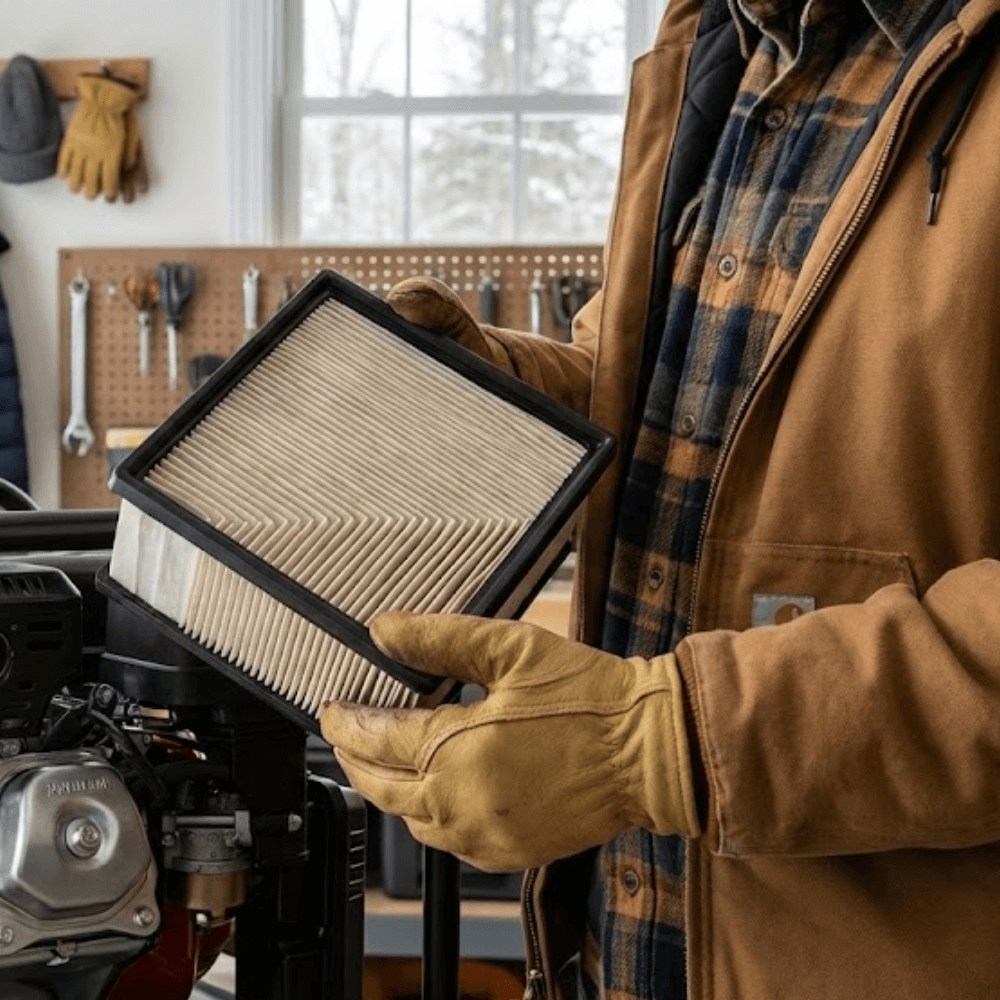
Replace Dirty or Damaged Air Filters
A clogged air filter restricts airflow, reduces power, and makes cold weather starting difficult. Replace a filter if it looks:
- Dark
- Dusty
- Oil soaked
- Torn
Airflow is one of the most important factors during winter generator operation.
Check Spark Plugs and Ignition Components
Spark plugs ignite fuel inside the engine. In winter, strong ignition is critical. Replace a plug if you see:
- Soot
- Corrosion
- Cracks
- Worn electrodes
A fresh spark plug can dramatically improve winter starting performance.
Inspect All Power Cords and Outlets
Generator cords must be rated for outdoor use and winter temperatures. Look for:
- Worn insulation
- Twisted or bent prongs
- Exposed internal wire
- Melted areas near plugs
If you find damage, replace the cord immediately.
Test Run Your Generator Before Storm Season
A generator should be run at least once before major winter storms. This confirms it can start, warm up, and power your essential items.
Conduct a Test Run on a Clear Weather Day
Move the machine outside and:
1. Turn the fuel valve on
2. Set the choke
3. Start the engine
4. Let it warm up fully
5. Check for leaks, smoke, or odd noises
If you use an electric start, test the battery early. Cold weather weakens battery performance.
Perform a Load Test to Check Real Power Output
Connect one or two small appliances such as:
● A lamp
● A portable heater that matches your generator’s wattage rating
● A shop tool
This light load simulates how the generator will perform during an outage. Always keep total wattage within the generator’s rated capacity. Load tests reveal:
- Weak power output
- Random surging
- Stalling
- Electrical issues
If your unit will not start or runs unevenly, walk through the steps in our generator troubleshooting guide before scheduling service.
Listen for Warning Signs
Pay attention to:
- Rattling
- Fuel odors
- Excess smoke
- Sharp vibrations
- Hesitation during startup
These are signs that service is needed before winter storms arrive.
Emergency generator prep helps New Hampshire homeowners stay ready for winter storms by checking fuel quality, cleaning filters, testing output, and setting up safe operating space. Fresh fuel, proper ventilation, and routine test runs ensure your generator starts reliably when a storm shuts down the grid.
Portable Generator Care Tips for Safe Winter Use
Portable generators provide important backup power, but they require safe placement and careful handling.
Always Operate the Generator Outdoors
A generator must never run:
- In a home
- In a shed
- In a garage
- Under an enclosed roof
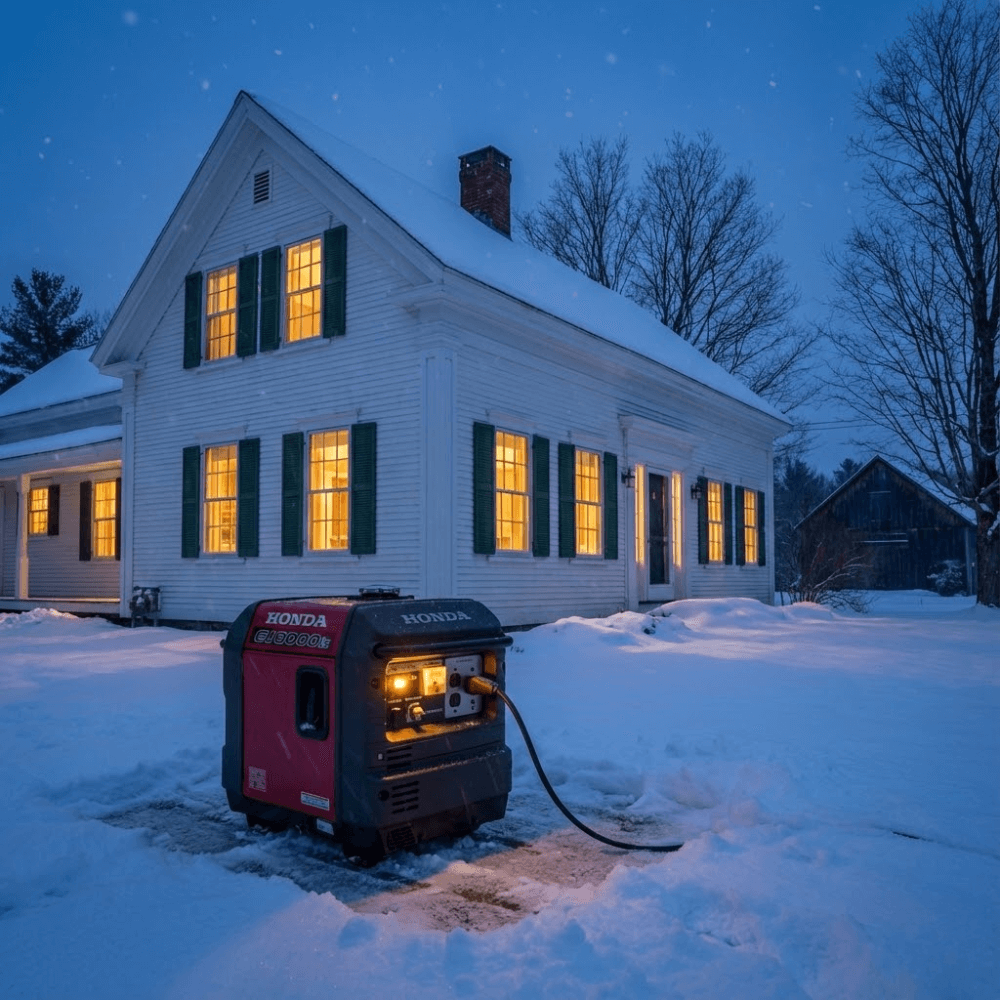
Carbon monoxide travels silently and can build up quickly. Always place the machine outdoors on level ground, at least 20 feet away from doors, windows, and vents, with the exhaust pointed away from the house.
Follow Carbon Monoxide Safety Rules
Install CO detectors on every floor and test them regularly. Replace batteries before winter. If an alarm sounds, turn off the generator, move outside, and contact emergency services.
Select the Right Extension Cords
Use only:
- Outdoor rated cords
- Three prong grounded plugs
- Proper wattage capacity
Do not run cords through windows where they can pinch. Keep cords elevated when possible to prevent freezing into ice.
Setting Up Your Generator for Quick Activation
Simple preparation helps you start your generator quickly during a storm.
Install a Transfer Switch for Safer Home Use
A licensed electrician can install a transfer switch or interlock device to:
- Keep power stable
- Lower overload risk
- Prevent dangerous backfeeding
This upgrade improves safety and convenience, especially for longer outages.
Create a Generator Go Kit
Keep all generator items together in one easy to access place:
- Heavy duty cords
- Work gloves
- Funnel
- Stabilizer
- Flashlight
- Quick start steps
- Small tool kit
A go kit saves time when an outage hits.
Practice Your Setup Before Storms Arrive
Practice moving the generator, routing cords, and starting the engine. A quick rehearsal builds confidence and reveals any issues before winter begins.
Common Generator Prep Mistakes to Avoid
Even well maintained generators can fail if used incorrectly.
Running the Generator Indoors
This is extremely dangerous. Only operate outside with full ventilation.
Overloading the Generator
Know your generator’s watt rating and plan loads carefully. Prioritize:
- Heat
- Refrigeration
- Basic lighting
- Chargers
Avoid plugging in too many appliances at once.
Not Tracking Maintenance Tasks
It helps to record:
- Oil changes
- Filter replacements
- Test run dates
- Fuel treatment dates
Good records mirror the systems encouraged in other Seacoast Power Equipment resources such as winter equipment storage recommendations.
Final Generator Prep Checklist for Reliable Winter Storm Readiness
Emergency generator prep is one of the most dependable ways to protect your home during severe winter weather. With steady habits like fresh fuel rotation, safe cord setups, visual inspections, and test runs, your generator will be ready for outages all season long.
Many of the best practices in this guide are reinforced throughout the Seacoast Power Equipment website, including tips for spotting generator performance issues, winter equipment storage habits, and cold weather engine protection steps. All of these resources work toward the same goal: keeping your equipment ready to perform when New England weather turns harsh.
By following this checklist every winter, your generator stays reliable and your home stays prepared for outages caused by heavy snow, ice, and winter wind.
Get Expert Generator Support for Winter Storm Preparation
If you want expert help with emergency generator prep, seasonal inspections, or troubleshooting before the next storm arrives, contact Seacoast Power Equipment. The team can help ensure your generator is ready to run safely and reliably through the toughest winter conditions.