
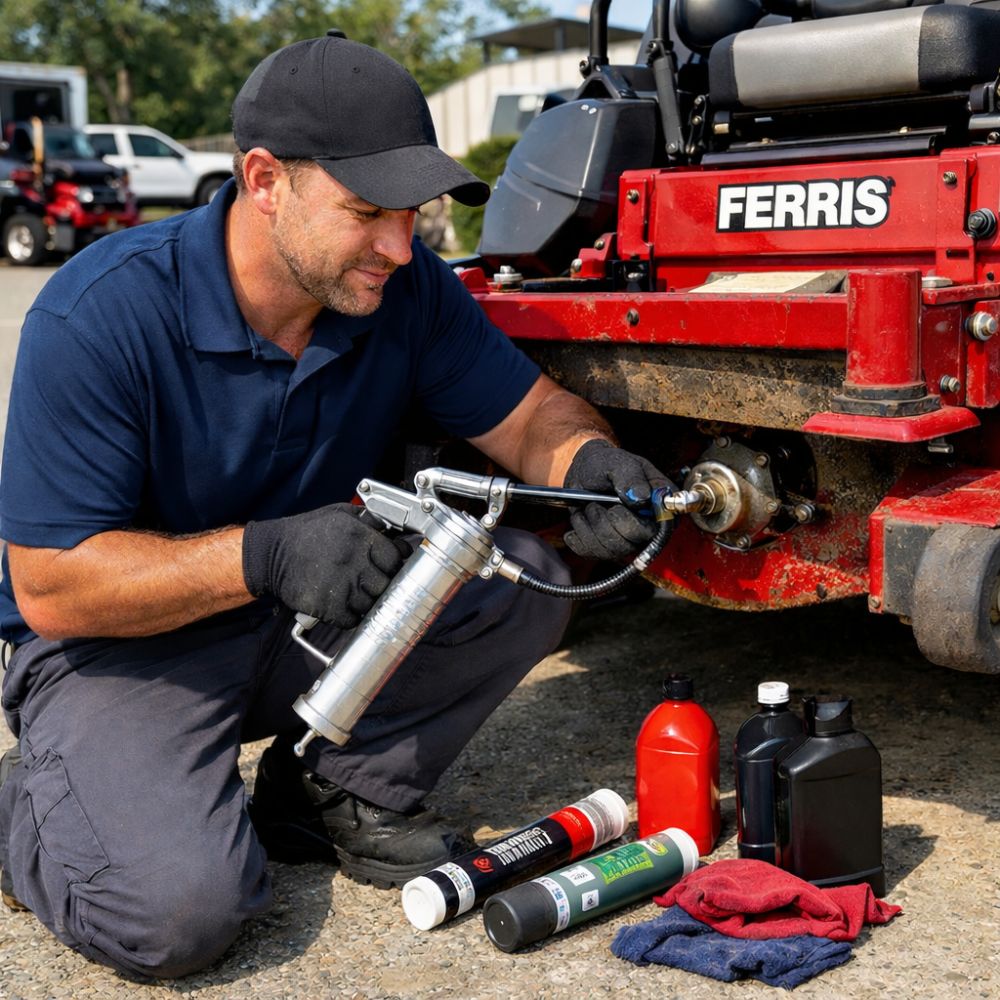
You fire up your zero-turn on Monday morning’s first commercial job. The engine runs rough, the mower pulls hard to one side, and grinding noises come from the deck. By 10 AM your $8,000 mower heads to the shop instead of earning money. Your crew sits idle, the job falls behind schedule, and you’re calculating $500-1,000 in lost revenue plus repair costs.
Zero-turn mowers represent precision machines with hydrostatic transmissions, multiple grease points, high-speed blade systems, and commercial-grade engines. They require proactive maintenance at specific intervals, not reactive repairs after failures. A $50 oil change at 50 hours prevents a $1,200 engine rebuild. Regular spindle greasing costs under $1 but prevents $400 bearing replacements.
The difference between equipment delivering 1,500-2,500 profitable hours and mowers failing prematurely at 500-800 hours comes down to systematic maintenance. This guide explains hour-based zero-turn mower maintenance, covering daily checks, weekly greasing, monthly oil changes, and long-term transmission service.
Understanding Hour-Based vs. Calendar Maintenance
Zero-turn mower maintenance intervals are based on engine hours, not calendar months. This distinction matters tremendously for commercial operators.
Equipment wear happens during operation. Bearings wear from rotation, engine oil degrades from heat, hydrostatic fluid breaks down from pressure, and blades dull from grass contact. All wear accumulates based on operating hours, not calendar days.
A homeowner’s zero-turn running 2 hours weekly accumulates 30-40 hours per season. That’s one week of commercial operation. Commercial operators running 8-hour days, 5 days weekly, accumulate 40 hours per week, 160-200 hours monthly, and 250-400 hours by season end.
Commercial zero-turn mowers accumulate 200-400 operating hours per season compared to 30-50 hours for residential use, requiring maintenance 6-10 times more frequently. Hour meters track cumulative runtime for precise service scheduling rather than calendar-based intervals.
Most commercial zero-turns have hour meters on the dashboard. Without an hour meter, track daily usage: 8 hours daily × 5 days = 40 hours weekly. Maintain a log recording the date, hours, and service performed.
The Cost of Skipping Maintenance
Equipment failures during peak season cost far more than maintenance. A single day of downtime represents $400-640 in lost revenue at $50-80 hourly crew rates. Multi-day repairs for transmission or engine failure cost thousands in lost revenue plus emergency repair charges.
Systematic hour-based maintenance eliminates most preventable failures. An annual maintenance investment of $1,100-1,800 costs less than one day’s revenue loss, making it cost-effective insurance.
Daily Pre-Use Checks: 5-Minute Failure Prevention
Daily checks catch developing problems before they become equipment failures.
Essential Daily Checklist:
Engine Oil Level: Check the dipstick before starting. Oil should be in the “full” range. Modern engines have low-oil shutdown switches, but don’t rely solely on this protection. Adding significant oil (more than 4-8 ounces) between 50-hour changes indicates developing problems requiring professional diagnosis.
Tire Pressure: Check all four tires with a pressure gauge. Most commercial zero-turns specify 10-14 PSI. All tires should match within 1 PSI. Unequal pressure causes drift, uneven cutting, and increased transmission strain.
Visual Leak Inspection: Walk around the mower looking for hydraulic fluid, engine oil, or fuel leaks. Fresh hydraulic fluid appears red or amber. Engine oil looks brown to black. Check beneath the mower for fluid accumulation.
Belt Condition: Inspect visible belts for fraying, cracks, or damage. Damaged belts identified early can be replaced during scheduled downtime rather than causing mid-job failures.
Debris Removal: Clean grass clippings from engine cooling fins, air filter housing, belt guards, and pulleys. Accumulated debris reduces cooling efficiency and can interfere with belt operation.
For comprehensive guidance on maintaining equipment during active use, see our peak season maintenance guide.
Weekly Greasing: Preventing $400 Spindle Failures
Greasing all fittings every 40-50 hours (weekly for commercial operations) prevents expensive bearing failures.
Why Greasing Matters
Zero-turn mowers have 10-20 grease fittings depending on the model. Spindle bearings operate at 3,000+ RPM while supporting blade weight and absorbing impact. Without regular greasing, moisture and contaminants infiltrate bearings, causing premature failure.
Spindle bearing replacement costs $200-400 per spindle plus labor. Most decks have three spindles. Complete spindle bearing failure across all positions can cost $600-1,200 plus labor. Weekly greasing takes 15 minutes and costs under $1 in grease.
Grease Fitting Locations:
- Spindles under deck (2-3 fittings)
- Caster wheel pivots (2 fittings)
- Deck wheels and anti-scalp wheels (2-6 fittings)
- Control linkages (2-4 fittings)
- Steering dampener (1 fitting on some models)
Proper Greasing Technique
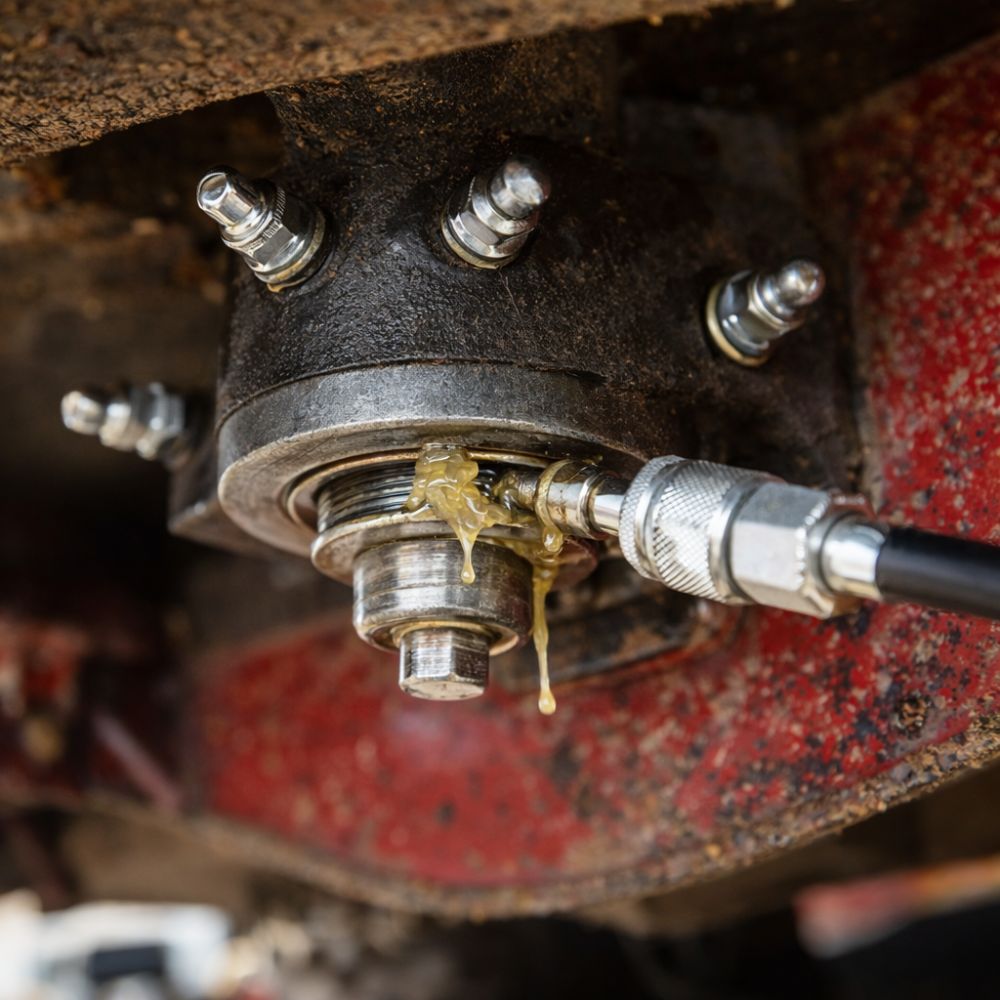
Use a grease gun loaded with high-quality lithium grease or synthetic water-resistant grease. Premium grease costs a few dollars more but provides significantly better protection in coastal New Hampshire’s humid conditions.
Recommended grease: Mobil 1 Synthetic Grease, Amsoil Synthetic Water Resistant Grease, or John Deere Multi-Purpose SD Polyurea Grease.
Greasing Procedure:
- Clean each fitting before greasing (prevents dirt injection)
- Attach grease gun firmly to the fitting
- Pump 2-3 shots of grease
- Watch for old grease purging from bearing seal
- Stop when you see fresh grease or feel resistance
- Wipe excess grease from fittings
Commercial Time-Saver: Assign one crew member to grease all mowers at day’s end or week’s start. Keep a greasing log tracking date and hours for each mower.
Oil Changes Every 50 Hours: Engine Protection
Engine oil changes represent the single most important maintenance task for engine longevity. Commercial operators should never extend intervals beyond 50 hours.
Why 50-Hour Intervals Matter
Commercial engines operate under sustained high load and temperature. Oil breaks down from heat, forming sludge and acids. Even synthetic oils degrade under commercial conditions. The 50-hour interval provides a safety margin, ensuring oil remains effective.
Skipping one oil change accelerates wear significantly. Engine rebuilds cost $1,200-2,000. New engines cost $2,500-4,000 plus installation. These expenses dwarf oil change costs.
Feature Snippet: Change zero-turn mower oil every 50 operating hours using SAE 10W-30 or 15W-50 synthetic oil. Commercial engines require oil changes every 1-2 weeks during peak season compared to 2-3 times annually for residential use. Synthetic oil costs $5-10 more but provides superior heat protection.
Correct Oil for Commercial Engines
Most commercial zero-turn engines specify SAE 10W-30 or 15W-50 synthetic oil. Kawasaki engines commonly prefer 10W-40. Verify exact specifications in your operator’s manual.
Synthetic oil is strongly recommended for commercial use, providing better heat protection, improved cold-weather starting, and superior lubrication. The $5-10 cost increase provides substantial protection benefits.
Oil capacity: Small commercial engines (18-24 HP) hold 1.5-2 quarts. Larger commercial engines (25-35 HP) hold 2-2.5 quarts.
Oil Change Procedure
- Warm engine 5 minutes for easier draining
- Position drain pan under engine drain plug
- Remove drain plug and let drain completely (10-15 minutes)
- Replace oil filter if equipped (hand-tight plus quarter turn)
- Reinstall drain plug with good sealing washer
- Refill with correct amount fresh oil
- Run the engine for 30 seconds and recheck the level
- Record date, hours, and oil change in maintenance log
For detailed guidance on oil maintenance across equipment types, see our article on small engine oil change frequency.
Blade Maintenance: Weekly Sharpening for Commercial Use
Dull blades reduce cut quality, stress engines, and damage grass. Commercial operators should sharpen blades weekly during the active season.
Why Weekly Sharpening Matters
Professional landscapers can’t afford appearance problems from dull blades. Clients expect crisp, clean cuts. Dull blades tear grass, creating brown, frayed tips visible 24-48 hours after mowing. In New Hampshire’s humid coastal climate, torn grass tissue increases fungal disease risk, as our blade sharpness article explains.
Engine strain from dull blades increases fuel consumption and accelerates wear. Sharp blades cut efficiently with minimal load. Dull blades require substantially more power, particularly in spring’s thick growth.
Blade Rotation System
Professional landscapers maintain multiple blade sets: one set on mower (current use), one set freshly sharpened (ready to install), and one set being sharpened.
This rotation minimizes downtime. Remove dull blades, install sharp blades from ready inventory (10-15 minute swap), and send dull blades for batch sharpening.
Professional vs. DIY Sharpening
Correct sharpening requires maintaining a proper angle (30-45 degrees), removing metal evenly, creating a durable edge, and balancing afterward. Unbalanced blades cause vibration, accelerating spindle bearing wear.
Professional sharpening costs $8-12 per blade with same-day or next-day turnaround. For commercial operations, time savings often justify the cost. Fifteen minutes per blade × 3 blades × 5 mowers = nearly 4 hours. Professional sharpening costs less than the labor value.
Professional shops also catch problems: cracks near mounting holes, excessive thinning, and damage requiring replacement. Understanding repair versus replace decisions relates to equipment part selection principles.
Transmission Fluid Service: Preventing $3,000 Failures
Hydrostatic transmission fluid changes prevent catastrophic failures costing thousands in repairs.
Understanding Hydrostatic Systems
Zero-turns use independent hydrostatic transmissions for each rear wheel. These convert engine power into continuously variable speed through pressurized hydraulic fluid.
Hydrostatic systems generate substantial heat. Fluid temperatures routinely exceed 180-200°F. This heat breaks down transmission fluid, forming varnish and sludge and affecting performance.
Warning signs fluid needs changing:
- Jerky operation when starting from stops
- Slow response to control inputs
- Loss of power on hills
- Whining or grinding noises
- Mower “creeping” when controls are neutral
Service Intervals and Professional Requirements
Change intervals: Commercial operators should change transmission fluid annually or every 400-500 hours. High-use operations (8+ hours daily) may need changes every 300 hours.
Most zero-turns use 20W-50 hydrostatic transmission fluid. Some specify synthetic. Never use automotive transmission fluid.
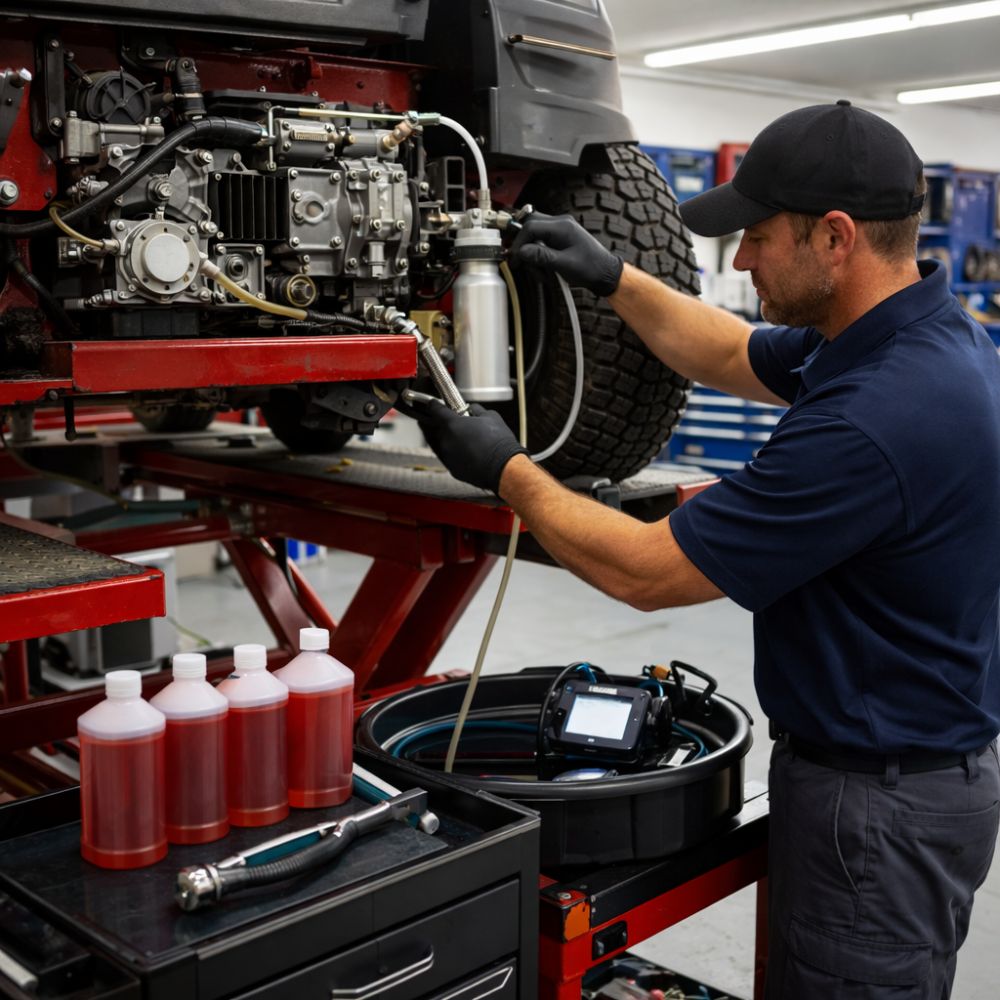
Why this isn’t DIY: Transmission fluid changes require specialized equipment for evacuating old fluid, precise measuring for new fluid, manufacturer-specific purging procedures, and testing plus tracking adjustments.
Incorrect fluid levels cause problems. Air in the system creates rough operation and damage. DIY service gone wrong can turn a $180-280 maintenance into a multi-thousand-dollar repair.
Belt Inspection and Replacement
Drive belts transfer power from the engine to blade spindles and hydrostatic pumps. Belt failure during operation means immediate work stoppage.
Deck Belt Inspection
Inspect deck belts every 50 hours for cracks, fraying, glazed surfaces, or missing chunks. Belt life varies: clean lawns allow 200-300 hours; rough conditions reduce life to 150-200 hours.
Squealing when engaging blades indicates slippage. Loss of blade speed suggests wear. Visual inspection confirms replacement needs.
Pump Belt Inspection
Inspect pump belts every 100 hours. These last longer but are more critical. Failure means complete loss of mobility.
Replace pump belts every 400-500 hours as preventive maintenance even if serviceable. The $35-60 belt cost plus labor is minimal compared to the inconvenience of mid-job failure.
Professional Belt Service
Belt replacement difficulty varies by model. Professional replacement costs $85-140, including correct routing, proper tension, and operational testing.
For commercial operators, professional installation provides correct routing guaranteed, proper tension set, time savings, and warranty protection. Our guide to common lawn equipment issues covers belt problems and other maintenance needs.
Air Filter Service: Daily Checks in Dusty Conditions
Air filters prevent dust and debris from entering engines. Clogged filters reduce power, increase fuel consumption, and can cause engine damage.
Commercial Filter Maintenance
Check air filters daily in dusty conditions and every 10-25 hours under normal conditions. Remove cover, inspect filter. Paper filters should allow light through when held to light source. Replace if opaque or heavily soiled.
Foam pre-filters should appear white or cream. Dark gray or black indicates heavy contamination.
Replace paper filters rather than cleaning ($5-12 per filter). Clean foam pre-filters by washing in warm soapy water, squeezing dry, and applying a light coat of motor oil.
Filter Stocking Strategy
Stock 3-5 paper filters per mower at season start ($25-50 per mower). Replacement takes 60 seconds. Clean filters are always available for quick changes.
Seasonal Maintenance Transitions
Spring Startup Preparation
After winter storage is complete, do these tasks:
- Drain old fuel, add fresh fuel
- Change engine oil and filter
- Replace or clean air filters
- Grease all fittings thoroughly
- Sharpen or replace all blades
- Check battery condition; charge if needed
- Inflate tires to correct pressure
- Test all safety switches
Our early spring lawn care guide covers equipment preparation in the overall spring context.
Fall Winterization
Proper winterization prevents spring problems:
- Change engine oil
- Add fuel stabilizer or drain fuel completely
- Clean entire mower thoroughly
- Remove the battery and store in warm location
- Cover with breathable cover
For comprehensive winterization guidance, see our winter equipment care article.
Annual Maintenance Investment vs. Downtime Cost
Commercial Maintenance Costs
Annual maintenance for 300 hours per season: oil changes (6 × $45-75 = $270-450), blade sharpening (25 × $24-36 = $600-900), air filters (3 × $5-12 = $15-36), transmission fluid ($180-280), and belt replacement as needed ($85-140).
Total annual investment: $1,250-1,900 per mower.
This protects $4,000-12,000 worth of equipment. Proper maintenance extends life to 1,500-2,500 hours (6-10 years commercial) compared to 500-800 hours for neglected equipment.
Downtime Comparison
One day of downtime costs $500-1,000 in lost revenue. Multi-day repairs compound losses. A $1,500 annual maintenance investment prevents most failures. Preventing just one 2-day breakdown ($1,000-2,000 lost revenue) makes maintenance extremely cost-effective.
Major repairs from neglect: engine rebuilds ($1,200-2,000), transmission replacement ($1,600-3,000), spindle bearings ($600-1,200). Any major repair costs more than annual maintenance and involves multi-day downtime.
Maintenance Record Keeping
What to Track
Record the date, engine hours, service performed, parts used, and technician for each maintenance event.
Documentation ensures scheduled maintenance, provides warranty protection, tracks patterns, and adds resale value. Buyers pay more for a well-documented maintenance history.
Record Systems
Simple paper logs work effectively. Keep a log sheet with each mower recording all service. Smartphone apps designed for equipment tracking can send reminders when service is due.
Consistency matters more than complexity. Simple systems used faithfully beat elaborate systems neglected.
Get Professional Zero-Turn Maintenance
Systematic hour-based maintenance determines whether your commercial equipment delivers 1,500+ profitable hours or fails prematurely. Daily checks, weekly greasing, 50-hour oil changes, and annual transmission service protect your investment and prevent costly downtime during prime season.
Seacoast Power Equipment provides factory-trained service for all major zero-turn brands, including Ariens, Gravely, Stihl, Toro, Ferris, Simplicity, and Husqvarna. Services include routine maintenance, blade sharpening with precision balancing, transmission service with specialized equipment, belt replacement with proper tension, and seasonal preparation.
Fleet programs offer scheduled mobile service, 15-25% volume discounts, priority 24-48 hour turnaround, and loaner equipment availability throughout New Hampshire’s seacoast region.
Contact Seacoast Power Equipment: (603) 964-8384 | 106 Lafayette Road, North Hampton, NH
For additional equipment maintenance guidance, visit our blog covering all power equipment types.