
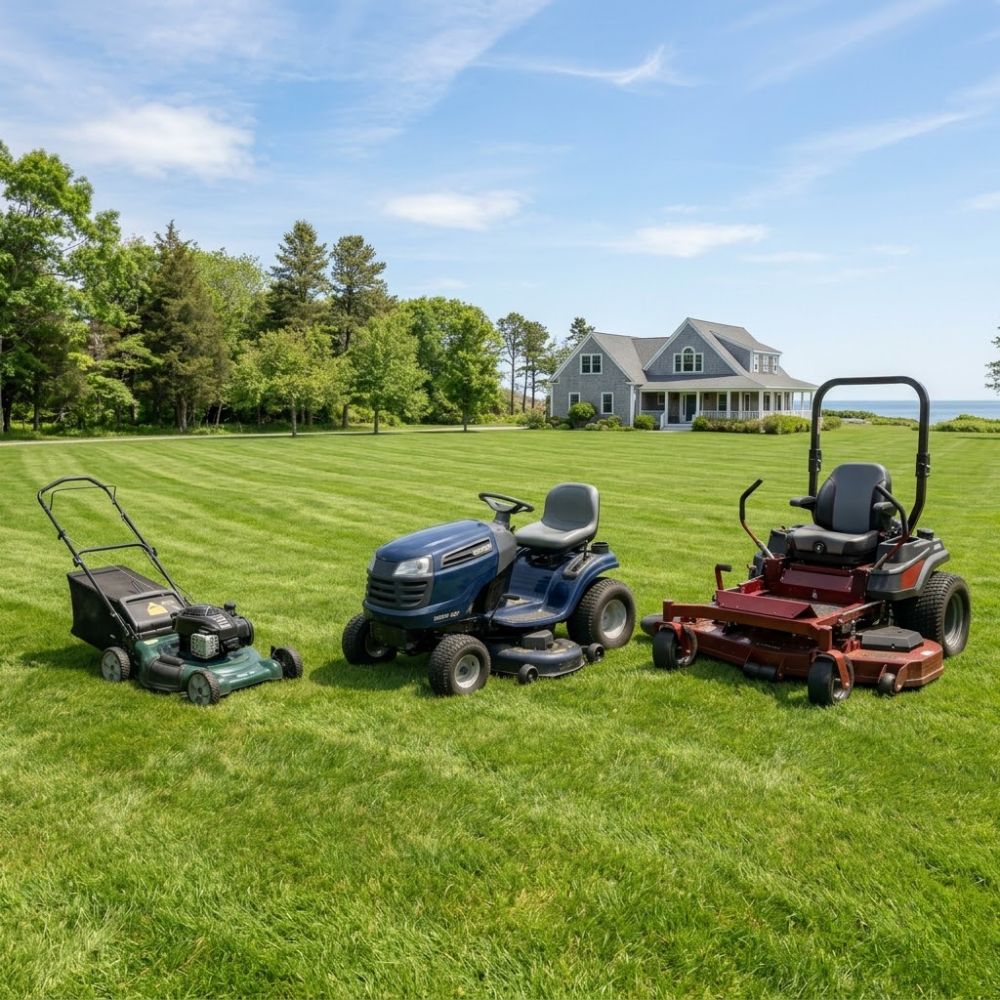
Picking the right lawn mower involves more than finding a good price or choosing a brand name you recognize. The deck size controls how fast you mow, how many passes you need, and whether the machine can actually get around your property without scalping grass or wedging between trees.
Most people either buy too big and regret it when they can’t fit through gates or buy too small and spend twice as long mowing. The right deck width for your property saves fuel, cuts mowing time, and keeps the lawn looking better with less effort. We’ve been helping seacoast homeowners and commercial operators find that match for nearly 60 years, and the same sizing principles apply whether you’re mowing a quarter-acre lot or a five-acre parcel.
We’ll walk through the specific deck measurements that work for different property sizes. You’ll also learn how slopes and obstacles change these recommendations and which sizes the major brands offer across walk-behind, lawn tractor, and zero-turn categories.
Why Deck Size Affects Everything
Three things change with deck width: how long it takes to mow, how good the cut looks, and how long the equipment lasts.
Go too wide and you’re doing extra trim work around every tree, scalping high spots on hills, and backing up constantly in tight spaces. The time you saved with a wider cut gets eaten up fixing problem areas and navigating around obstacles.
Go too small, and you’re burning extra gas making twice as many passes. On a three-acre property, an undersized deck can turn a two-hour job into four hours. Those extra passes also pack down soil in your most-traveled routes and create visible wear patterns in the turf.
The right size lets you cover ground efficiently in open areas while still handling the obstacles and slopes that exist on real properties, not the perfectly flat rectangles in equipment brochures.
Deck Sizes for Different Property Sizes
Manufacturers base their recommendations on acreage, but those assume flat, open terrain. Here’s how standard deck sizes map to actual property dimensions.
Walk-Behind Mowers: 14 to 36 Inches
Walk-behind mowers work best under half an acre. Even with self-propulsion, the physical effort of walking limits how much ground you want to cover.
A 14 to 20-inch deck handles up to a quarter acre. These smaller widths navigate tight yards with heavy landscaping, narrow side yards, or properties broken up by gardens and hardscaping. Honda’s 21-inch commercial models fit here, built for durability on compact properties.
The 20 to 36-inch range serves quarter-acre to half-acre lots. Self-propelled models this wide cover decent ground without requiring a riding mower investment. The extra width helps on slightly larger lots while maintaining agility around typical suburban obstacles.
Lawn Tractors: 36 to 60 Inches
Tractors bridge walk-behind and zero-turn territory, offering comfort and reasonable maneuverability for mid-sized properties.
A 36 to 42-inch deck matches half an acre to one acre. This width handles properties with some obstacles but enough open space to justify riding equipment. The narrower profile fits through standard gates and works around established landscaping without constant backing up.
The 42 to 52-inch range suits one to two acres. This is the most common configuration for suburban and rural homeowners who need efficient coverage but still have gardens, trees, and varied terrain. Toro’s residential models often feature decks in this range with different blade setups for various grass types.
A 48 to 54-inch deck handles two to three acres well. Properties this size usually have more open areas where wider coverage pays off, though you still need maneuverability around edges and landscaped zones.
The 54 to 60-inch range serves properties over three acres where tractors still make sense before zero-turns become more practical. At this width, you’re trading maneuverability for coverage, which only works when you have big open sections.
Zero-Turn Mowers: 32 to 72 Inches
Zero-turns mow most efficiently once you have enough room to use their speed and turning radius advantages.
A 32 to 36-inch deck works on properties under one acre when obstacles and tight spaces make the zero-turn’s agility more valuable than wide coverage. These compact commercial-grade units excel on heavily landscaped properties or irregular shapes.
The 42 to 48-inch range fits one to two acres with moderate obstacles. This balances zero-turn efficiency with enough agility for typical residential features. Ferris IS-series models of this size include suspension systems that maintain cut quality on uneven ground.
A 48 to 54-inch deck serves two to three acres well, especially with good open areas. This is the most popular size for serious residential users and commercial lawn care work.
The 54 to 60-inch range handles three-plus acres efficiently. Commercial landscaping operations often start here for residential accounts, and large property owners who mow frequently find the productivity gains worth it.
A 60 to 72-inch deck works best on large, open properties over four acres with few obstacles. These commercial-grade widths on Toro Z Master or Ferris IS 6200Z models deliver maximum productivity but need significant open space to justify the size and cost. If you’re considering this range, our guide on selecting the right zero-turn covers additional features that matter at this level.
How Terrain Changes the Rules
The acreage recommendations above assume relatively flat, open ground. Real properties rarely match those assumptions. Terrain characteristics often push you toward smaller decks even on larger acreage.
Hills and Slopes
Sloped terrain calls for smaller decks, both for safety and cut quality. A 60-inch deck might work great on flat three acres, but if those three acres slope, a 48-inch deck will perform better.
Larger decks on hills create stability problems. The wider stance increases tip risk on side slopes, and the longer deck span makes it hard to maintain consistent ground contact across the full width. This causes scalping where the deck dips into low spots and uncut strips where it lifts over high spots.
Weight distribution changes with deck size too. Heavier, wider decks pull traction away from drive wheels on slopes, increasing the chance of sliding or losing control. Commercial operators regularly size down on hilly properties for this reason, even though it means more passes.
Cut quality suffers on slopes with oversized decks because keeping even pressure across the entire width becomes impossible. The terrain pushes different parts of the deck up and down independently, creating an inconsistent height that shows up as light and dark stripes.
For properties with significant slopes, drop down one size from the acreage recommendation. A two-acre property that would typically take a 52-inch deck might work better with 48 inches if hills are a major feature.
Obstacles and Tight Spaces
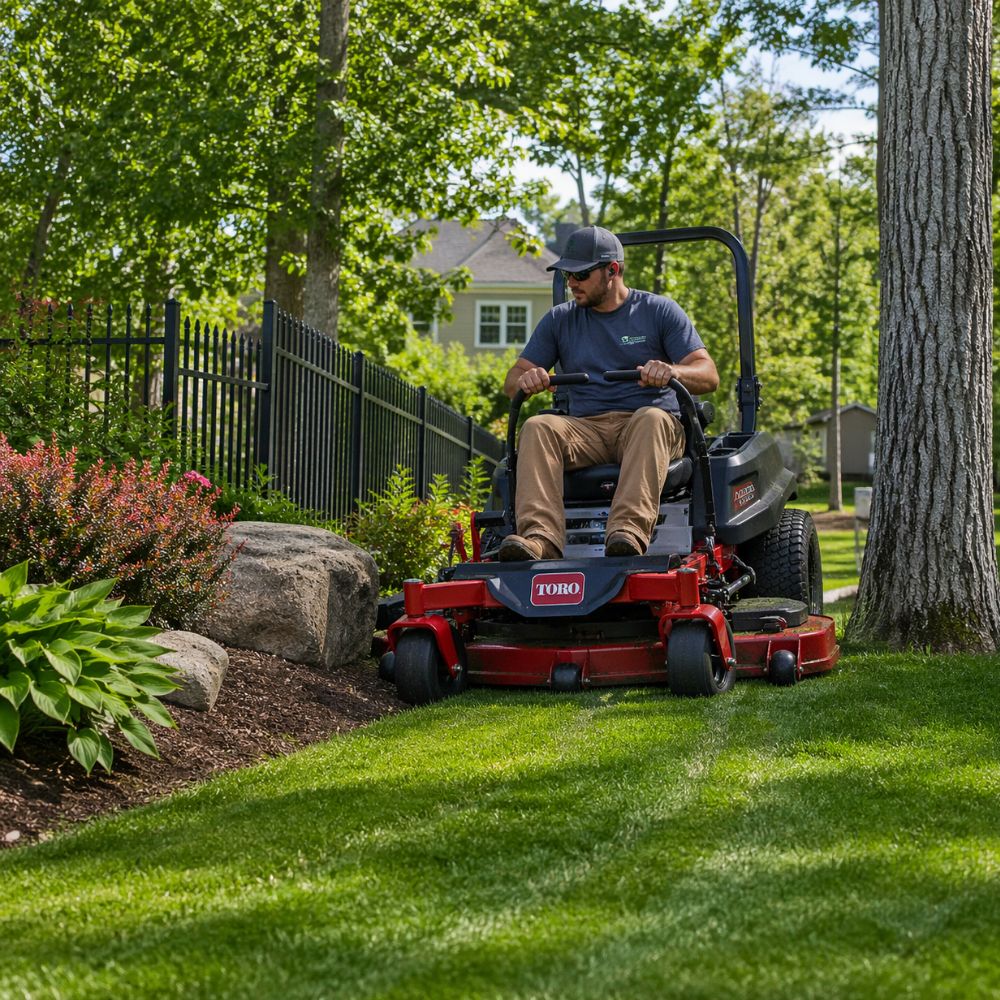
Trees, gardens, flower beds, play structures, and other obstacles reduce the effective cutting width of larger decks. Every time you maneuver around an obstacle, you trade the wide deck’s efficiency for the agility you gave up.
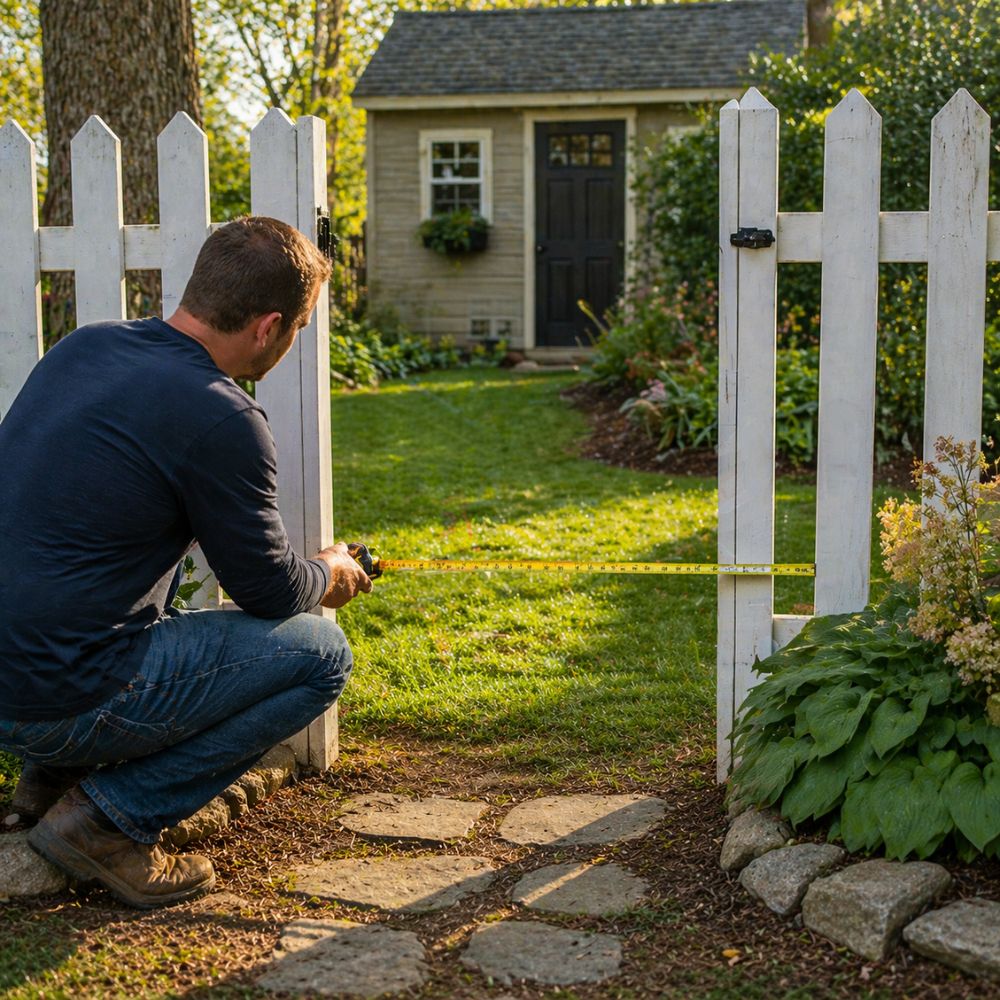
Gates create hard limits. Measure your narrowest gate opening and subtract at least two inches for clearance. A 48-inch gate can handle up to a 46-inch deck comfortably. Trying to squeeze a 48-inch deck through means scraping paint and potentially damaging both the gate and the mower.
Established landscaping with tight spacing makes smaller decks more practical. If you’re constantly backing up and repositioning to get around closely spaced trees or garden beds, a wider deck adds time instead of saving it.
Properties with multiple separate mowing areas connected by narrow passages need deck sizes based on the narrowest passage, not total acreage. A three-acre property might need a 42-inch deck instead of 54 inches if you navigate a 48-inch path to access the back section. For heavily overgrown areas that standard mowers can’t handle, field and brush mowers offer different deck configurations for rougher terrain.
Professional landscapers often run smaller decks than acreage alone would suggest because residential properties pack in more obstacles than commercial or municipal sites. The maneuverability advantage beats the coverage loss when you’re navigating around decade-old plantings and permanent structures.
Property Shape Matters
Rectangular properties with few obstacles suit wider decks. You make long, efficient passes that fully use the cutting width without constant maneuvering.
Irregular shapes benefit from smaller, more agile decks. Properties with multiple distinct sections, narrow side yards, or odd-shaped areas around buildings need equipment that turns tight and fits through varied spaces.
Properties with heavy perimeter obstacles but open centers might justify a wider deck regardless of acreage. You’ll mow the center efficiently and accept the extra trimming around edges, which you’d do anyway regardless of deck size.
Long, narrow properties often work better with narrower decks even if total acreage suggests going wider. A one-acre property that’s 100 feet wide can use a larger deck more effectively than a one-acre property that’s 50 feet wide, even though the total area is identical.
Brand-Specific Deck Options at Seacoast Power Equipment
The brands we carry offer different deck size ranges depending on mower category and intended use.
Honda Walk-Behind Mowers
Honda focuses on 21-inch walk-behind mowers across both residential and commercial lines. The HRX series serves residential users with features like NeXite deck material and variable cutting height from 3/4 inch to 4 inches. Commercial models like the HRC216HDA use the same 21-inch width but upgrade to a 16-gauge steel deck and hydrostatic self-propel for professional durability.
The consistent 21-inch sizing makes Honda straightforward for properties up to half an acre where walk-behind mowing makes sense. The choice becomes residential versus commercial features rather than deck size selection.
Toro Mowers and Zero-Turns
Toro offers the broadest deck size range across multiple mower categories.
Residential TimeCutter zero-turns start at 32 inches for compact applications and extend to 60 inches for larger homeowner properties. The 42-inch TimeCutter models hit the sweet spot for one to two-acre residential properties with their fabricated 10-gauge decks.
The Commercial Z Master series runs from 48 inches up to 72 inches for large-scale professional use. The TURBO FORCE deck construction in 7-gauge steel handles heavy commercial workloads. The Z Master 2000 series at 48 inches serves smaller commercial accounts, while the 6000 series in 60-inch and 72-inch configurations tackles large properties and municipal contracts.
Toro’s range means you find a properly sized deck whether you’re mowing three-quarters of an acre or managing a 10-acre commercial property.
Ferris Commercial Zero-Turns
Ferris builds commercial zero-turns with an emphasis on ride comfort through suspension systems. Deck sizes range from 36 inches in the compact F60Z up to 72 inches in the IS 6200Z.
The IS 600Z series offers 48-inch and 52-inch decks with 10-gauge fabricated construction and the iCD cutting system. These sizes work well for commercial operators handling two to four-acre residential accounts where the suspension helps maintain cut quality on varied terrain.
Larger IS models scale up to 60-inch and 72-inch decks for bigger commercial applications. The ISX 3300 at 72 inches combines the large deck with the iCD+ cutting system and up to 12 mph mowing speed for maximum productivity on large, open properties.
Ferris deck sizes align with commercial applications where cut quality and operator comfort justify the equipment investment. The suspension systems make these mowers effective on properties with uneven terrain where larger decks might otherwise struggle. Once you’ve selected your deck size, proper zero-turn maintenance keeps the equipment performing at its best. Our service department handles all brands when that maintenance comes due.
Measuring Your Property Accurately
Rough estimates lead to wrong deck size decisions. Getting measurements right means accounting for actual mowing area, not just total lot size.
Start with total lot dimensions. For rectangular properties, multiply length times width and divide by 43,560 to get acres. Most properties aren’t perfect rectangles, so break irregular shapes into sections and add them together.
Subtract non-mowing areas from the total. Driveways, patios, buildings, large garden beds, and other permanent features reduce actual mowing area. A one-acre lot might only have 0.7 acres of grass once you account for the house, driveway, and landscaping.
Measure gate openings and passage widths. Check every access point your mower needs to pass through: side yard gates, paths between buildings, and entrances to fenced areas. The narrowest opening sets your maximum deck width regardless of property size.
Note obstacle density and spacing. Count significant obstacles (trees, garden beds, and play structures) and estimate the average space between them. High obstacle density pushes toward smaller decks even if total acreage suggests going larger.
Document slope locations. Walk the property and identify any areas where the slope makes you lean while walking. These sections will challenge mower stability and cut quality, with wider decks feeling it most.
Map the property layout on paper or use one of the free satellite measurement tools online. Seeing the property from above helps identify access issues and mowing patterns that aren’t obvious from ground level.
Common Deck Size Mistakes
Property owners make the same sizing errors, usually from overemphasizing efficiency or underestimating terrain challenges. When evaluating lawn equipment, these mistakes show up repeatedly.
Buying too large based on acreage alone tops the list. A three-acre property might mathematically suit a 60-inch deck, but if half that acreage includes slopes, mature landscaping, or irregular sections, a 48-inch deck will actually mow faster and produce better results.
Ignoring access limitations comes next. Finding out your new 54-inch zero-turn won’t fit through 48-inch gates after purchase means either removing gates, returning equipment, or permanently hand-trimming areas the mower can’t reach.
Underestimating obstacle impact wastes time. That wide-open look from the property line disappears once you’re navigating between three oak trees, two garden beds, and a play structure. The extra trimming and maneuvering eliminates any efficiency gain from the larger deck.
Overlooking terrain challenges creates safety and quality issues. Slopes that seem manageable on foot become genuine hazards on a riding mower with a 60-inch deck. The wider stance and longer deck span magnify stability problems and make it difficult to maintain even ground contact.
Matching a neighbor’s equipment ignores property differences. Your neighbor’s 52-inch zero-turn might work great on their flat, rectangular two acres, but your two acres with hills and extensive landscaping need a different solution.
Prioritizing speed over maneuverability suits commercial operators mowing the same properties repeatedly, not homeowners maintaining diverse terrain. Learning tight patterns with a wide deck takes practice that commercial operators have and most homeowners don’t.
Testing on Your Property Before Buying
The best way to confirm the right deck size is testing equipment on your actual property. Seacoast Power Equipment’s try-before-you-buy program lets you verify deck size suitability before you commit, and it’s something big box stores simply can’t offer.
Walk the property with a tape measure before testing. Measure your narrowest gates, spaces between obstacles, and any areas where maneuverability might be tight. Knowing these dimensions helps you focus on the right test scenarios.
Test multiple scenarios during your trial. Mow open areas to check coverage efficiency, navigate around obstacles to verify maneuverability, and try slopes to assess stability and cut quality. Don’t just mow the easy sections.
Pay attention to how often you’re backing up, repositioning, or making multiple passes in tight areas. If you’re constantly adjusting position to avoid obstacles, a smaller deck will likely save time despite the narrower cut.
Check ground contact across the full deck width on uneven terrain. Look for scalping (visible soil from cutting too low) or uncut strips (visible tall grass where the deck lifted). Consistent ground contact indicates proper sizing for your terrain.
Note operator comfort and control on slopes and around obstacles. A deck that feels unstable or difficult to control safely is too large regardless of what acreage calculations suggest.
Compare actual mowing time with different deck sizes if possible. Sometimes the seemingly less efficient smaller deck actually mows faster on obstacle-heavy properties because it wastes less time maneuvering.
When to Size Up or Down From Standard Recommendations
Certain situations justify deviating from standard acreage recommendations.
Size up when you have truly open terrain with minimal obstacles across most of the property. Large, flat acreage with established turf and few obstacles can handle wider decks than mixed-use properties of the same size.
Size up for commercial applications where productivity per hour drives profitability. Commercial operators often use the widest deck they can maneuver safely because income depends on mowing more properties per day.
Size down for heavily landscaped properties even if acreage suggests larger decks. Extensive gardens, multiple play areas, or complex hardscaping means more time maneuvering than mowing, making narrow decks more efficient.
Size down for sloped terrain regardless of total acreage. Safety and cut quality concerns override efficiency calculations on properties with significant hills.
Size down when storage space is limited. Larger mowers with wider decks take more garage or shed space, and that practical limitation might matter more than perfect efficiency.
Size down if you’re learning to mow or new to riding equipment. Smaller decks forgive mistakes better and create less risk of property damage while you build experience.
Getting Expert Guidance
Deck size selection involves enough variables that local dealer guidance helps, especially for properties with unusual characteristics or mixed terrain types. Our factory-trained sales staff can assess your specific property features and recommend appropriate deck sizes across different brands and price points. The conversation should cover total acreage, terrain characteristics, obstacle density, and access limitations before suggesting specific models.
If you need service on what you already own, our service department handles all makes and models, not just the brands we sell. And if you’re sourcing parts for an older machine, our parts department carries OEM and aftermarket inventory for most major manufacturers with 2- to 3-day sourcing for anything we don’t have on hand.
Frequently Asked Questions
What deck size do I need for a 1-acre lawn?
For one acre of relatively flat, open lawn, a 42 to 48-inch deck on a lawn tractor or zero-turn mower is the right range. If your acre has significant obstacles, mature trees, or tight passages, lean toward 42 inches. If it’s mostly open ground, 48 inches will cut your mowing time without sacrificing maneuverability.
Can a deck be too wide for my property?
Yes. A deck that’s too wide creates more problems than it solves: you can’t fit through gates, you scalp uneven ground, and you spend more time backing up and repositioning around obstacles than you save with extra cutting width. Acreage alone doesn’t determine the right deck size.
What is the best deck size for a zero-turn mower for residential use?
Most residential zero-turn buyers land on 48 to 54 inches. That range covers one to three acres efficiently while still handling the gates, garden beds, and trees that come with typical seacoast properties. The right size within that range depends on your specific terrain and obstacle count.
Does deck size affect cut quality on hills?
Wider decks struggle more on slopes because keeping consistent ground contact across the full cutting width becomes harder as the terrain changes. A 60-inch deck might leave uncut strips or scalp uneven spots on the same hill where a 48-inch deck cuts cleanly. For hilly properties, size down from what acreage alone suggests.
How do I measure my lawn for the right mower deck size?
Multiply your lot’s length by its width in feet, then divide by 43,560 to get acreage. Subtract non-mowing areas (buildings, driveways, hardscaping, large gardens), then measure your narrowest gate opening. That gate measurement sets your maximum deck width. Terrain and obstacle density determine where within the appropriate range you should land.
Can I test a mower on my property before buying?
Yes. Seacoast Power Equipment offers a try-before-you-buy program that lets you test equipment on your actual property before committing. Contact us to schedule a demonstration.
The Bottom Line on Deck Size Selection
The right deck size balances coverage efficiency with terrain maneuverability for your specific property. Acreage provides a starting point, but terrain characteristics, obstacle density, access limitations, and property layout determine optimal size.
Most property owners benefit from sizing conservatively. A slightly smaller deck that handles all property features comfortably beats a larger deck that creates access problems or safety concerns. The time lost to a few extra passes rarely matches the time wasted backing up, repositioning, or doing extensive trimming around areas the oversized deck can’t navigate.
Quality dealers offer testing opportunities because deck size decisions can’t be made reliably from specifications alone. Testing equipment on your actual terrain, with your obstacles and access points, reveals practical considerations that matter more than mathematical calculations.
The deck size that seems too small in the showroom often turns out to be the right call on real properties with mature landscaping, varied terrain, and the access limitations that come with residential settings. Trust the testing process over the acreage charts.
Ready to find the right deck size for your property? Visit Seacoast Power Equipment in North Hampton, NH, to test Honda, Toro, and Ferris mowers on your actual property. Our factory-trained staff will help you match deck size to your specific terrain, obstacles, and access requirements. Contact us or stop by to schedule your try-before-you-buy demonstration.