
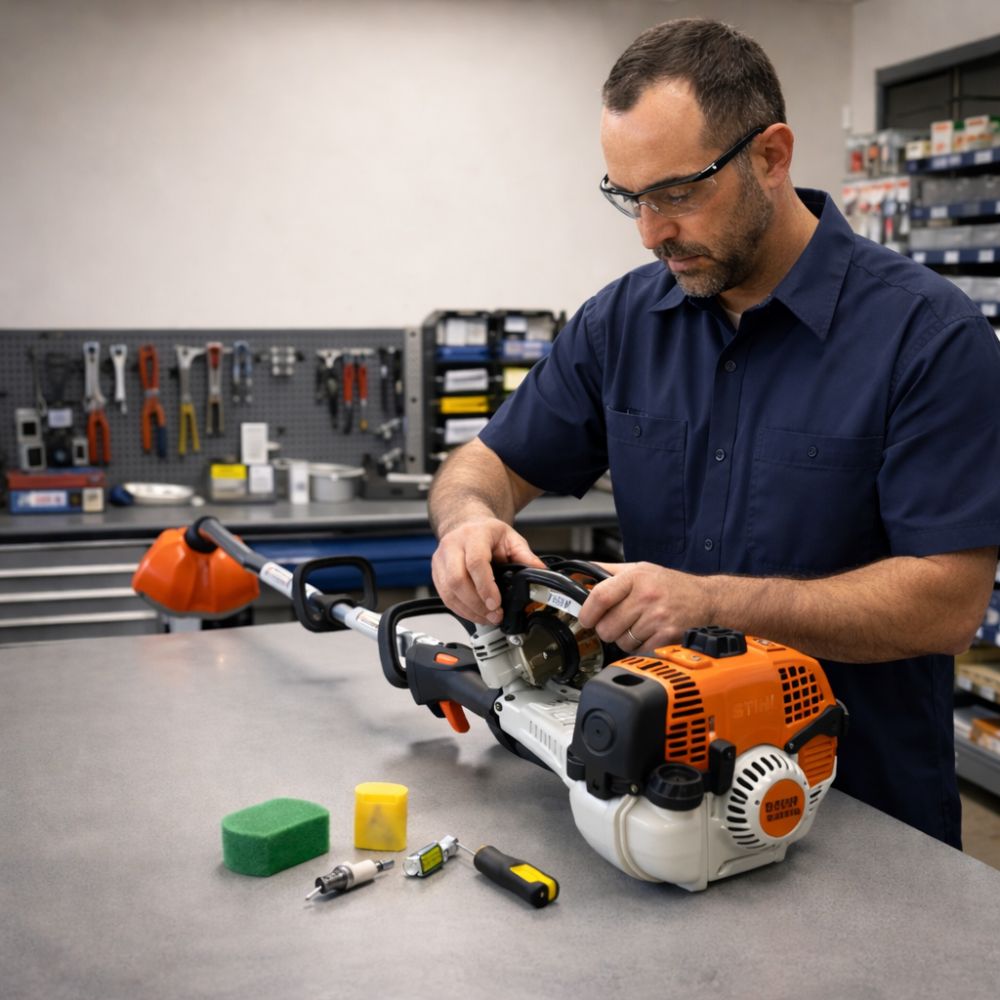
String trimmers sit idle through New Hampshire winters, and that dormancy creates problems. Old fuel gums up carburetors, spark plugs foul, air filters clog with debris, and drive shaft bearings dry out. When March arrives and professional landscapers need equipment running immediately, stored trimmers often refuse to start.
Factory-trained technicians at Seacoast Power Equipment service all major handheld equipment brands, including Stihl, Echo, Husqvarna, and RedMax. This maintenance checklist covers every critical service point to get string trimmers running reliably for the entire season. Whether you maintain equipment yourself or schedule professional service, understanding these procedures helps you make informed decisions about repairs versus replacements.
Professional landscapers throughout Portsmouth, Dover, North Hampton, and the greater seacoast region rely on properly maintained handheld equipment. Homeowners maintaining larger properties need the same reliability. This guide provides the technical knowledge to prepare string trimmers for spring work.
Complete String Trimmer Maintenance Checklist for New Hampshire Spring
Fuel System Service: The Most Critical Spring Maintenance
Old Fuel Removal
Gasoline degrades over winter storage. Ethanol-blended fuel absorbs moisture from humid New Hampshire air, causing phase separation where water settles at the tank bottom. This water reaches the carburetor and prevents proper fuel delivery. Ethanol also creates varnish deposits that coat carburetor jets and passages.
Remove all fuel from the tank and inspect it. Cloudy or separated fuel indicates contamination. Fuel lines deteriorate from ethanol exposure, developing cracks that leak or allow air into the fuel system. Replace cracked fuel lines before adding fresh gasoline.
Winter fuel storage causes more string trimmer problems than any other factor. Equipment stored with fuel experiences carburetor varnish buildup that blocks tiny jets and passages. This varnish prevents fuel flow even when fresh gas is added to the tank. Understanding proper winter equipment storage techniques prevents these common spring starting problems.
Fresh Fuel Mixture Requirements
Two-stroke engines require proper oil-to-gasoline ratios. Most modern string trimmers use 50:1 ratios, meaning 50 parts gasoline to 1 part two-stroke oil. This translates to 2.6 ounces of oil per gallon of gasoline. Some older models require 40:1 mixing (3.2 ounces per gallon).
Check your owner’s manual for the correct ratio. Using too little oil causes excessive engine wear and potential seizure. Too much oil creates carbon buildup, fouled spark plugs, and reduced power output.
Pre-mixed fuel products like Stihl MotoMix and TruFuel eliminate mixing concerns. These ethanol-free fuels stay fresh for years and contain proper oil ratios. Professional landscapers appreciate the convenience during busy seasons, though DIY mixing costs less for high-volume users.
Ethanol-free gasoline sources exist throughout the seacoast region. Many marine fuel stations sell ethanol-free gas suitable for small engines. This fuel prevents the phase separation and varnish problems associated with ethanol blends.
Fuel Filter Inspection
The fuel filter sits inside the tank at the end of the fuel line. This small felt or nylon component catches debris before it reaches the carburetor. Filters deteriorate over time, developing cracks or becoming clogged with sediment.
Access the fuel filter by removing the fuel cap and pulling the fuel line from the tank. Inspect for debris accumulation or physical damage. Manufacturers recommend replacing filters based on operating hours and seasonal use patterns. Consult your owner’s manual for specific maintenance intervals.
Carburetor Service and Adjustment
Carburetors meter precise fuel-to-air ratios for efficient combustion. Varnish buildup from old fuel blocks these passages, preventing proper fuel delivery. Minor buildup responds to carburetor cleaner sprayed through ports and passages. Severe varnishing requires carburetor removal and complete rebuilding.
Professional carburetor service includes ultrasonic cleaning, diaphragm replacement, needle valve inspection, and gasket renewal. Factory-trained technicians understand brand-specific carburetor designs. Stihl, Echo, and Husqvarna use different carburetor configurations requiring specialized knowledge.
Idle adjustment controls engine speed when the throttle trigger releases. A small screw on the carburetor body adjusts idle speed. Turn clockwise to increase idle speed and counterclockwise to decrease it. Proper idle allows the engine to run smoothly without dying, but not so fast that the cutting head engages.
High-speed mixture adjustment affects maximum engine RPM and power output. EPA regulations limit access to this adjustment on newer models. Professional service ensures proper adjustment without violating emissions standards or voiding warranties.
Signs requiring carburetor replacement include cracked bodies, stripped adjustment screws, severely worn throttle shafts, and damaged mounting surfaces. Replacement often costs less than rebuilding severely damaged carburetors.
Air Filter Maintenance
Air filters protect engines from dust and debris that cause premature wear. Spring maintenance requires inspecting, cleaning, or replacing filters depending on condition and type.
Foam air filters need cleaning with soap and water, then re-oiling with filter oil. Squeeze the filter gently to remove dirt, wash with mild detergent, rinse thoroughly, and allow complete drying. Apply a light coat of foam filter oil before reinstallation. Squeeze excess oil from the filter to prevent over-oiling that restricts airflow.
Felt air filters resist multiple cleanings. Replace felt filters when they become discolored, compressed, or torn. Attempting to clean felt filters often damages them.
Clean filters matter for engine protection and performance. Restricted airflow causes rich fuel mixture, increased fuel consumption, carbon buildup, and reduced power. Professional landscapers clean filters monthly during heavy use periods. Homeowners should inspect filters at least quarterly during the growing season.
Spark Plug Service
Spark plugs fail over winter from moisture exposure and carbon fouling. Spring maintenance requires spark plug inspection and typically replacement.
Remove the spark plug using a proper spark plug socket. Inspect the electrode condition. Normal plugs show light tan or gray electrode color. Black carbon deposits indicate a rich fuel mixture or excessive oil. White electrodes suggest a lean fuel mixture causing excessive heat. Oil-fouled plugs appear wet and black.
Check the spark plug gap using a feeler gauge. Specifications vary by model and manufacturer. Incorrect gaps cause hard starting, misfiring, and reduced power. Always reference your owner’s manual for proper gap specifications.
Replace spark plugs according to manufacturer recommendations, which vary based on equipment type and usage patterns. Commercial-grade plugs feature precious metal electrodes lasting longer than standard copper plugs. The modest cost difference matters for professional equipment running hundreds of hours annually.
Seacoast Power Equipment stocks OEM spark plugs for all major brands at the parts counter. Using correct plugs ensures proper fit, heat range, and electrode reach. Incorrect plugs damage engines regardless of whether they physically fit.
Trimmer Line and Cutting Head Service
Trimmer Line Selection and Replacement
Line Diameter Selection
Trimmer line diameter directly affects cutting performance. Choosing the correct size matches equipment power to cutting demands:
- 0.080-inch line: Light residential trimming around flower beds, sidewalks, and decorative landscaping
- 0.095-inch line: General purpose property maintenance for typical lawn edging and weed control
- 0.105-inch line: Heavy commercial use cutting thick vegetation, brush, and overgrown areas
Commercial landscapers stock multiple line sizes for different properties. Residential users typically need only one diameter for their specific property type. Using a line that’s too thin causes excessive breaking and frequent reloading. Oversized line strains engine power and reduces cutting speed.
Line shape affects cutting performance and durability. Round line works for general trimming. Square and twisted line cuts more aggressively through thick vegetation. A serrated line stays sharp longer during heavy use. The professional-grade line contains additives that increase flexibility and wear resistance.
Proper Line Loading Technique
Bump feed heads advance the line when tapped against the ground. Loading these heads requires proper winding direction and line length:
- Remove the head cover according to manufacturer instructions
- Note the winding direction arrow molded into the head
- Insert line ends into the anchor holes
- Wind line in the indicated direction, maintaining tension
- Leave 6 inches of line extending from each side
- Secure the cover and test bump feed operation
Incorrect winding direction prevents proper line feeding. Too much line creates head imbalance, causing excessive vibration. An insufficient line requires frequent reloading, interrupting work.
Fixed head systems use pre-cut line lengths inserted through the head. These systems eliminate winding but cost more per line change. Professional landscapers choose systems based on property types and cutting frequency.
Cutting Head Inspection and Maintenance
Bump feed heads contain springs, buttons, and line advance mechanisms requiring periodic inspection. Springs weaken over time, reducing line feeding reliability. Buttons wear from ground contact, eventually failing to advance the line. Replace worn components before they fail mid-season.
Fixed-head systems using metal blades need sharpness inspection. File or replace dull blades before spring work begins. Sharp blades cut cleanly, while dull blades tear vegetation, causing browning.
Inspect head threads for cross-threading and damage. Debris accumulation in threads prevents secure attachment. Clean threads with a wire brush and apply an anti-seize compound to prevent corrosion.
Upgrading head styles improves productivity for specific applications. Universal heads accept various line sizes. Commercial-grade heads feature metal-lined eyelets preventing wear. Speed feed heads allow line loading without disassembly.
Drive Shaft and Housing Maintenance
Lower unit bearings require periodic lubrication, preventing premature wear. Access the lubrication point by removing the cutting head and gearbox cover. Apply recommended grease using a grease gun or manual packing.
Inspect the drive shaft tube for impact damage, cracks, and bends. Damaged tubes cause vibration and potential drive shaft failure. Straight shaft models experience more stress than curved shaft designs due to higher power levels.
Split boom models feature detachable shafts accepting different attachments. The connection point requires inspection for wear, proper alignment, and secure locking. Loose connections cause excessive vibration and poor attachment performance.
When Your String Trimmer Won’t Start: Diagnostic Guide
Starting Procedure Review
Many starting problems result from improper technique rather than mechanical failure. Cold engines require different starting procedures than warm engines. Understanding these differences prevents flooding and unnecessary service.
Cold Start Procedure:
- Move choke lever to full choke position
- Press primer bulb until fuel appears (typically 5-6 presses)
- Set throttle to starting position
- Pull starter cord with smooth, full pulls
- When engine fires briefly, move choke to half position
- Continue pulling until engine starts
- Move choke to run position after engine warms
Warm Start Procedure:
- Leave choke in run position
- Press primer bulb 2-3 times
- Set throttle to starting position
- Pull starter cord until engine starts
The priming procedure varies by model. Over-priming floods the engine, preventing starting. Under-priming requires excessive pulling before sufficient fuel reaches the carburetor.
Throttle position during starting affects air velocity through the carburetor. Most models require partial throttle for starting. Full throttle provides too much air, creating a lean mixture that won’t ignite.
Pull cord technique matters more than most users realize. Short, jerky pulls don’t spin the engine fast enough for starting. Smooth pulls extending the full cord length generate sufficient engine speed for ignition. These same cold-weather starting principles apply to all small engine equipment during New Hampshire’s cool spring mornings.
Flooding Recovery Procedure
Featured Snippet: What causes string trimmers to not start after winter storage? String trimmers fail to start after winter primarily due to old fuel causing carburetor varnish buildup. Ethanol fuel absorbs moisture and creates deposits blocking fuel passages. Additionally, spark plugs foul from condensation, air filters accumulate debris, and fuel lines deteriorate. Professional spring maintenance addresses these issues, ensuring reliable starting and season-long performance.
Flooded engines smell strongly of gasoline. Remove the spark plug and pull the cord several times to clear excess fuel. Allow the engine to sit 10-15 minutes, letting fuel evaporate. Install a dry spark plug and attempt starting with the choke in the run position.
Persistent flooding indicates improper carburetor adjustment or a damaged needle valve. Professional diagnosis prevents repeated flooding episodes and potential engine damage from washing cylinder walls.
Methodical Troubleshooting Steps
Fuel Delivery Check
Remove the spark plug and ground it against the engine. Pull the starter cord while observing the spark plug hole. Fuel spray indicates proper delivery. Absence of fuel spray points to carburetor blockage, a failed fuel line, or a clogged fuel filter.
Spark Test
Ground the spark plug against the engine cylinder. Pull the starter cord and observe for a blue spark jumping the electrode gap. A strong blue spark confirms the ignition system function. A weak or absent spark indicates a failed ignition module, a damaged spark plug wire, or a faulty stop switch.
An orange or yellow spark appears weaker than a blue spark, often failing under compression. Replace ignition components producing anything except a strong blue spark.
Compression Test
Basic compression checking requires only pulling the starter cord. Healthy engines show strong resistance, requiring firm pulling. Weak resistance indicates low compression from worn piston rings, cylinder scoring, or valve problems in four-stroke models.
Professional compression testing uses gauges measuring exact pressure. Manufacturer specifications vary by model. Consult your owner’s manual or authorized service center for specific compression values considered normal for your equipment.
Exhaust Port Inspection
Remove the muffler and inspect the exhaust port. Thick carbon buildup restricts exhaust flow, reducing power and preventing starting. This carbon results from incorrect fuel mixture, poor-quality oil, or excessive idling.
Professional service includes carbon removal using specialized tools. Severe buildup requires port cleaning and muffler replacement. Regular maintenance prevents excessive carbon accumulation, which is particularly important when preparing equipment for peak season performance.
When Professional Service Becomes Necessary
Certain symptoms require factory-trained diagnosis and repair:
No Spark After Plug Replacement: Failed ignition modules, damaged spark plug wires, or faulty stop switches require proper testing equipment. Seacoast Power Equipment service technicians diagnose electrical problems using manufacturer-specific procedures.
Fuel Delivery Issues Despite Clean Carburetor: Internal carburetor passages remain blocked after cleaning, cracked pulse lines prevent proper fuel pumping, or internal check valves fail. Professional carburetor rebuilding or replacement solves these problems.
Low Compression: Worn piston rings, scored cylinders, and damaged crankshaft seals require complete engine disassembly. Technicians determine whether repair costs justify investment versus new equipment purchase.
Excessive Vibration or Unusual Noises: Loose engine mounts, damaged drive shafts, worn bearings, and failing clutches create vibration and noise. Continued operation with these symptoms causes additional damage. Immediate professional inspection prevents catastrophic failure.
Won’t Idle or Dies Under Load: Air leaks in crankcase seals, failed fuel pump diaphragms, and improper carburetor adjustment cause these symptoms. Proper diagnosis requires understanding two-stroke engine operation and manufacturer specifications. These issues appear on the list of common equipment problems requiring professional attention during spring startup.
Why Factory-Trained Technicians Matter
Seacoast Power Equipment technicians receive ongoing training from Stihl, Echo, Husqvarna, and RedMax. This training covers brand-specific designs, common failure points, and proper repair procedures. Generic repair shops lack this specialized knowledge.
Diagnostic equipment varies by manufacturer. Stihl diagnostic tools differ from Echo equipment. Proper testing requires correct tools and training in their interpretation.
OEM parts availability ensures repairs use components meeting original specifications. Aftermarket parts vary in quality. Critical components like ignition modules, carburetors, and fuel pumps should use OEM parts for reliability. Understanding the differences between OEM and aftermarket parts helps you make informed service decisions.
Warranty service requires authorized dealer status. Repairs performed by non-authorized shops void manufacturer warranties. For equipment still under warranty, authorized service protects your investment.
Repair Versus Replacement Decision Factors
Equipment Age and Usage Hours
Commercial string trimmers typically last several hundred operating hours before major repairs become necessary. Residential equipment lifespan depends on maintenance quality and usage conditions. Calculate approximate hours based on years of ownership and seasonal use frequency.
Equipment exceeding typical lifespan often faces multiple repairs within short timeframes. Investing in repairs becomes questionable when replacement offers better long-term value. Consider evaluating lawn equipment condition to determine whether repair or replacement makes better economic sense.
Repair Cost Versus New Equipment Pricing
Compare repair estimates to new equipment costs. Repairs exceeding 50% of replacement cost generally favor purchasing new equipment. This calculation should include remaining expected lifespan after repair.
Major engine repairs like piston replacement, crankshaft rebuilding, or cylinder replacement typically exceed 60-70% of new equipment cost. These repairs make economic sense only for specialized or high-value models.
Parts Availability for Older Models
Manufacturers may discontinue parts for older models after several years. Finding components for discontinued equipment becomes difficult and expensive. Check parts availability before authorizing expensive repairs on older units.
Seacoast Power Equipment maintains an extensive parts inventory for current and recent models. Older equipment may require special ordering with extended lead times. Learning how to select the right replacement parts ensures compatibility and proper function.
Technology Improvements in Modern Models
Current string trimmers offer significant advantages over older designs:
- Reduced weight through advanced materials
- Lower vibration from improved engine mounting
- Easier starting with advanced ignition systems
- Better fuel efficiency from optimized carburetors
- Reduced emissions meeting current EPA standards
- Ergonomic improvements reducing operator fatigue
Professional landscapers benefit most from these improvements. Reduced operator fatigue increases productivity. Better fuel efficiency lowers operating costs. Improved starting reliability eliminates downtime.
Trade-In Value Evaluation
Seacoast Power Equipment evaluates trade-in equipment when purchasing new string trimmers. Trade-in credit reduces new equipment costs even for non-running units. Components, parts, and scrap value provide trade-in worth.
Trading non-functioning equipment eliminates disposal concerns. Many communities restrict small engine disposal, requiring proper recycling procedures.
Commercial Landscaping Equipment Service Solutions
Preventive Maintenance Programs for Handheld Equipment
Professional landscapers operate string trimmers hundreds of hours annually. Equipment failure during peak season costs money through lost productivity and customer dissatisfaction. Preventive maintenance programs eliminate most unexpected failures.
Pre-Season Service Packages
Complete handheld equipment inspection includes fuel system service, carburetor rebuilding, air filter replacement, spark plug replacement, drive shaft lubrication, bearing inspection, throttle cable inspection, cutting head service, trimmer line installation, safety inspection covering guards and straps, and a test run under load confirming proper operation.
Pre-season service prepares equipment for reliable operation during the busiest months. Scheduling service in early March prevents the late March and April rush when service departments experience peak demand. This timing strategy aligns with broader spring preparation for farm and commercial equipment used throughout New Hampshire.
Priority Service Scheduling
Commercial accounts receive priority scheduling for repairs during the season. When equipment fails, rapid turnaround keeps crews working. This fast service prevents the multi-week delays typical during peak season.
Priority service requires enrollment in commercial fleet programs. These programs recognize professional equipment needs differ from residential users. Landscaping businesses cannot wait weeks for repairs when customers expect service. Understanding typical repair timelines helps commercial operators plan for equipment availability.
Fleet Discount Pricing
Commercial fleet programs offer tiered discounts on parts and service based on annual purchase volume. Different discount levels recognize various business sizes and equipment needs.
These discounts apply to parts, service labor, and new equipment purchases. Larger landscaping operations with multiple crews realize significant savings through fleet programs.
Loaner Equipment Availability
Equipment failures happen despite preventive maintenance. Loaner equipment keeps commercial crews working while repairs are completed. Fleet program members access loaners for short-term use during repairs.
Loaner availability depends on current inventory and season. Spring represents peak demand when loaner equipment sometimes faces limited availability. Off-season repairs always have loaner equipment available.
Mobile Service Options
Large commercial operations with extensive equipment inventories benefit from mobile service. Factory-trained technicians visit customer locations for preventive maintenance, reducing transportation logistics.
Mobile service works better for fleet maintenance rather than diagnostic repairs. Complex repairs requiring specialized equipment and parts access need in-shop service. Learn more about mobile equipment repair options available throughout the seacoast region.
Parts Inventory for Professional Needs
Bulk Consumables Pricing
Professional landscapers consume significant quantities of trimmer line, air filters, spark plugs, and two-stroke oil. Bulk purchasing reduces costs and ensures supplies remain available during peak season.
Trimmer line bulk spools cost less per foot than retail packaging. The professional-grade line lasts longer than the economy line, reducing reloading frequency. Commercial landscapers calculate cost per cutting hour rather than cost per pound.
Filter and spark plug fleet packs provide quantities needed for multiple trimmers. Spring tune-ups for entire equipment fleets require numerous filters and plugs. Bulk pricing reduces per-unit costs.
Two-stroke oil by the case ensures a consistent supply throughout the season. Commercial-grade oil protects engines under severe operating conditions. Using quality oil prevents carbon buildup and extends engine life.
Comprehensive Parts Inventory
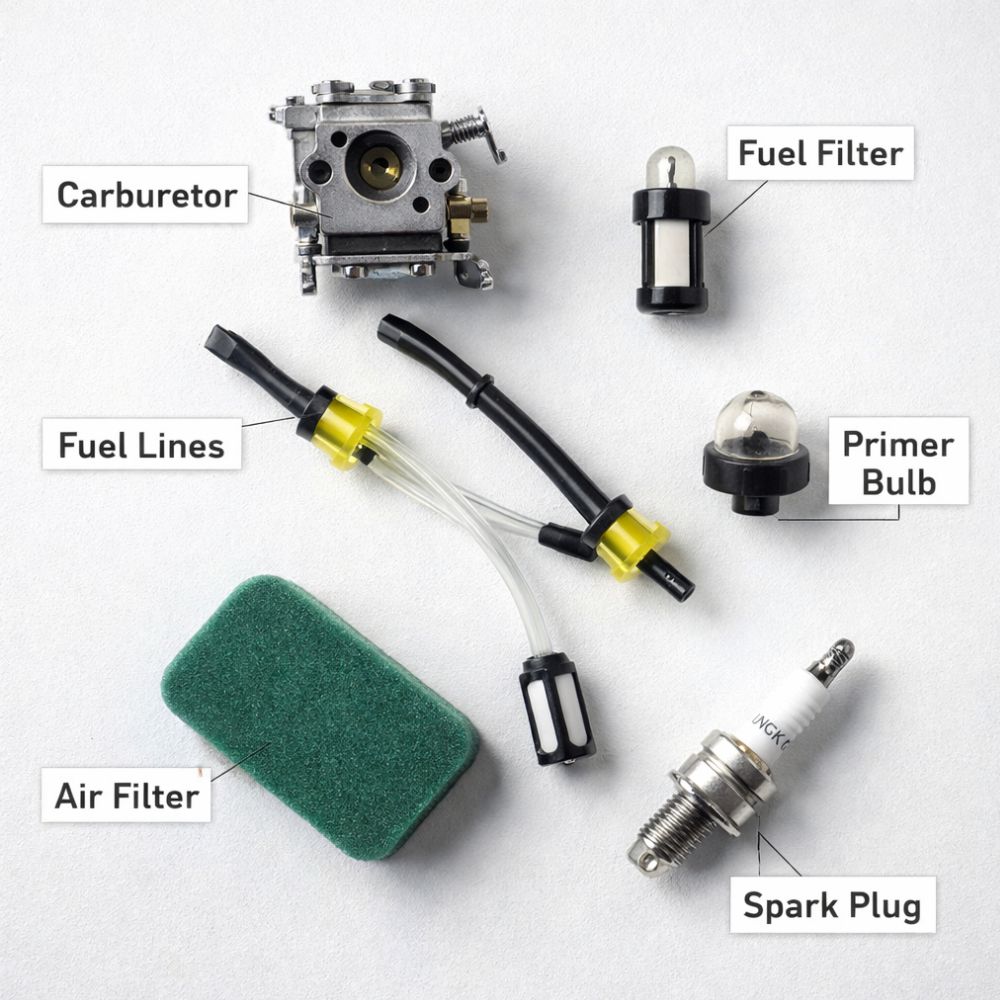
Seacoast Power Equipment maintains over $150,000 in parts inventory covering current and recent model equipment. Common wear parts like fuel lines, primer bulbs, and carburetor kits stay in stock for immediate availability.
Brand-specific parts require separate inventory for Stihl, Echo, Husqvarna, and RedMax equipment. Each manufacturer uses unique components requiring substantial inventory investment.
When parts aren’t in stock, sourcing provides most components quickly. Specialty items or discontinued parts may require longer lead times depending on manufacturer availability.
Seasonal Preparation Timing for Professionals
Early March Service Benefits
Smart commercial operators schedule spring service before the rush begins. Early March service ensures equipment readiness when customers call for quotes and spring cleanup begins.
Service departments operate below capacity in early March. This timing provides the fastest turnaround for complete service. Technicians spend more time on each unit when not rushed by peak season pressure.
March also allows time for parts ordering if unexpected repairs become necessary. Discovering major problems in early March leaves time for repair-versus-replace decisions without affecting business operations. Planning ahead with pre-season equipment orders helps commercial operators avoid the spring rush.
Peak Season Service Challenges
Late March through May represents peak service demand. Every landscaper and homeowner wants equipment serviced simultaneously. Service departments book out during this period. Emergency repairs receive priority over routine maintenance.
Waiting until April for spring service risks delays affecting business schedules. Missing the first profitable weeks of spring costs far more than early service scheduling.
Off-Season Storage and Service Programs
Fall equipment storage programs prepare string trimmers for winter. Proper storage procedures prevent the spring starting problems discussed earlier through complete fuel system drainage, carburetor preservation treatment, air filter cleaning and protection, spark plug maintenance, cutting head removal and cleaning, drive shaft lubrication, and storage in dry, temperature-controlled environments.
Combined fall storage and spring service packages provide year-round equipment care. Equipment enters winter properly preserved and receives spring service before delivery. This program eliminates off-season equipment concerns for busy landscapers and complements other fall equipment maintenance strategies for complete fleet protection.
Equipment returns from storage fully serviced and ready for immediate use. This convenience justifies storage program costs for operations lacking proper storage facilities.
FAQ: String Trimmer Maintenance and Service
Why won’t my string trimmer start after sitting all winter?
Winter storage causes multiple problems affecting starting. Old fuel creates carburetor varnish, blocking fuel passages. Spark plugs foul from moisture condensation. Fuel lines deteriorate from ethanol exposure. Air filters accumulate debris. Remove old fuel; install fresh, properly mixed gas; replace the spark plug; clean or replace the air filter; and check fuel line condition. If problems persist after these steps, carburetor rebuilding or replacement becomes necessary.
What’s the correct fuel mixture ratio for two-stroke string trimmers?
Most modern string trimmers require 50:1 fuel mixture ratios (50 parts gasoline to 1 part two-stroke oil). This equals 2.6 ounces of oil per gallon of gasoline. Some older models use 40:1 ratios, requiring 3.2 ounces per gallon. Always check your owner’s manual for manufacturer specifications. Using incorrect ratios causes engine damage. Too little oil creates excessive wear. Too much oil fouls spark plugs and creates carbon buildup.
How often should I replace the spark plug in my string trimmer?
Replace spark plugs according to manufacturer recommendations, which vary by model and usage level. Commercial equipment running extensive hours needs more frequent replacement than residential equipment. Spark plugs gradually wear, losing electrode material and developing excessive gaps. This wear causes hard starting, rough running, and reduced power. Quality commercial spark plugs with precious metal electrodes last longer than standard copper plugs but cost more initially.
What trimmer line diameter should I use for my property?
Line diameter selection depends on cutting requirements. Use a 0.080-inch line for light residential trimming around flower beds and decorative areas. Choose a 0.095-inch line for general property maintenance and typical lawn edging. Select a 0.105-inch line for heavy commercial use, cutting thick vegetation and brush. Using a line that’s too thin causes frequent breaking. An oversized line strains engine power, reducing efficiency.
Can I use automotive spark plugs in my string trimmer?
Never use automotive spark plugs in small engines. String trimmers require spark plugs with the correct heat range, reach, and thread pitch for two-stroke engines. Automotive plugs have different specifications, causing improper fit, incorrect heat dissipation, and potential engine damage. Always use manufacturer-specified spark plugs available at authorized dealers.
How do I know if my string trimmer needs professional service or replacement?
Consider equipment age, operating hours, repair cost versus replacement price, parts availability, and technology improvements in newer equipment. Generally, repairs exceeding 50% of replacement cost favor buying new equipment. Professional evaluation at Seacoast Power Equipment helps determine the most cost-effective decision. Trade-in credit for non-running equipment reduces new purchase costs.
What maintenance can I do myself versus what needs professional service?
Homeowners can handle trimmer line replacement, air filter cleaning or replacement, spark plug replacement, and basic cleaning. Professional service should address carburetor rebuilding, internal engine repairs, compression problems, ignition system diagnosis, and warranty work. Attempting complex repairs without proper training and tools often causes additional damage. Professional diagnosis prevents misguided repair attempts.
Why does my string trimmer run fine at idle but die under load?
This symptom indicates carburetor adjustment problems, air leaks in crankcase seals, a clogged fuel filter, or insufficient fuel pump pressure. The engine receives adequate fuel at low speeds but can’t maintain proper mixture under load. Professional diagnosis determines the specific cause. Air leaks require pressure testing equipment. Proper carburetor adjustment needs understanding of EPA restrictions on mixture screws.
Should I use pre-mixed fuel or mix my own for string trimmers?
Both options work correctly. Pre-mixed fuel like Stihl MotoMix offers convenience, a long shelf life, and an ethanol-free formulation, preventing varnish buildup. These advantages cost more per gallon. Mixing your own fuel costs less for high-volume users but requires accurate measuring and fresh fuel use within recommended timeframes. Professional landscapers often mix their own fuel due to volume requirements, while homeowners may prefer pre-mixed convenience.
How long does professional string trimmer service take?
Service turnaround depends on season and required work. Off-season service typically completes quickly. Peak season service (late March through May) may require longer timeframes due to volume. Commercial fleet program members receive priority scheduling for faster turnaround. Simple maintenance like spark plug and air filter replacement completes quickly when scheduled in advance.
Get Your String Trimmer Spring-Ready at Seacoast Power Equipment
Proper spring maintenance prevents mid-season failures when string trimmers matter most. Factory-trained technicians service all major brands, including Stihl, Echo, Husqvarna, and RedMax, using OEM parts and manufacturer-specified procedures. Whether you need complete carburetor rebuilding, simple tune-ups, or parts for DIY maintenance, comprehensive service options meet every need.
Professional landscapers benefit from commercial fleet programs offering priority scheduling, discount pricing, and loaner equipment availability. Spring preparation timing matters for business success. Early March service prevents April rush delays, keeping your crews productive when customers need service.
Homeowners maintaining their own properties receive the same expert service and parts quality. Test your string trimmer now before vegetation requires cutting. Starting problems discovered early leave time for proper repairs without affecting your maintenance schedule.
The parts counter stocks trimmer line, filters, spark plugs, two-stroke oil, and common repair components for immediate availability. Specialty parts arrive quickly for most models. Technicians provide guidance for DIY maintenance and honest assessments about repair-versus-replace decisions.
String trimmers represent essential tools for property maintenance throughout New Hampshire’s growing season. Don’t let winter storage problems prevent productive spring work. Professional service ensures reliable operation when you need it most.
Contact Seacoast Power Equipment in North Hampton, New Hampshire, for string trimmer service, parts, or new equipment consultation. Call the service department to schedule spring maintenance or visit the parts counter for maintenance supplies. Factory-trained expertise and comprehensive inventory ensure your handheld equipment runs reliably all season.