
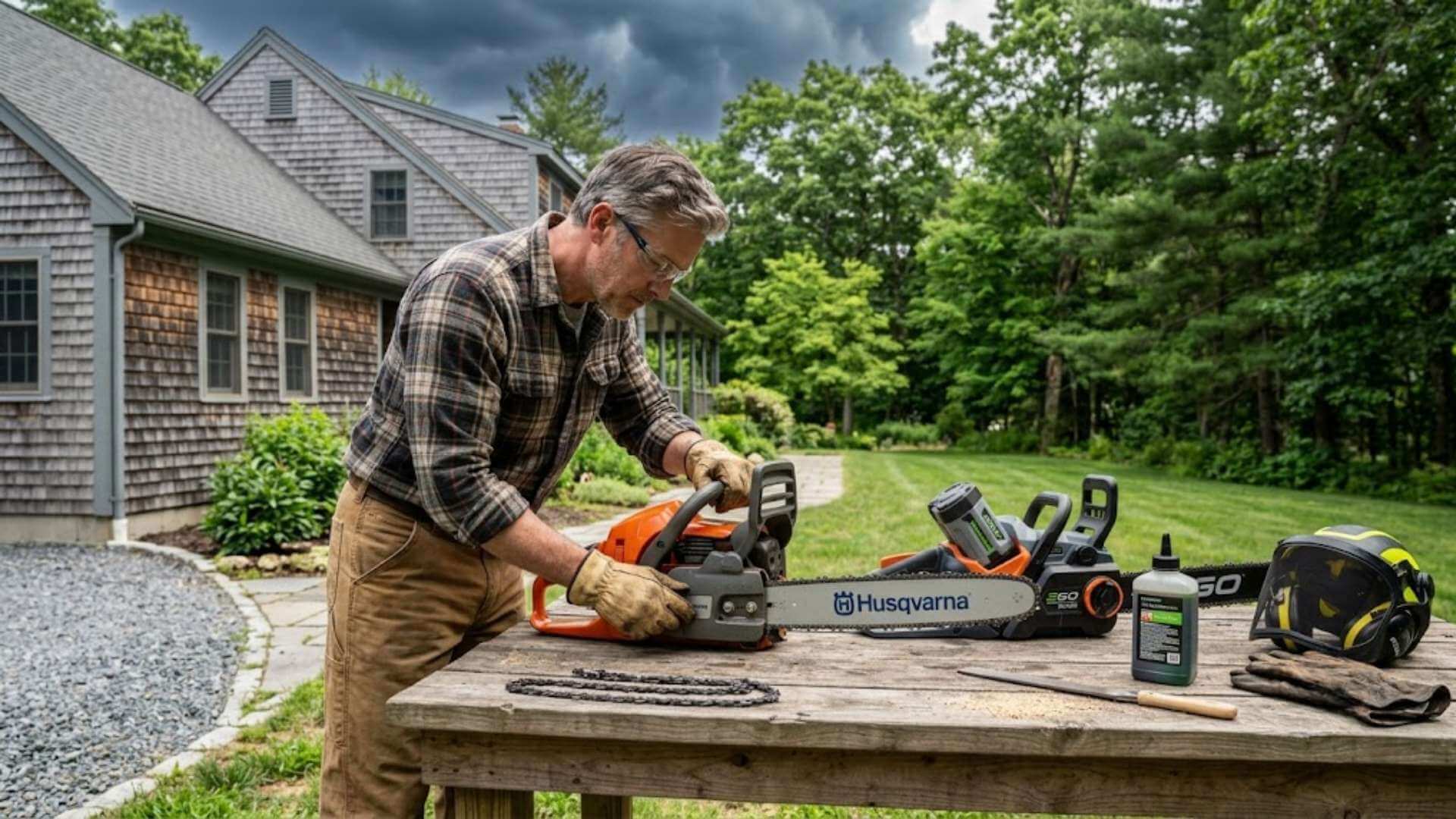
The Atlantic hurricane season runs from June 1 through November 30, with peak activity concentrated between mid-August and mid-October, according to NOAA’s historical data. The statistical peak of the season is September 10. For NH seacoast homeowners and commercial property crews, that window means right now: late July, early August is exactly when chainsaw readiness needs to be confirmed.
A saw that sat unused since last fall’s leaf cleanup is not ready for storm response. A chain that’s been dull since spring won’t cut efficiently under pressure. A carburetor that gummed up over winter may start once or twice before it quits on you mid-job. These are preventable failures, and every one of them gets fixed faster before the storm than after it.
This guide covers what to check, what to do, and when to bring the saw in for service — so that when a storm tracks up the New England coast this season, your equipment is ready before the first tree comes down.
Why NH Properties Face Real Storm Risk Every Season
New Hampshire’s seacoast location puts it in the path of Atlantic storm systems more than many inland New England properties. Tropical systems weakening to tropical storms or post-tropical cyclones regularly track northward up the Atlantic seaboard and make their presence felt across the NH seacoast with heavy rain, wind damage, and downed trees.
NOAA’s 2026 Atlantic hurricane season outlook, released May 21, predicts a below-normal season for the Atlantic basin this year, with a 55% chance of below-normal activity according to the official forecast. But as NOAA’s National Weather Service Director Ken Graham noted in the same release, “It only takes one storm to make for a very bad season.” The same forecast explicitly warns that below-normal activity at the basin level does not predict specific landfalls and that early preparation remains critical regardless of seasonal forecasts.
NH seacoast property owners with mature trees know the landscape well: coastal oaks, maples, and white pines define the terrain from North Hampton to Portsmouth. A single significant storm event can drop multiple trees and require sustained chainsaw work over days. The question is not whether storm cleanup will happen at some point this season. The question is whether your saw is ready when it does.
The Pre-Storm Chainsaw Readiness Checklist
Work through this before peak season. Do it now, in late July or early August, not the day before a named storm is forecast to track up the coast.
Chain condition. A properly sharp chain cuts wood, not your time and energy. If your saw has been sitting since last season, the chain needs inspection and likely sharpening or replacement. The tell is simple: run the saw through a cut. If it produces fine dust rather than chips, it is dull. If you have to apply downward pressure to drive it through the wood rather than guiding it, it is dull. Dull chains also increase kickback risk, make the engine work harder, and tire the operator faster: all problems that compound in a sustained storm cleanup scenario.
If the chain shows cracks, bent links, or damage to the cutters, replace it rather than sharpen. We carry OEM Stihl and Echo chains in stock and can cut a new chain to length while you wait.
Bar condition. Check the bar groove for debris and blockages, especially the oil inlet port, which feeds chain lubrication. A blocked port means the chain runs dry even with a full oil tank. Clean the groove, flip the bar if you haven’t done it recently to distribute wear evenly, and look at the rail edges. If the rails are visibly rounded or the groove has widened to the point where the chain side links have lateral play, the bar needs replacement before heavy use.
Bar oil. Full tank before any session. Verify the oiler is working by revving the saw over a light-colored surface, a piece of cardboard or a stump, and confirming a faint oil spray line. If you don’t see it, the port may be blocked or the oiler may need adjustment.
Fuel system. This is where most problems show up in saws that have been sitting. Gasoline with ethanol begins to degrade within 30 days. If there is old fuel in the tank from last fall or winter, drain it completely and run the engine until it stalls to clear the lines and carburetor. Then refuel with fresh mix: correct ratio for your saw, no more than 10% ethanol per manufacturer guidance, or use a premixed ethanol-free fuel for a saw you want to be reliable without fuss.
If the saw has been sitting with old fuel and you’re getting hard starting, surging, or a saw that dies at idle: the carburetor likely needs cleaning before you will have a reliable tool. This is a service department job, not a field repair.
Air filter. Remove and inspect. If it’s clogged with sawdust from last season’s cutting, clean or replace it. A restricted filter starves the engine, reduces power, and can cause overheating during the extended running that storm cleanup requires.
Spark plug. Quick inspection: pull it, look at the electrode. A normal tan or gray color means it’s fine. Heavy carbon fouling, erosion, or a cracked ceramic necessitates replacement. A fresh spark plug is a few dollars and eliminates one of the most common no-start causes.
Chain brake function. Engage the chain brake manually and confirm it locks the chain. Release it, confirm the chain moves freely. The chain brake is a critical safety feature; it stops chain rotation in a kickback event. In the demanding, often fatigued conditions of post-storm cleanup, functional safety systems matter more than they do in a controlled cutting session.
Safety gear inventory. A storm cleanup situation is not when you discover that your chainsaw chaps are worn through or your helmet visor is cracked. Check before the season: chaps, helmet with face shield, cut-resistant gloves, hearing protection, and chainsaw boots. Replace worn items now. We carry personal protective equipment at Seacoast Power Equipment; if you’re not sure what you need, our staff can walk you through proper protection for chainsaw work.
What Professional Arborist Crews Do Differently
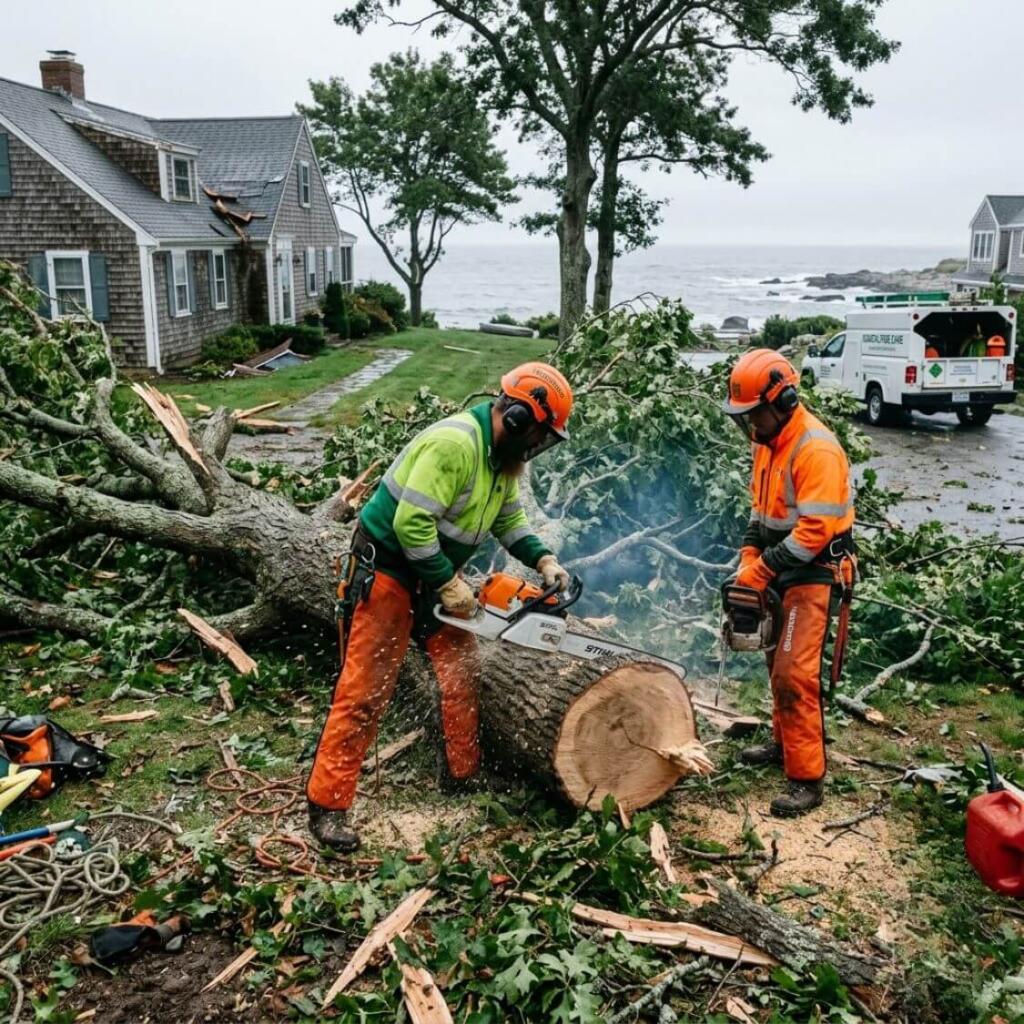
Commercial arborist crews and property management operations that service the NH seacoast don’t respond to storms. They prepare for them.
A professional crew heading into storm season ensures every saw in the fleet has a freshly sharpened chain or a spare chain staged and ready. Carburetor adjustments are made on any saw that showed running problems during the season. Bar oil supply is confirmed. Fuel is fresh or premixed. Saws are test-run before the storm hits, not on the way to the first job site.
The reason is simple: a crew that arrives on a job with a saw that won’t start reliably has a productivity problem and a safety problem. Post-storm conditions bring debris-covered ground, standing water, downed power lines in the vicinity, and fatigued operators. Every equipment failure is amplified. The standard for professional readiness is different from weekend homeowner use, and it should be.
For commercial landscaping operations and estate management crews in the NH seacoast region, Seacoast Power Equipment’s fleet service program accommodates priority service scheduling to ensure commercial equipment is ready before peak storm season. If you run multiple saws and need them all serviced on a timeline, call (603) 964-8384 to coordinate.
Fuel Storage for Storm Season: What to Keep on Hand
A common mistake before storm season: running out of chainsaw fuel during multi-day cleanup. This is a logistics problem, not an equipment problem, and it is entirely avoidable.
For homeowners, keeping a two- to four-gallon supply of fresh, properly mixed chainsaw fuel, or sealed containers of premixed fuel, is a reasonable pre-season preparation. Small-engine premixed fuels like Stihl Motomix are ethanol-free and sealed for long-term storage, which makes them well-suited for emergency supply. A container sealed before a storm will still be viable when you need it.
Fresh fuel is best used within 30 days. If you are mixing your own, mix what you need for the season and store in properly labeled, sealed fuel containers away from heat and ignition sources. Do not store mixed chainsaw fuel in automotive fuel containers; use containers specifically rated for small-engine fuel.
For professional crews running multiple saws, fuel management during extended storm cleanup means calculating consumption by saw, having dedicated cans per saw to avoid cross-contamination with wrong oil-ratio mixes, and replenishing before you run low rather than when you are already out.
Bar oil supply. Bar and chain oil consumption is significant during heavy cutting. Keep a gallon on hand before storm season. Running out mid-cleanup is a fast way to damage a chain and bar: running dry accelerates rail groove wear and chain wear simultaneously.
Spare Chain: The Single Most Useful Pre-Season Purchase
If there is one thing to buy before storm season, it is a spare chain.
Chains hit rocks, embedded metal from old fence posts, and construction debris that gets buried in soil around mature trees. A single strike on a buried rock can destroy a chain in seconds. On a professional crew, this is expected and planned for. For a homeowner, it often means the saw is down for the rest of the cleanup until a replacement is sourced.
A spare chain, OEM, correct pitch and gauge for your saw, costs a fraction of what a day of downtime costs. We stock OEM Stihl and Echo chains, and with $150,000+ in parts inventory, we typically have the right chain on the shelf. But after a major storm, chains move fast. The time to buy the spare is now.
If you are not sure what chain your saw takes, bring the saw in or call with the model number. We can identify the correct pitch and gauge and have the chain ready.
Service Timing: Pre-Storm vs. Post-Storm
The worst time to service a chainsaw is after a storm has hit and you need it running now. Service departments across the NH Seacoast fill up fast after major storm events, the same way snow blower service backs up after the first major snowfall of winter. Wait times that run 24 to 48 hours under normal conditions can stretch significantly when every neighbor in the region is bringing in equipment at the same time.
The right window is now: late July through mid-August, before the peak risk window and before that service crunch develops. If your saw has any of the following issues, bring it in before September:
Hard starting or won’t start consistently. Surging or dying at idle. Cutting that feels sluggish despite a sharp chain. Any fuel leak. Any chain brake that doesn’t engage cleanly. Any unusual sound under load.
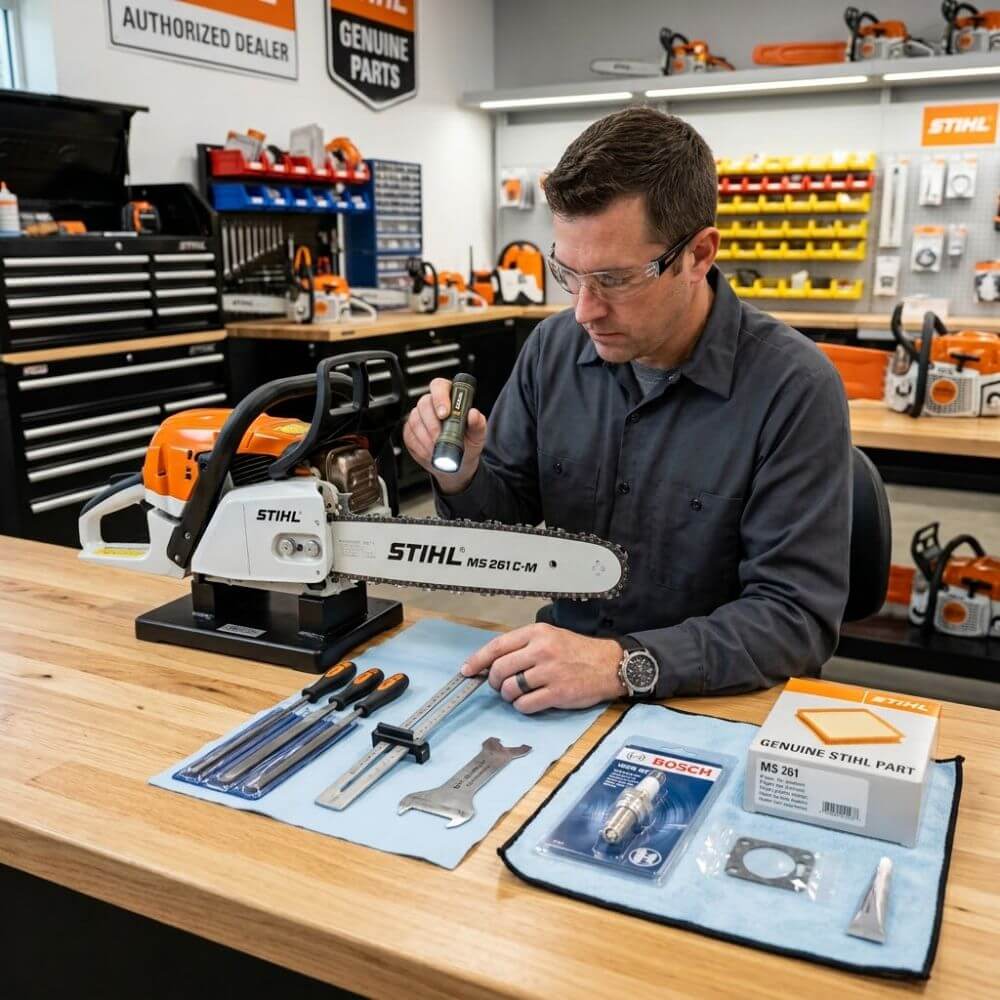
Our factory-trained technicians handle chainsaw service for all makes and models with a typical 24- to 48-hour turnaround. We carry OEM parts for Stihl and Echo, and our $150,000+ parts inventory means most repairs don’t require waiting on parts. Pickup and delivery are available throughout the NH seacoast and into southern Maine for customers who can’t bring the saw in themselves; call (603) 964-8384 or schedule a pickup.
Storm Prep Beyond the Chainsaw
A chainsaw is essential equipment for post-storm property cleanup, but it is one part of a larger storm readiness picture for NH seacoast properties.
Backup power is the other major preparation that matters before hurricane season peaks. A generator that hasn’t run since last winter may have the same fuel and carburetor issues as a neglected chainsaw. Our generator maintenance guide covers exactly this: pre-storm service, fuel system checks, and what a reliable backup power setup requires on the NH seacoast.
The two pieces of equipment that matter most in the immediate aftermath of a major storm are the chainsaw and the generator. Getting both serviced before peak season means you are not solving equipment problems while also managing property damage, power outages, and everything else a storm brings.
For a broader look at what a well-matched chainsaw setup looks like for your NH property before storm season creates urgency, our chainsaw buyer’s guide and our Stihl vs. Echo comparison cover the decisions worth making while there is still time to make them thoughtfully.
Frequently Asked Questions
When is the peak of Atlantic hurricane season for NH?
According to NOAA, the statistical peak of the Atlantic hurricane season is September 10, with most activity occurring between mid-August and mid-October. The official season runs June 1 through November 30. For NH Seacoast properties, late August through October represents the highest risk window.
How long before a storm should I service my chainsaw?
Service it now, mid-to-late July through August, before the peak risk window. Post-storm service demand fills quickly after a major event. A normal 24- to 48-hour turnaround can extend significantly when the region is responding to widespread storm damage simultaneously.
What should I keep on hand for storm cleanup?
A spare chain (correct pitch and gauge for your saw); a full bar oil supply; fresh, properly mixed fuel or sealed premixed fuel; and a complete set of PPE: chaps, a helmet with a face shield, cut-resistant gloves, hearing protection, and appropriate boots.
Do you service chainsaws on short notice before or after a storm?
We service all makes and models with a typical 24- to 48-hour turnaround under normal conditions. Before a named storm makes landfall, call (603) 964-8384 to check current availability. We offer pickup and delivery throughout the Seacoast and into southern Maine.
What’s the most common chainsaw problem after it sits for a season?
Carburetor varnishing from stale ethanol-blended fuel is the leading cause of saws that won’t start or run poorly after storage. The fix is a proper carburetor cleaning; not just fresh fuel. If your saw sat with fuel in it over winter, have it serviced before you count on it for storm work.
Do commercial arborist crews get priority service?
Yes. Seacoast Power’s fleet service program accommodates commercial crews with priority scheduling. Contact us ahead of peak storm season to coordinate service on multiple units.
Seacoast Power Equipment is an authorized Stihl and Echo dealer in North Hampton, NH, serving the NH seacoast since 1965. Our factory-trained technicians service all chainsaw brands with a typical 24- to 48-hour turnaround. Pickup and delivery available throughout the seacoast region and into southern Maine and northern Massachusetts. Call (603) 964-8384 or bring your saw in before storm season gets serious.