
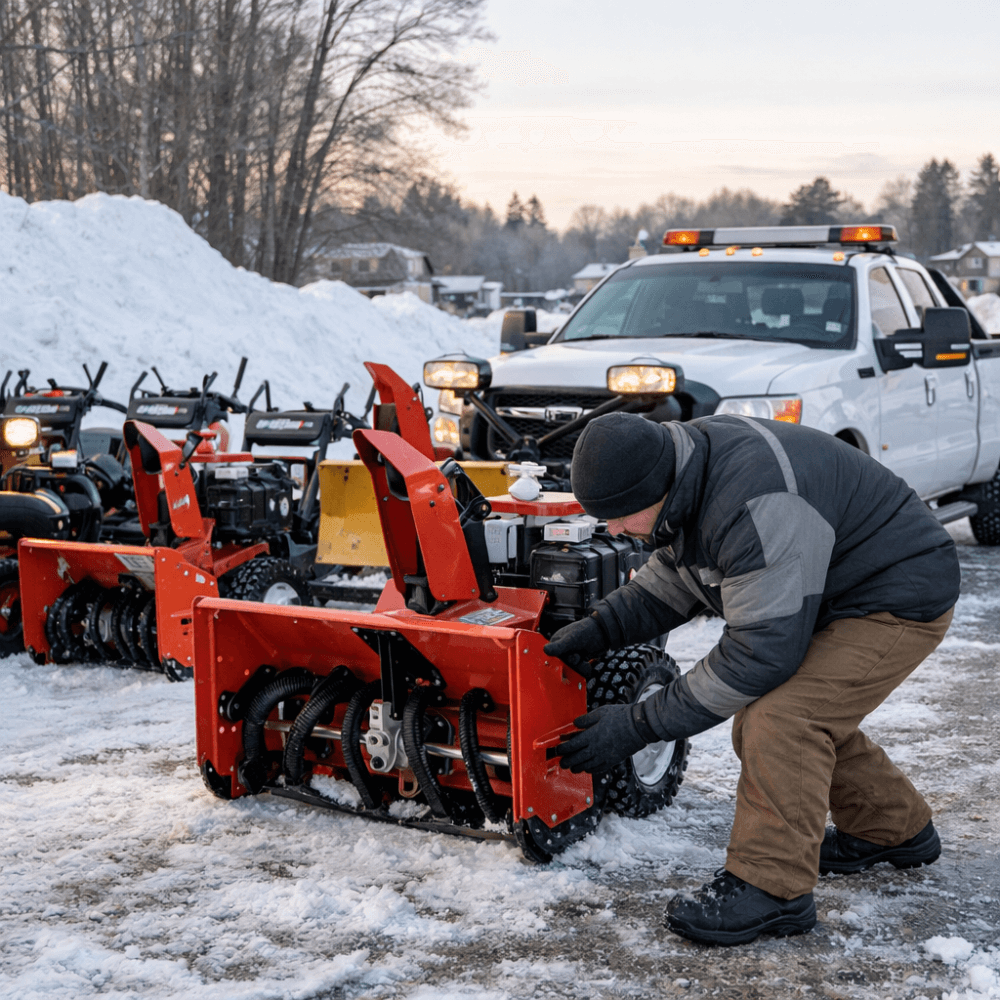
January and February put the most strain on commercial snow operations in New Hampshire. Equipment has already logged heavy hours. Storms arrive closer together. Temperatures hover around freezing, then drop hard overnight. Small issues that felt manageable in December often surface as real downtime mid-route.
Commercial snow equipment maintenance at this point in the season is about keeping machines dependable through the toughest stretch of winter. The goal is not perfection. It is consistency. Reliable starts. Predictable performance. Fewer surprises when demand is highest.
This article focuses on practical mid-season checks, service timing, and decision points that help commercial operators reduce downtime while protecting route coverage across the Seacoast region.
Why Mid-Season Maintenance Matters During Peak Winter Demand
Preseason service prepares equipment for winter. Mid-season maintenance keeps it working once winter conditions intensify.
By late January, machines have already dealt with repeated cold starts, extended run time, salt exposure, vibration, and heavy, wet snow. These conditions accelerate wear and expose weak points that were not obvious earlier in the season.
For commercial operators, equipment downtime affects more than productivity. Missed service windows, longer route times, and equipment reshuffling all compounds quickly during peak demand.
Many operators tie their mid-season maintenance planning back to broader operational readiness principles covered in Seacoast Power Equipment’s article on keeping commercial properties safe and accessible during winter storms, which outlines how equipment reliability supports service continuity.
The Objective Of Mid-Season Commercial Snow Equipment Maintenance
Mid-season maintenance only works if it fits real storm cycles.
A practical approach does three things well:
- Identifies developing issues before they stop a route
- Prioritizes service for high-impact equipment
- Aligns shop time with lighter weather windows
Seacoast Power Equipment supports commercial equipment service across New Hampshire and works with mixed-brand fleets. That flexibility matters mid-season, when waiting on brand-specific service can cost valuable time.
Common Causes Of Commercial Snow Equipment Downtime
Most mid-winter failures follow predictable patterns. Crews who know what to watch for can catch problems early.
Wear Parts Reaching End Of Service Life
Scraper bars, skid shoes, cutting edges, belts, and shear pins wear faster under commercial use. When wear becomes uneven or excessive, performance drops quickly.
Early warning signs include increased vibration, reduced scraping quality, stiff controls, or repeated shear pin failures on the same unit.
Operators often reference Seacoast Power Equipment’s breakdown of OEM versus aftermarket replacement parts when deciding how to handle wear items mid-season, especially when uptime is critical.
Cold-Weather Engine And Fuel Issues
Extended cold operation affects starting, throttle response, and overall performance. Moisture buildup, thickened oil, and fuel degradation all contribute.
Many crews use Seacoast Power Equipment’s guidance on preventing hard starts in cold weather as a mid-season refresher on winter engine habits and warm-up practices.
Electrical And Control Problems
Salt exposure and vibration loosen connections and corrode terminals. These issues often appear intermittently rather than as total failure.
Watch for flickering lights, inconsistent controller response, weak electric start performance, or recurring fuse issues.
Hydraulic And Drive Response Issues
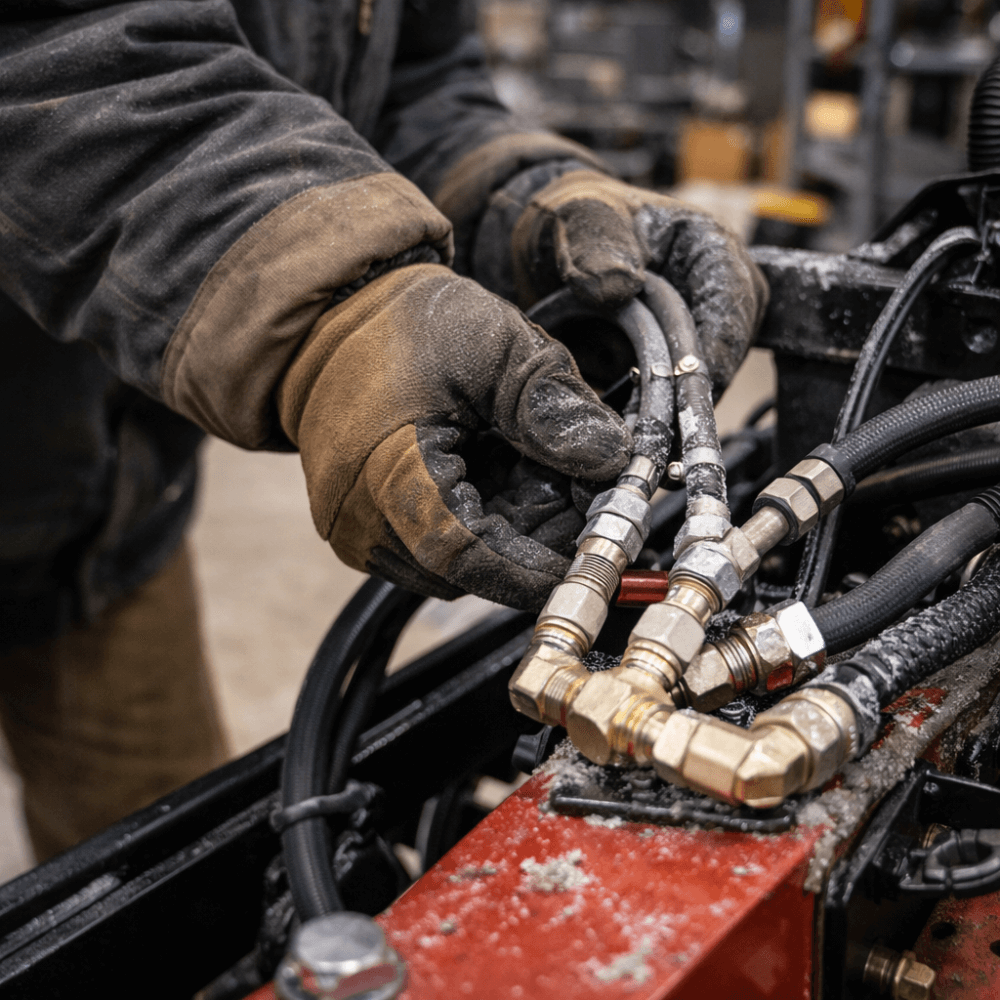
Plow and spreader systems rely on clean, responsive hydraulics. Slower movement, chatter, or visible seepage usually signal the need for service.
Mid-Season Commercial Snow Equipment Maintenance Checklist
This checklist is designed to be fast, repeatable, and realistic during winter operations.
Route Readiness Screen (10 To 15 Minutes Per Unit)
Use this before assigning equipment to a storm.
- Walkaround inspection for leaks, loose hardware, and missing guards
- Check throttle, drive, chute rotation, and engagement controls
- Inspect scraper bars, skid shoes, cutting edges, and shear pins
- Confirm tire or track condition
- Test lights, electric start, and safety shutoffs
- Perform a short load test in a safe area
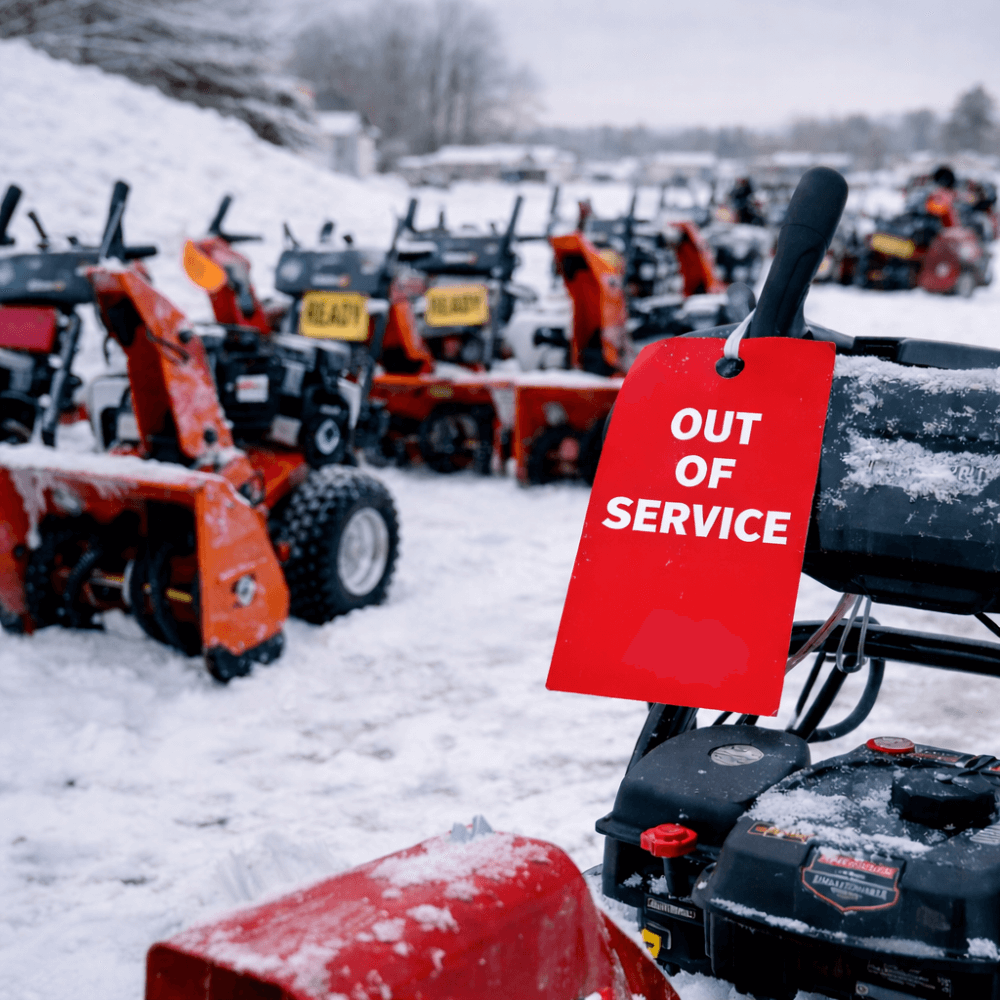
Any unit that fails a safety or control check should be tagged and removed from service.
Weekly Deeper Checks
Scheduled between storms.
- Inspect belts and visible drive components
- Check chute and deflector movement
- Inspect auger area for damage or loose hardware
- Clean salt buildup around wiring and controls
- Listen for abnormal vibration or noise under load
Mid-Season Fleet Service Block
Planned shop time for the most critical machines.
- Replace worn wear parts as sets
- Address leaks, hose routing, and slow response
- Inspect driveline and traction components
- Verify all safety and control systems
- Order common replacement parts ahead
Seacoast Power Equipment’s service department handles these inspections and repairs for commercial snow equipment across brands and models.
Keeping Maintenance From Disrupting Route Coverage
The most effective approach splits the fleet into service groups.
- One group receives service during a lighter weather window
- The second group follows during the next window
- At least one backup unit remains ready at all times
This approach prevents pulling too many machines off the road at once and helps maintain consistent coverage through February.
When transporting equipment is difficult mid-season, many operators rely on Seacoast Power Equipment’s mobile equipment repair options or scheduled pickup and delivery for shop-level work.
When To Stop Field Checks And Schedule Professional Service
Crews should stop and schedule service when they encounter:
- Safety controls that do not function consistently
- Missing or damaged guards
- Visible fluid leaks or damaged hoses
- Electrical issues that repeat after basic correction
- Vibration or noise that increases under load
Understanding realistic repair timelines helps crews plan coverage without overpromising service. Seacoast Power Equipment explains this clearly in its overview of average equipment repair timelines during peak season.
Parts Readiness And Mid-Season Reliability
Downtime is often tied to parts availability as much as repairs.
Seacoast Power Equpiment maintains a large parts inventory and uses a computerized sourcing system to locate items that are not immediately in stock. Parts can be picked up locally or scheduled for delivery when timing matters.
Many operators use Seacoast Power Equpiment’s step-by-step explanation of how to select the correct replacement parts to avoid delays caused by ordering errors during peak winter demand.
Additional Winter Resources Operators Reference Mid-Season
Depending on fleet makeup, operators often revisit:
- Guidance on commercial snow equipment selection and winter readiness
- Safety reminders for operating snow equipment in icy conditions
- Broader best practices outlined in the essential guide to commercial equipment maintenance
These resources help reinforce consistent habits across crews as winter wear accumulates.
Commercial Snow Equipment Maintenance Services In New Hampshire
Mid-season is where winter reliability is won or lost. A consistent commercial snow equipment maintenance routine keeps crews productive, protects service commitments, and reduces emergency repairs during the busiest part of the season.
If you need support with mid-season inspections, repairs, parts sourcing, or pickup and delivery scheduling, contact Seacoast Power Equipment in North Hampton, New Hampshire.
- Commercial service support: https://seacoastpower.com/service/
- Parts and sourcing assistance: https://seacoastpower.com/parts/
- Contact the Seacoast Power Equipment team: https://seacoastpower.com/contact-us