
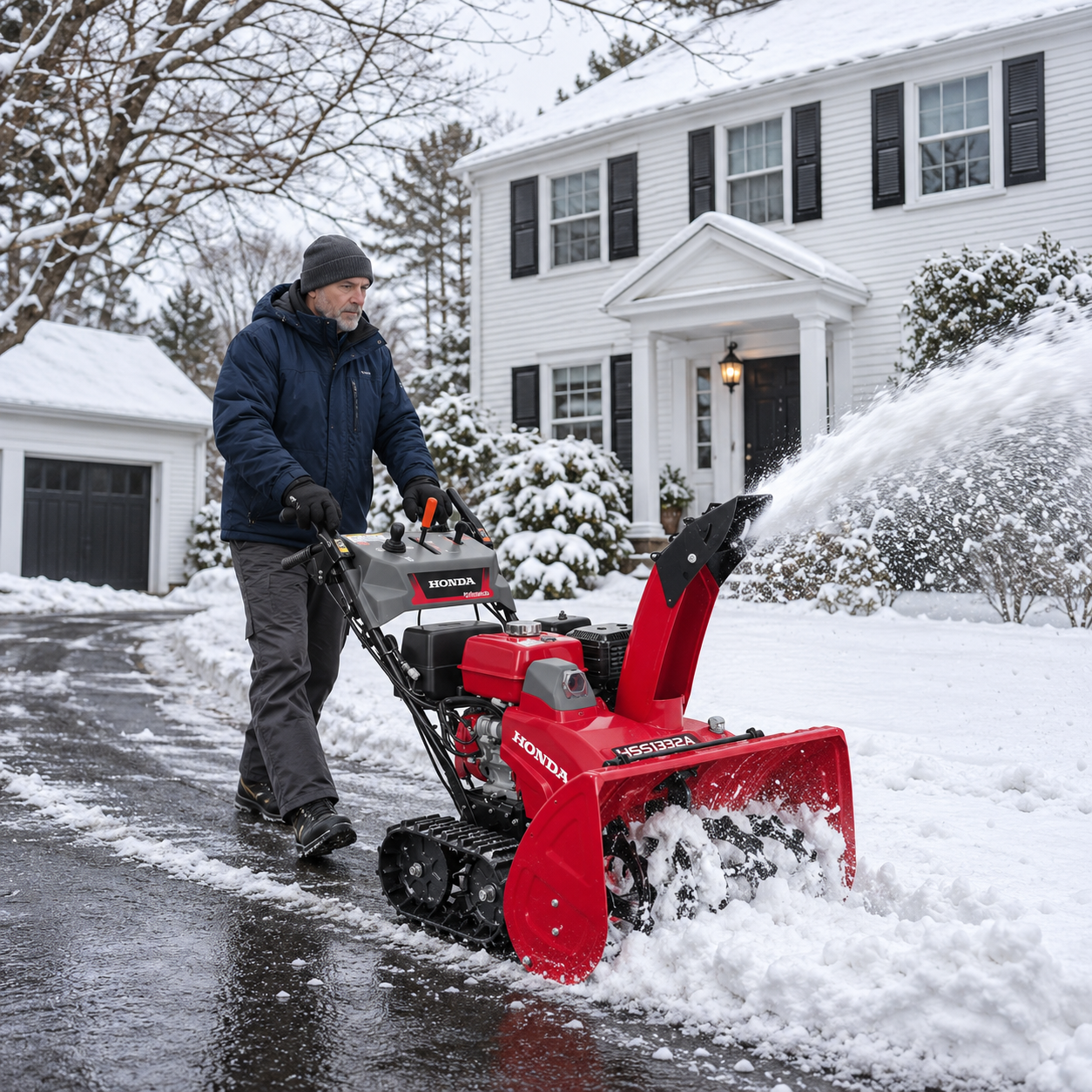
Five years ago, a battery snow blower would not handle a New Hampshire winter – they would simply dust off a walkway and run out of power halfway down the driveway. Now, these two-stage battery powered snow blower machines move heavy, wet coastal snow, with good runtime numbers.
A battery snow blower is a strong fit if you clear a paved driveway up to roughly three or four car lengths, you see typical storm totals under 10 to 12 inches, and you want a machine that starts every time without fuel, oil, or spring carburetor work. It is a weaker fit for long gravel driveways, unpaved surfaces, properties that routinely see 18-inch storms, or commercial crews clearing multiple accounts back-to-back.
Most manufacturers build snow blowers on the same battery platform as their mowers, trimmers, and blowers, so the batteries you bought for your summer battery tools can carry over to winter.
How Battery Snow Blowers Perform in New Hampshire Conditions
Coastal storms bring wet, dense snow that packs at the end of the driveway when the plow goes by. That heavy end-of-driveway pile is the real test, and it is where cheap battery machines fail. Three specs predict whether a machine will handle it.
- Stage count: Single-stage machines use one auger to both gather and throw snow and work well on paved surfaces in lighter storms. Two-stage machines add a separate impeller, which is what gives a machine the ability to chew through packed plow piles and throw snow a useful distance.
- Intake height: This is the vertical opening at the front of the machine. A 20-inch intake can take a bite out of a pile that a 12-inch intake will ride up and over.
- Battery capacity in watt hours, not just voltage: Voltage gets marketed. Watt hours determine how long you run. A 60V platform with a 7.5Ah battery holds 405 watt-hours. Two of those roughly double your working time, and machines with a third port extend it further.
Verified Specs on the Toro 60v Battery Lineup
Toro publishes clear numbers on its Flex-Force battery snow blowers, which makes them a useful reference point for what current battery machines can and cannot do.
| Model | Type | Clearing width | Ideal snow depth | Batteries | Runtime / capacity |
| Power Clear e21 (39901) | Single-stage | 21 in | Up to 10 in | One 7.5Ah included | Up to 45 min |
| Power Clear 39902 | Single-stage | 21 in, 12 in intake | 2 to 9 in | Two 6.0Ah included | Throws up to 40 ft |
| Power Clear Self-Propel (39921T) | Single-stage, self-propelled | 21 in | Up to 9 in | Bare tool, two ports | Uses 60V Flex-Force packs |
| Power Max e24 (39924) | Two-stage | 24 in, 20 in intake | Up to 12 in | Two 6.0Ah included | Up to 70 min, throws up to 45 ft |
| Power Max e26 | Two-stage | 26 in, 20 in intake | Up to 12 in | Two 7.5Ah included | Three battery ports |
Source: Toro product specifications, toro.com, verified September 2026.
A few things stand out in that table. The two-stage e24 handles up to 12 inches of heavy, wet snow with 70 minutes of runtime, which covers most single-storm clearing for a typical Seacoast residential driveway. The single-stage models are rated for fluffy through wet snow but top out lower, and they are designed for paved surfaces only.
The third battery port on the e26 matters more than it sounds. In practice it means you are not walking back to the garage mid-storm.
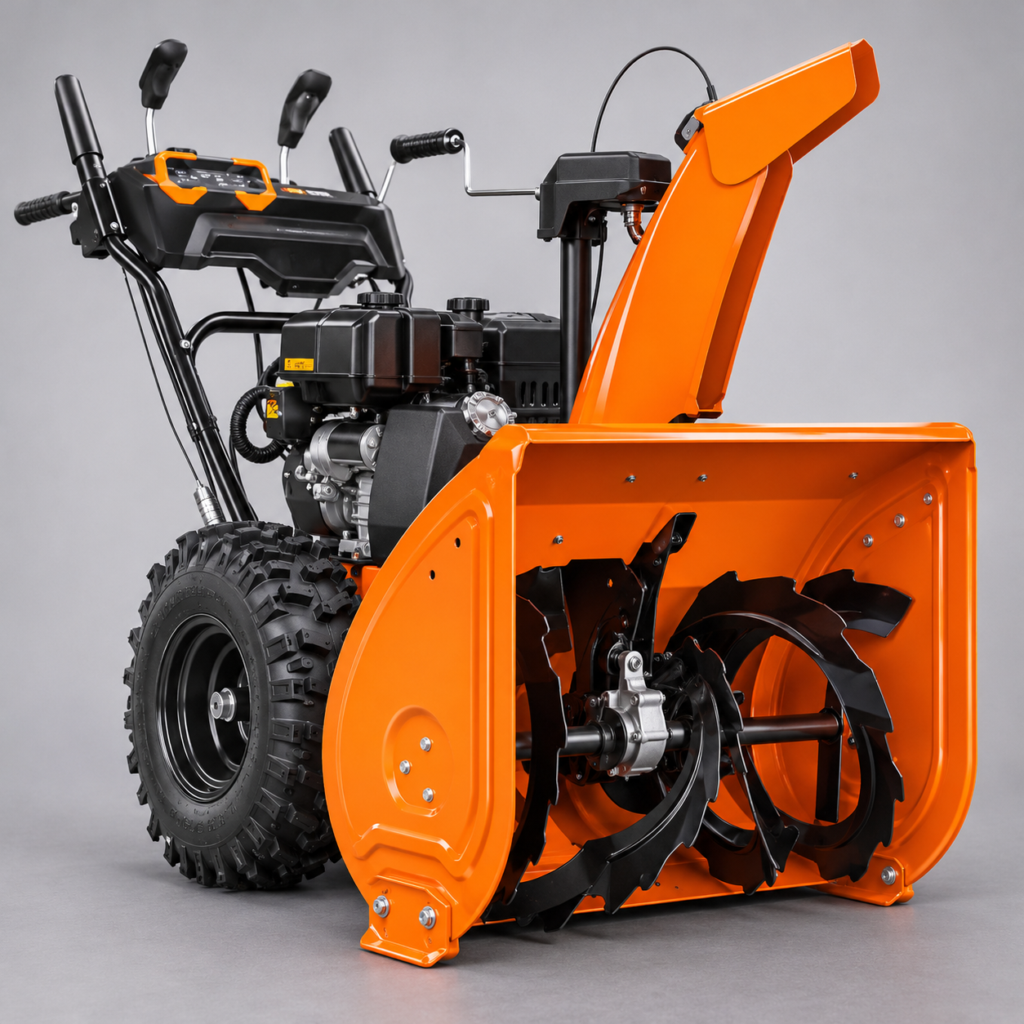
Snow Blower Battery Storage in Cold Weather
Lithium batteries lose capacity in the cold. That is physics, not a defect, and it is the single most common complaint we hear from first-year battery snow blower owners.
Two habits solve most of it. Store the batteries indoors at room temperature and install them right before you start clearing, rather than leaving them in an unheated garage overnight. And keep a second charged pack inside while you work, so you swap rather than wait.
Runtime ratings published by manufacturers are measured in favorable conditions. Plan on less in a January cold snap with wet snow, and buy capacity accordingly. If the numbers look tight on paper for your driveway, they will be tight in practice.
Battery-Powered Snow Blowers vs. Gas: Tradeoffs
This is not a question of which technology is better. It is a question of which set of trade-offs fits your property and how you want to spend your time.
Battery machines give you instant starting, no fuel stabilizer, no oil changes, no spring carburetor cleaning, far less noise, and no exhaust in a closed garage. For anyone who has fought a pull cord at 5 a.m., that list is the whole argument.
Gas machines give you unlimited runtime as long as you have fuel, higher sustained output in deep storms, and models built for gravel and unpaved surfaces. For long rural driveways and commercial work, gas still wins outright.
If you want the fuller comparison on the traditional side of that decision, our breakdown of gas snow blower versus electric options covers how the two power sources differ in maintenance and operating cost. For brand-level differences among gas two-stage machines, see our comparison of the best snow blower brands for New Hampshire.
Matching a Snow Blower Machine to Your Property
Paved driveway, two to three cars, storms under 8 inches. A single-stage battery machine is enough, and it will be lighter and easier to maneuver than anything gas.
Paved driveway, four or more cars, regular plow piles. Go two-stage with at least two high-capacity batteries. This is the most common Seacoast residential scenario and where the e24 class of machine fits.
Gravel driveway or unpaved surfaces. Single-stage machines of any power source are not built for this. You need a two-stage machine with adjustable skid shoes, and most current battery two-stage models are still rated for paved surfaces. Talk to us before you buy.
Multiple properties, back-to-back clearing. Battery is workable, but only with a real battery inventory and a charging plan. Property managers usually find the math works better on gas for primary machines with battery units for walkways, steps, and noise-sensitive accounts.
Try a Battery Snow Blower On Your Driveway First
Specs on a page only go so far. The reason we run our Try Before You Buy program is that the difference between a machine that fits your property and one that almost fits does not show up in a showroom.
Take a snow blower home, run it on your actual driveway and your actual surface, and decide from there. That is not something a big box store or an online retailer can offer, and for a purchase you will keep for a decade, it removes most of the guesswork.
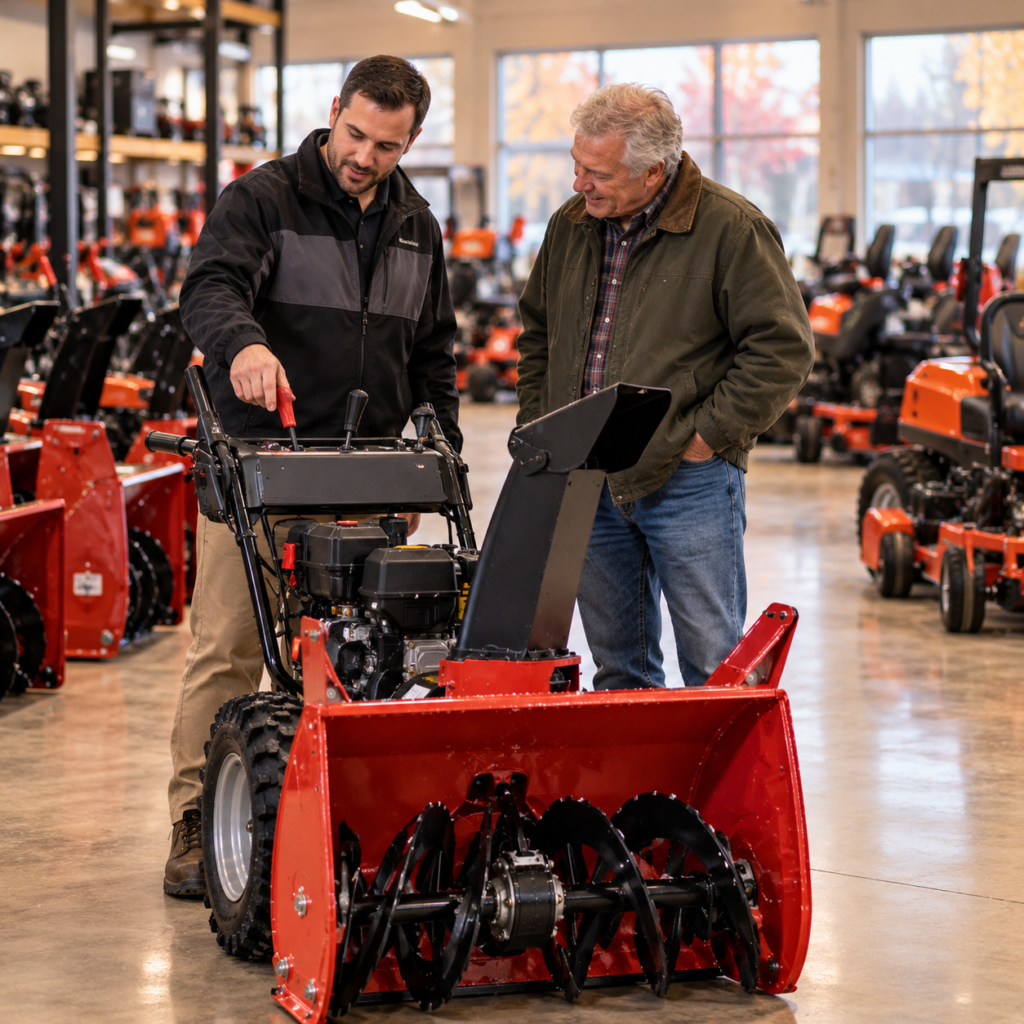
Service and Support After the Sale
Battery machines are simpler than gas, but they are not maintenance-free. Augers wear. Scraper bars wear. Paddles on single-stage machines are a consumable item. Batteries and chargers occasionally fail and need warranty handling.
Our factory-trained technicians service all makes and models, not only the brands we sell, with a typical 24- to 48-hour turnaround. We carry a $150,000+ parts inventory on hand, so the common wear items are usually on the shelf rather than on order. And if getting the machine here is the problem, we offer pickup and delivery throughout the NH seacoast and into southern Maine.
Serving New Hampshire’s seacoast since 1965, we have watched a lot of equipment technology come and go. Battery snow removal is not a passing experiment. It is a real category now, and it is worth a serious look if your property fits.
Browse our snow blower selection or schedule service before the first storm.
Frequently Asked Questions
Do battery-powered snow blowers work in heavy wet snow?
Two-stage battery snow blower models work in snow. Current two-stage machines are rated for heavy and wet snow up to roughly 12 inches, with a separate impeller that handles packed plow piles. Single-stage battery machines handle wet snow at lower depths and only on paved surfaces.
How long does a battery snow blower run on one charge?
It depends on capacity and conditions. Manufacturer ratings for two-stage models with two 6.0Ah batteries run up to about 70 minutes, and single-stage models with one 7.5Ah battery run up to about 45 minutes. Expect less in deep cold and wet snow, which is why most owners keep a spare pack charged.
Can I use a battery snow blower on a gravel driveway?
Most current battery snow blowers are rated for paved surfaces and not gravel driveways. Gravel requires a two-stage machine with adjustable skid shoes set to leave clearance, and options are limited in the battery category right now. Call us at 603-964-8384 and we will tell you honestly whether anything on the floor fits.
Are battery snow blower batteries interchangeable with other tools?
Yes, a 60V battery that runs a snow blower will typically run that brand’s mowers, trimmers, and handheld blowers. This is a real cost advantage if you are already on a platform.
Do you service battery-powered snow blowers?
Yes. Our factory-trained technicians service battery equipment from all makes and models, with a typical 24- to 48-hour turnaround, and pickup and delivery are available throughout the NH seacoast and into southern Maine.
Are battery-powered snow blowers any good?
Current two-stage battery models are. They clear up to roughly 12 inches of heavy, wet snow, throw it 45 feet, and run about 70 minutes on two batteries. The older reputation came from early single-stage machines that ran out of power on a full driveway. The honest limits today are gravel surfaces, very deep storms, and back-to-back commercial clearing, where gas still makes more sense.
Where are battery-powered snow blowers for sale near me?
Seacoast Power Equipment sells and services battery and gas snow blowers at 106 Lafayette Road in North Hampton, NH, and we deliver throughout the NH seacoast, southern Maine, and northern Massachusetts. Buying from a dealer rather than a big box store means the machine is assembled and set up correctly, you can test it on your own property through our Try Before You Buy program, and warranty and service are handled locally instead of shipped out. Call 603-964-8384 to check what is on the floor.
Are battery-powered snow blowers quiet?
Much quieter than gas. There is no engine, so what you hear is the motor and the snow moving through the chute rather than a running four-stroke. For most owners that means clearing at 6 a.m. without waking the neighbors, and no ear protection required for a normal driveway. It is one of the most common reasons customers switch, along with not having to deal with fuel.