
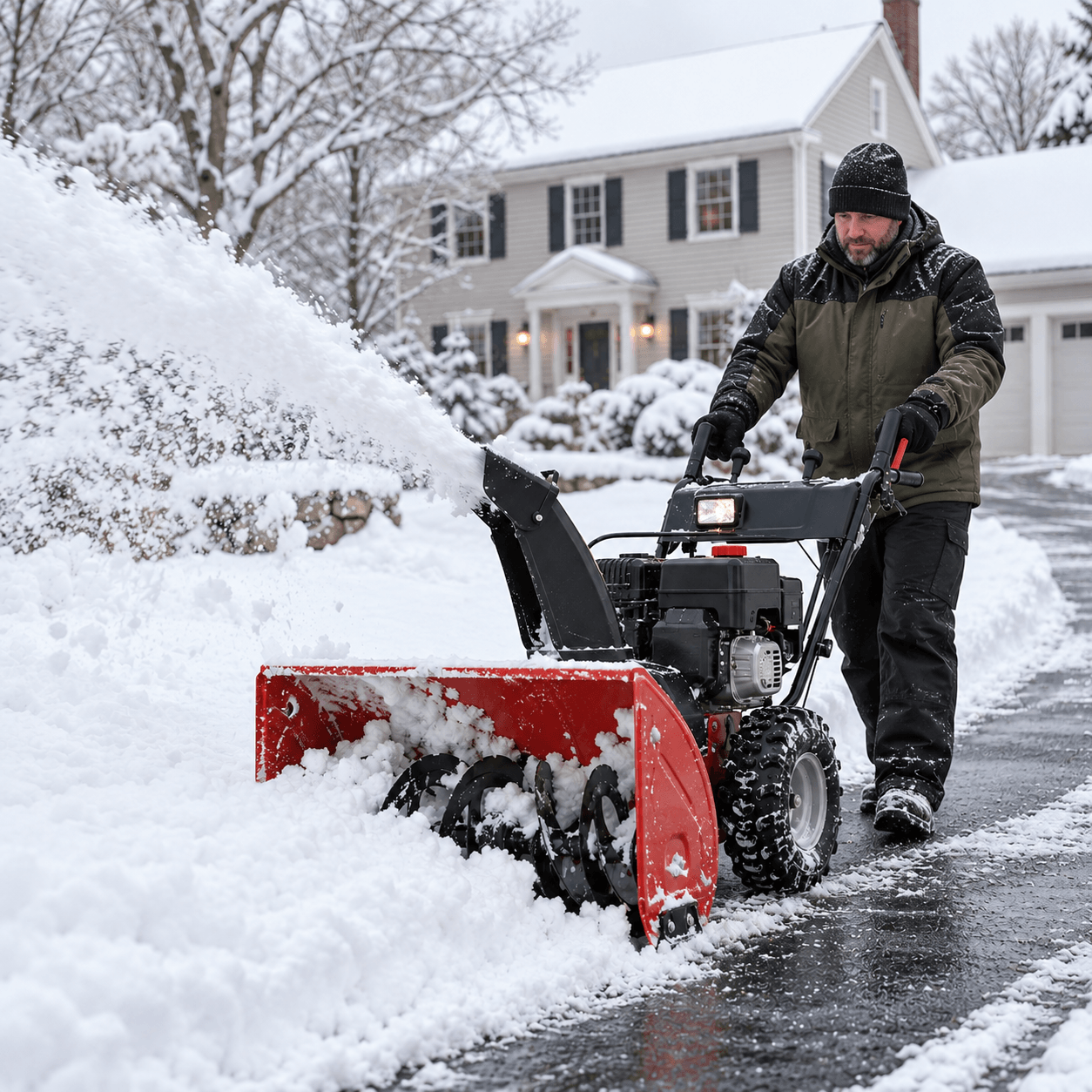
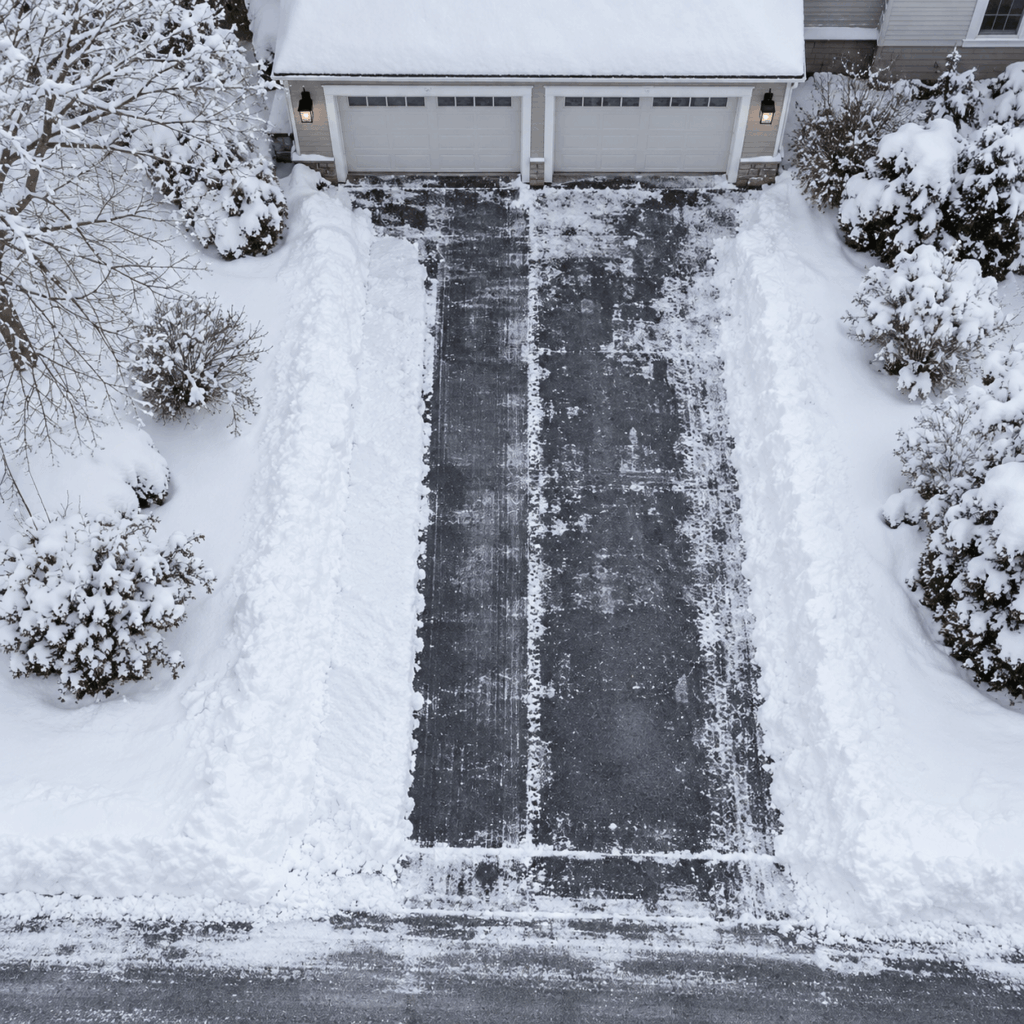
For a standard two-car paved driveway on the New Hampshire seacoast, a two-stage snowblower with clearing width in the mid- to upper-20-inch range is the right size. Go narrower for short driveways with tight turns, wider or three-stage for long driveways, and regular plow ridges. On gravel, use a two-stage or three-stage machine and adjust the skid shoes.
Most people buy a snow blower the same way they buy a ladder – somewhere between the biggest and least expensive. Half the time you end up with a machine that takes 3 hours to clear a driveway that should take 40 minutes, or one that’s too heavy to turn around at the top of a slope and too wide to fit through the gate to the back walkway.
Size determines whether your snow blower works for you so this guide covers how to size one for your property in coastal New Hampshire.
Three Numbers That Define Snow Blower Size
When people say size, they usually mean one of 3 things – which all matter in a specific order.
- Clearing width is how wide a path the machine cuts in one pass. This ranges from around 20 inches on compact units up to 30 inches and beyond on large residential machines. Width determines how many passes your driveway takes.
- Stage count is how the machine moves snow, and it matters more than width for our conditions. More on this below.
- Engine size and intake height determine what the machine can handle when the snow is deep, wet, or has been sitting at the end of the driveway after the plow went by.
Buyers tend to fixate on clearing width because it is the number on the tag. In practice, stage count and intake height decide whether the machine handles a seacoast storm, and width only decides how long it takes.
Start With Your Driveway, Not the Machine
Before you look at a single unit, get three facts about your property.
- How long and how wide is the clearing area? A two-car driveway 40 feet long is a different job than a 200-foot rural driveway. Measure it or step it off.
- What is the surface? Paved, gravel, or a mix. Gravel changes the answer, and we cover why below.
- What is the terrain? Slope, tight turns, a gate you need to pass through, steps, or a walkway that connects to the driveway. These constrain how large a machine you can actually maneuver.
That third one is where most sizing mistakes happen. A machine that clears your driveway in four passes instead of six is worth very little if you cannot turn it around at the top of a slope or fit it down the side of the house.
Matching Clearing Width to Your Property
Rough guidance for residential properties on the seacoast:
| Property | Suggested clearing width | Stage count |
| Short driveway, one or two cars, paved | Low to mid 20-inch | Two-stage |
| Standard two-car driveway plus a walkway | Mid- to upper-20-inch | Two-stage |
| Long driveway, steep grade, or clearing for a second unit | 28 inches and up | Two-stage or three-stage |
| Large property, multiple structures, or commercial clearing | Past residential sizing | Three-stage or track drive |
- Short driveway, one or two cars, paved. A clearing width in the low to mid 20-inch range handles this comfortably. You get a machine that is easy to store, easy to turn, and quick to start.
- Standard two-car driveway plus a walkway. The mid- to upper-20-inch range is the common landing spot. Enough width to keep the pass count reasonable, still manageable to steer.
- Long driveway, steep grade, or a property where you also clear for a neighbor or a rental unit. Move to 28 inches and up. At this size the machine does more of the work and you do less of it, but storage and maneuvering become real considerations.
- Large properties, multiple structures, or commercial clearing. You are past residential sizing. Track drive, larger intake, and heavier build become the relevant features.
One practical rule: adding width reduces passes but increases weight and turning radius. If your property has more turns than straight runs, a narrower machine often finishes faster in the real world than a wider one does on paper.
You can see the current snow blower lineup to compare widths across what we have on the floor in North Hampton right now.
Two-Stage vs. Three-Stage Snow Blowers
This is the part that matters most for coastal New Hampshire, and it is where the marketing gets confusing.
- Single-stage machines use one auger that both picks up snow and throws it. They are light and compact, and they work on paved surfaces with moderate snowfall. They are not a good fit for a seacoast winter where a storm can turn from powder to slush inside six hours, and they should not be used on gravel.
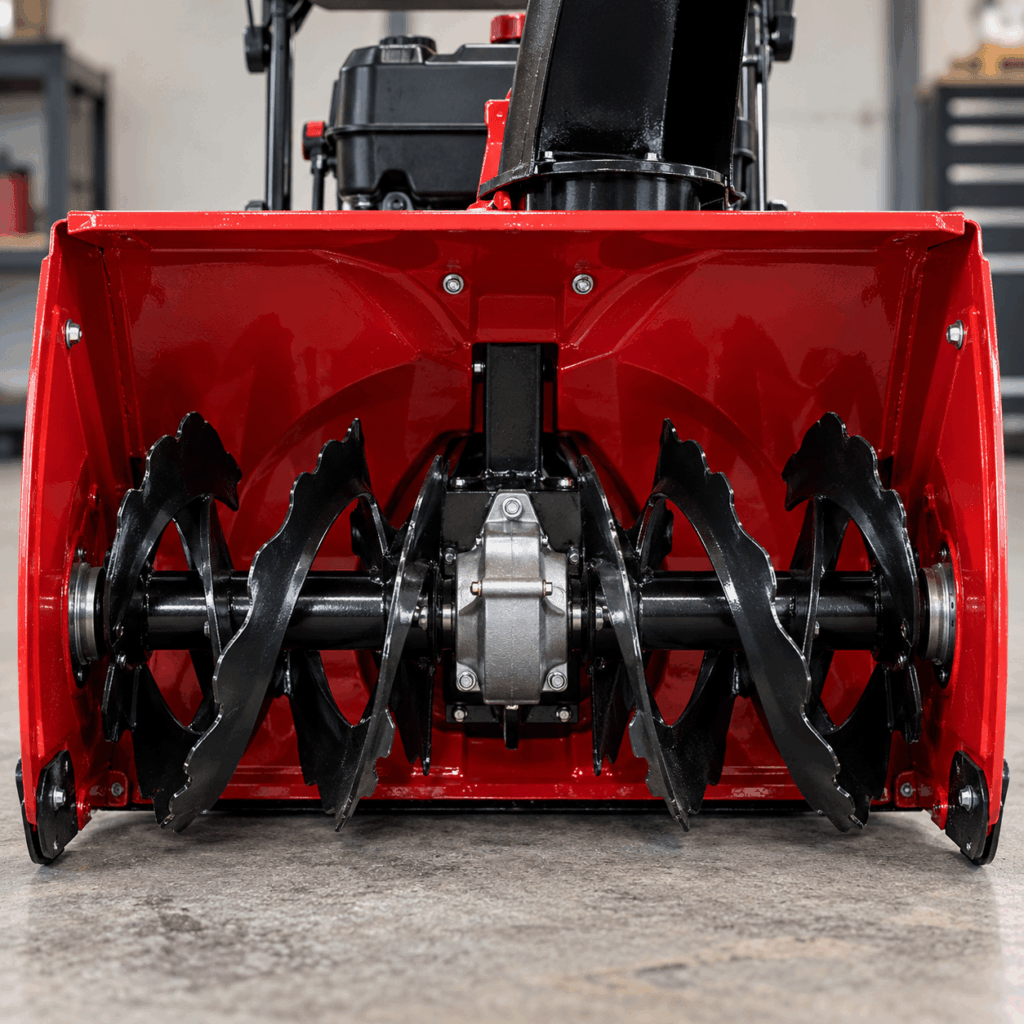
- Two-stage machines separate the work. An auger pulls snow in, and a separate impeller throws it. This handles deeper snow, heavier snow, and the packed ridge the town plow leaves across the end of your driveway. For most homeowners here, two-stage is the right answer.
- Three-stage machines add an accelerator that breaks up snow and feeds it to the impeller faster. The practical benefit is throughput. They chew through heavy wet snow and plow ridges faster than a comparable two-stage. The tradeoff is cost and weight.
Is three-stage worth it? It depends on how much snow you are actually moving. If you have a long driveway, get plowed in regularly, and deal with the wet coastal snow that packs into concrete at the curb, the faster throughput is a real difference you will notice in every storm. For a short paved driveway, a good two-stage does the same job for less money.
For the broader question of whether to step up to a commercial-grade machine, we have a separate guide on deciding if you need a professional snow blower.
Sizing a Snow Blower for a Gravel Driveway
Gravel is a common situation on seacoast and rural properties, and it changes the sizing conversation. Single-stage machines make direct contact with the surface, which means they will pick up gravel and throw it. That damages the machine and creates a hazard.
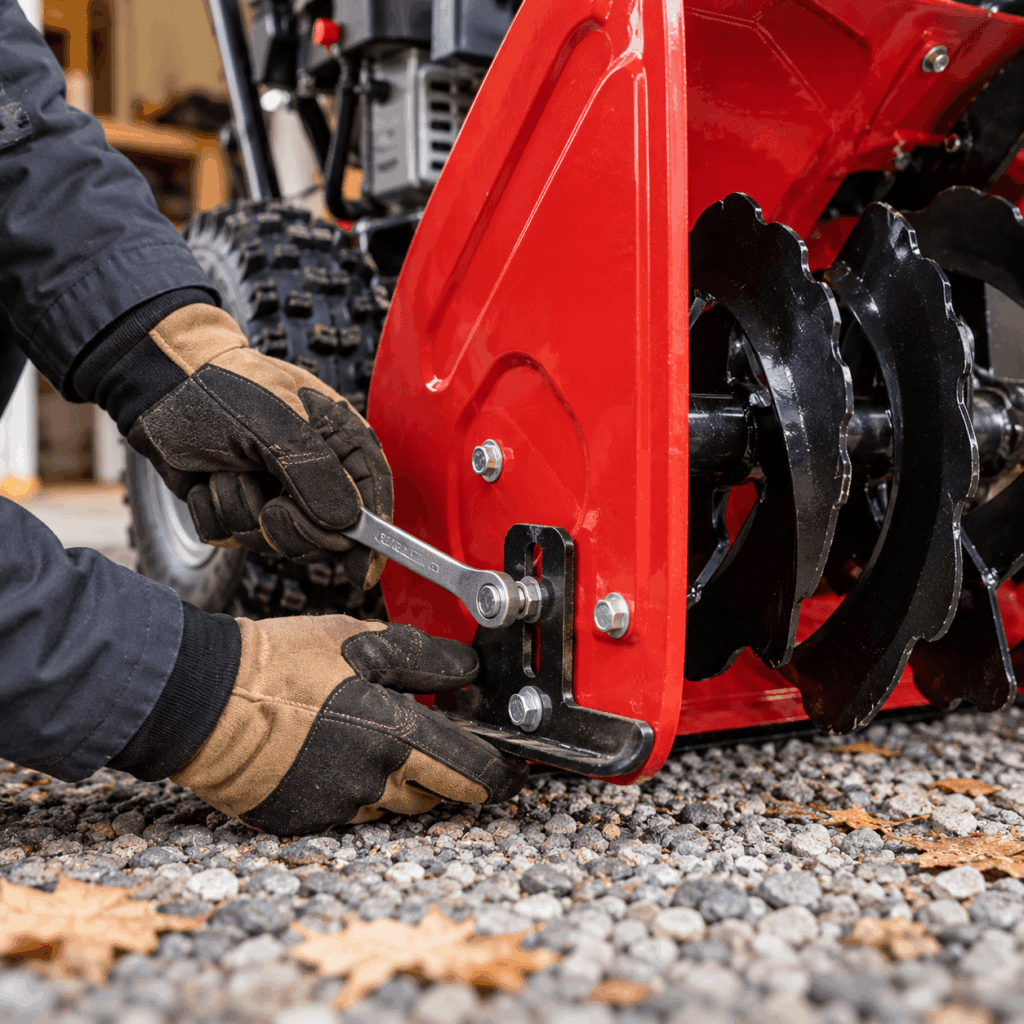
On gravel you want a two-stage or three-stage machine, because the auger sits above the surface rather than scraping it. The adjustment that makes it work is the skid shoes. Setting them to lift the auger housing clear of the surface lets the machine take the snow and leave the stone. It takes a few minutes and makes the difference between a machine that works on gravel and one that fires rocks across the yard.
Skid shoes wear out, and worn ones stop holding the height you set. They are one of the parts we keep on the shelf as part of a $150,000+ parts inventory, along with shear pins, belts, and augers for most major brands. Our 8 tips for driveway snow removal cover the rest of the gravel and surface prep worth doing before the first storm.
Should You Get a Plow Instead of a Snow Blower?
Worth asking, especially if you already own a tractor, an ATV, or a UTV.
A plow pushes snow rather than throwing it, which is faster over a long distance and means you stay in a seat rather than walking behind a machine. That is a real advantage on a long rural driveway.
The limits are where it gets practical. A plow needs somewhere to push snow to, and by February that somewhere is often full. It also does poorly on walkways, tight spaces, and anywhere the banks have built up past the height of the blade. And it requires a vehicle capable of carrying it.
For most seacoast properties, a snow blower handles the whole job. A plow makes sense when the driveway is long, the vehicle already exists, and there is open ground to push into. Plenty of properties end up with both: a plow for the driveway run and a blower for the walkways and the tight work. If you are weighing a plow-capable machine you would also use the rest of the year, our ride-on mowers and tractors are the place to start that conversation.
Snow Blower Features That Matter More Than Width
Once you are in the right size bracket, these separate machines are within it.
- Electric start: Removes the pull-start question entirely on a cold morning.
- Power steering or trigger steering: On a heavier machine, this is the difference between steering it and wrestling it. Anyone with a driveway that has turns should treat this as close to required.
- Heated grips: Small feature, noticeable at 6 a.m. in January.
- Chute control: Look for how quickly you can change throw direction without stopping. On a driveway with wind or neighbors, you will use it constantly.
- Intake height: Determines what happens when you meet a plow ridge rather than fresh snow.
If ease of operation is a priority, our guide to ergonomic snow removal covers the features that reduce physical strain.
Try a Snow Blower Before You Commit to it
Sizing on paper only gets you so far. Whether a machine is right for your property depends on how it handles your slope, your turns, and your surface. That’s why we offer Try Before You Buy. You take the machine to your property and use it in your conditions before you commit. No other option in the region, online or big box, gives you that.
Frequently Asked Questions
What size snow blower do I need for a two-car driveway?
A two-stage machine in the mid- to upper-20-inch clearing width range handles a standard two-car driveway and an attached walkway comfortably. Go wider if the driveway is long or steeply graded.
Is a bigger snow blower always better?
No. Wider machines reduce the number of passes but weigh more and turn harder. On a property with tight turns or a gate to pass through, a narrower machine often finishes the job faster.
What size snow blower do I need for a gravel driveway?
Any two-stage or three-stage machine works on gravel as long as the skid shoes are adjusted to keep the auger housing off the surface. Avoid single-stage machines on gravel entirely.
Do I need a three-stage snow blower in New Hampshire?
Not necessarily. A quality two-stage handles most seacoast properties. Three-stage is worth the cost if you have a long driveway, regularly deal with plow ridges, or want to cut the time each storm takes.
Can I bring my old snow blower in for evaluation?
Yes. Bring it in, or use our pickup and delivery service, and our factory-trained technicians will tell you honestly whether it is worth servicing or whether you are better off replacing it. Snow blower service runs a typical 24- to 48-hour turnaround in October and slows down once storms start.
Get Sized Correctly Before the First Storm
Seacoast Power Equipment has been serving New Hampshire’s seacoast since 1965 from 106 Lafayette Road in North Hampton. Our factory-trained technicians service all makes and models with a typical 24- to 48-hour turnaround, and we offer pickup and delivery throughout the NH seacoast and into southern Maine.
Tell us your driveway length, your surface, and where the tight spots are, and we will put you on the right machine from our snow blower lineup rather than just give you the biggest one. We may also have current promotions running.
Otherwise, you can just come see us in North Hampton. October is when we have the widest selection and when the service department has capacity. Both of those change the week the first storm shows up in the forecast.