
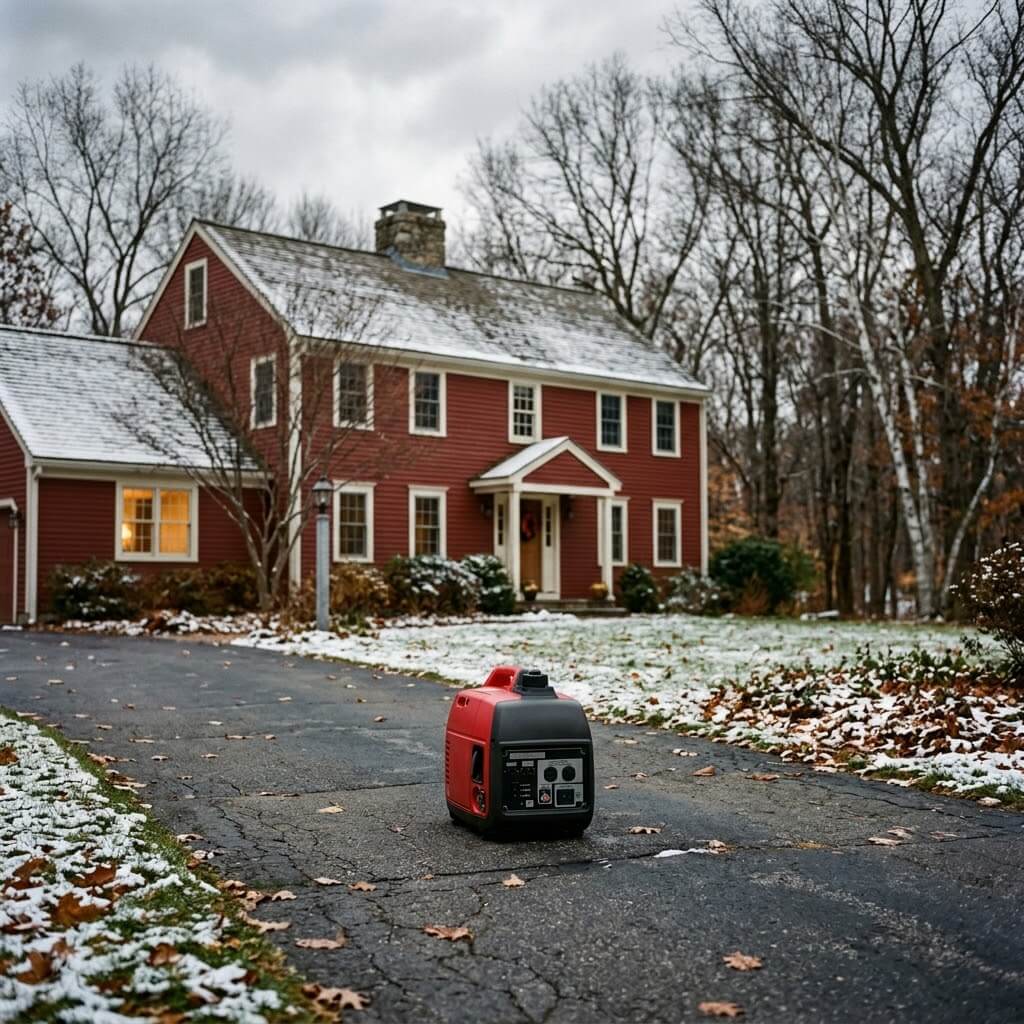
When the power goes out on the seacoast, it usually goes out in the worst possible weather. A nor’easter drops wet snow on lines already loaded with ice, a tree comes down on Route 1A, and suddenly you are counting how many hours the food in your refrigerator has left.
Most people start shopping for a generator during that outage. That is the worst time to buy one. Inventory across the region empties out within hours of a storm forecast, and the units still on the floor are whatever nobody else wanted. October is when you have options.
This guide covers how to pick the right generator for an outage at your property, what actually matters when you compare models, and what to do before the first storm of the season. If you would rather work through it in person, our portable generator lineup in North Hampton is on the floor now.
Which Generator Do You Need for a Power Outage?
There are three practical categories, and the right one depends less on your budget than on how you plan to live during an outage.
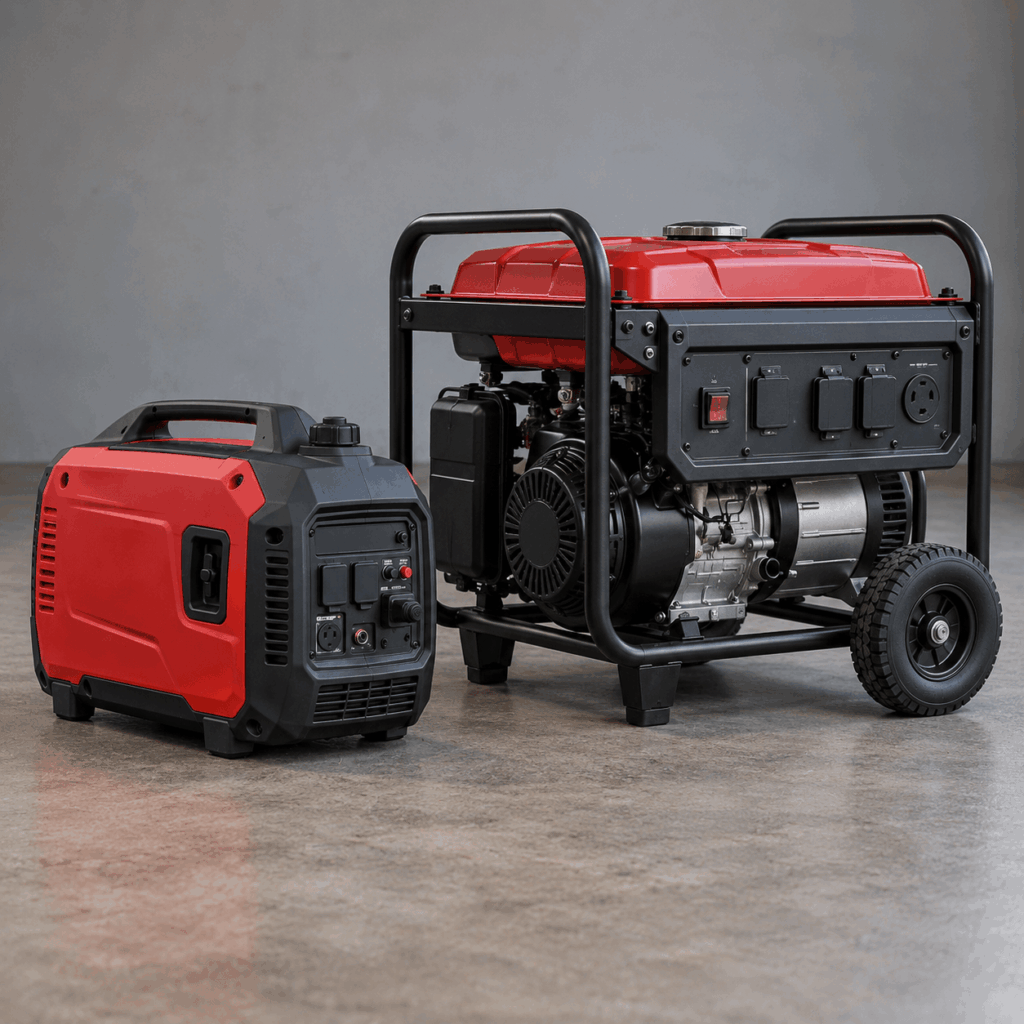
- Inverter generators produce clean, stable power suitable for electronics. They run quieter than conventional models and throttle down when the load is light, which stretches fuel. For most homeowners riding out a 2-3 day outage, this is the category that makes sense.
- Conventional portable generators deliver more watts per dollar but run louder and produce power that is less refined. They work well for well pumps, sump pumps, space heaters, and tools. If your priority is keeping water moving and the basement dry rather than running a home office, a conventional unit stretches your money further.
- Standby systems are permanently installed and start on their own when the power drops. They serve people who cannot be home to start a portable unit or who have medical equipment that cannot wait.
For the majority of seacoast homeowners, a portable inverter generator sized correctly to the loads that actually matter covers the outage without the cost of a permanent installation.
| Category | Typical range | Best for | Trade-off |
| Portable inverter | 2,200 to 7,000 watts | Homes running essentials, sensitive electronics | Higher cost per watt |
| Conventional portable | 3,500 to 8,000 watts | Pumps, heaters, jobsite, and barn power | Louder, less refined power |
| Standby | 10 kW and up | Properties that cannot wait for a manual start | Permanent installation and electrician required |
How Many Watts Do You Actually Need?
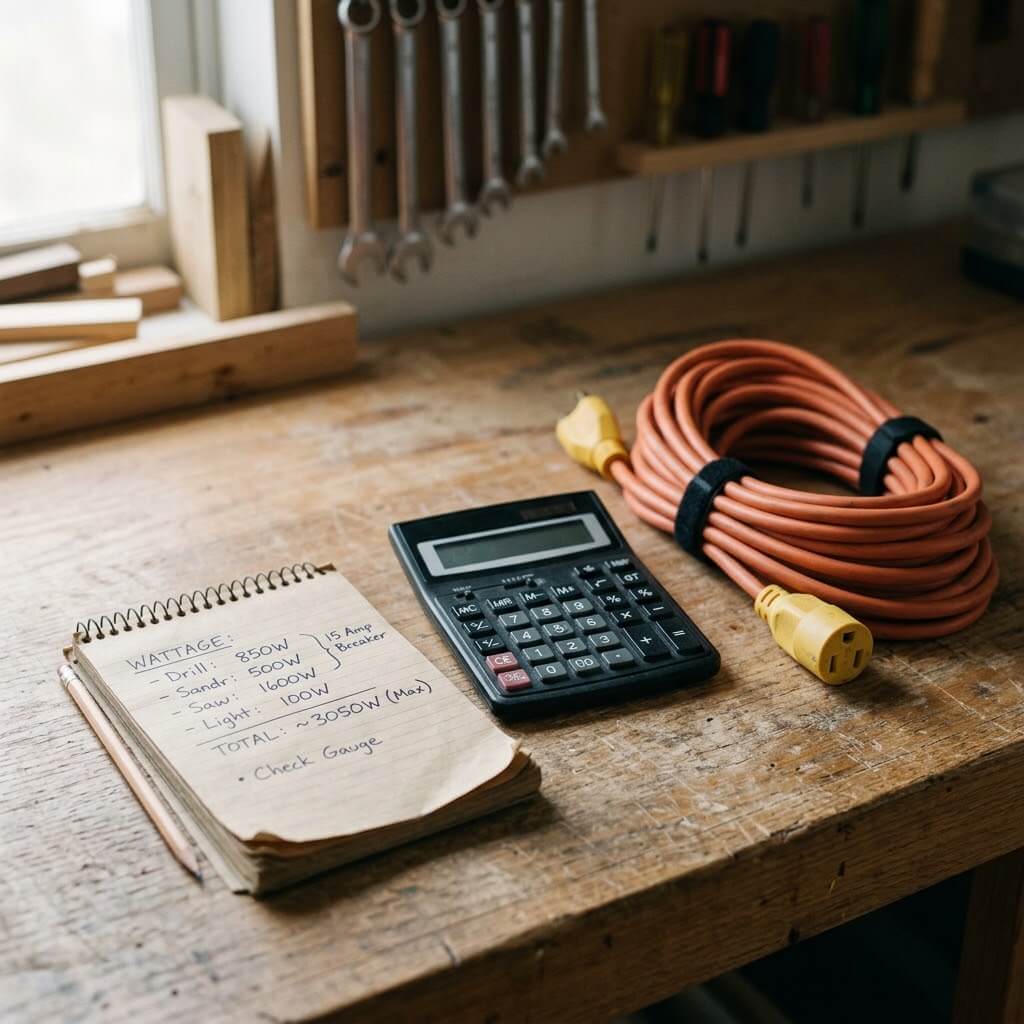
Add the running watts of the loads you refuse to live without, then add headroom for the largest starting surge among them. That total is your target, not the wattage of your whole house.
This is where most buyers go wrong in both directions. Some buy far more generators than they will ever load, and some buy a unit that cannot start a well pump.
A useful way to think about it:
- Refrigerator and freezer: the first thing almost everyone wants running, and the reason most outages become expensive
- Well pump: if you are on a well, no generator means no water, and pumps draw a heavy surge on startup
- Sump pump: in a coastal basement during a wet storm, this is not optional
- Furnace blower: your oil or gas furnace will not move heat without electricity
- Lights, phone charging, Wi-Fi: small loads that add up less than people expect
Starting surge is the piece people miss. Anything with a motor draws several times its running wattage for the first second or two. A generator sized to run watts alone will trip when the well pump kicks on.
We walk through this calculation with customers at the counter in North Hampton, and we have a more detailed breakdown in our home generator sizing guide if you want to work through the numbers before you come in.
Comparing Generators: What Separates the Good Ones
Once you know your wattage target, three things tell you more about a generator than the spec sheet headline.
Run Time at Realistic Load
Manufacturers publish run time at quarter load, which looks impressive and tells you very little. Ask what the run time is at the load you will actually put on it. The same unit can look like two different generators depending on which number you read. During a multi-day outage, run time at your real load decides how often you are outside in the weather refueling.
Noise Output
This matters more than buyers expect, and it matters most at 2 a.m. Honda’s inverter units in the Super Quiet line sit in the range of a normal conversation, with the EU3000iS rated at 50 dB(A) at quarter load and 57 dB(A) at rated load. A conventional open-frame generator running on a small lot will be audible from both inside your neighbor’s house.
Fuel System and Cold Starting
Coastal New Hampshire outages happen in the cold. Electronic fuel injection removes the choke and reduces the carburetor problems that come from fuel sitting through an off-season. If a generator is going to spend eleven months in a garage and be asked to start on the twelfth, the fuel system is the part that decides whether it does.
What Works for a Seacoast Property
- Smaller lots, essential loads only. A compact inverter unit around 2,200 watts will hold a refrigerator, lights, phone charging, and a furnace blower. The Honda EU2200i sits in this range and weighs a little over 47 pounds, which matters if you are the person moving it. Two identical units can be paralleled with an optional cable if you later decide you need more.
- Well and sump pumps in the mix. Step up to the 3,000-watt range or higher. This is the bracket where most seacoast homes with a well land, because the pump surge sets the floor. The EU3000iS is the common answer here.
- Larger properties, farms, and outbuildings. If you are powering a barn, a workshop, or livestock water, you are in the 7,000-watt range and above. At that point the conversation shifts to how you connect the generator to the building rather than which unit to carry outside.
That last point is worth stating plainly. How a generator connects to your home wiring is an electrical question, and it needs a licensed electrician. Never run a generator into a wall outlet. Backfeeding a panel is dangerous to you and to the line crews working to restore your power.
We keep over $1 million in new power equipment on hand across the full equipment lineup, which is why there is still something to choose from in October. Our Try Before You Buy program lets you put a unit to work on your own property before you commit, and on a generator that means finding out whether it starts your well pump while you can still change your mind.
Why October Is the Right Month to Buy
Three reasons, all of them practical.
- Inventory is deep right now. By the time a storm is in the forecast, generators move off the floor across the entire region within a day. Buying in October means you choose the unit that fits your property rather than the unit that happens to be left.
- You get time to set it up properly. A generator that arrives the afternoon before a storm is a generator you have never started. Buying now gives you time to run it, learn it, and find out whether you need a longer cord or a different connection before it matters.
- We have Service capacity. Our service department handles pre-season work in the fall and moves into snow equipment as winter arrives. October is when we can turn work around quickly.
Getting It Right Before the First Storm
Buying the generator is the first half. These are the things that determine whether it works when you need it.
- Run it before you need it. Start the unit, put a real load on it, and let it run. Finding a generator problem in October is inconvenient. Finding it during an outage is a different situation entirely. See our generator issues guide which covers what to check when a unit that worked last year will not start this year.
- Sort out your fuel plan. Decide where fuel is stored, how much you keep on hand, and how you will rotate it. Stabilizer matters if fuel is going to sit.
- Buy the cords you need now. The right gauge and length for your setup, rated for outdoor use.
- Set a maintenance rhythm. Oil changes, air filter, spark plug, and a periodic run under load – check our generator maintenance schedule which covers the intervals.
- Place it safely. Outdoors, well away from windows and doors, never in a garage or under a deck. Carbon monoxide from a generator is a serious risk, and it is the reason newer Honda units include automatic CO shutdown.