
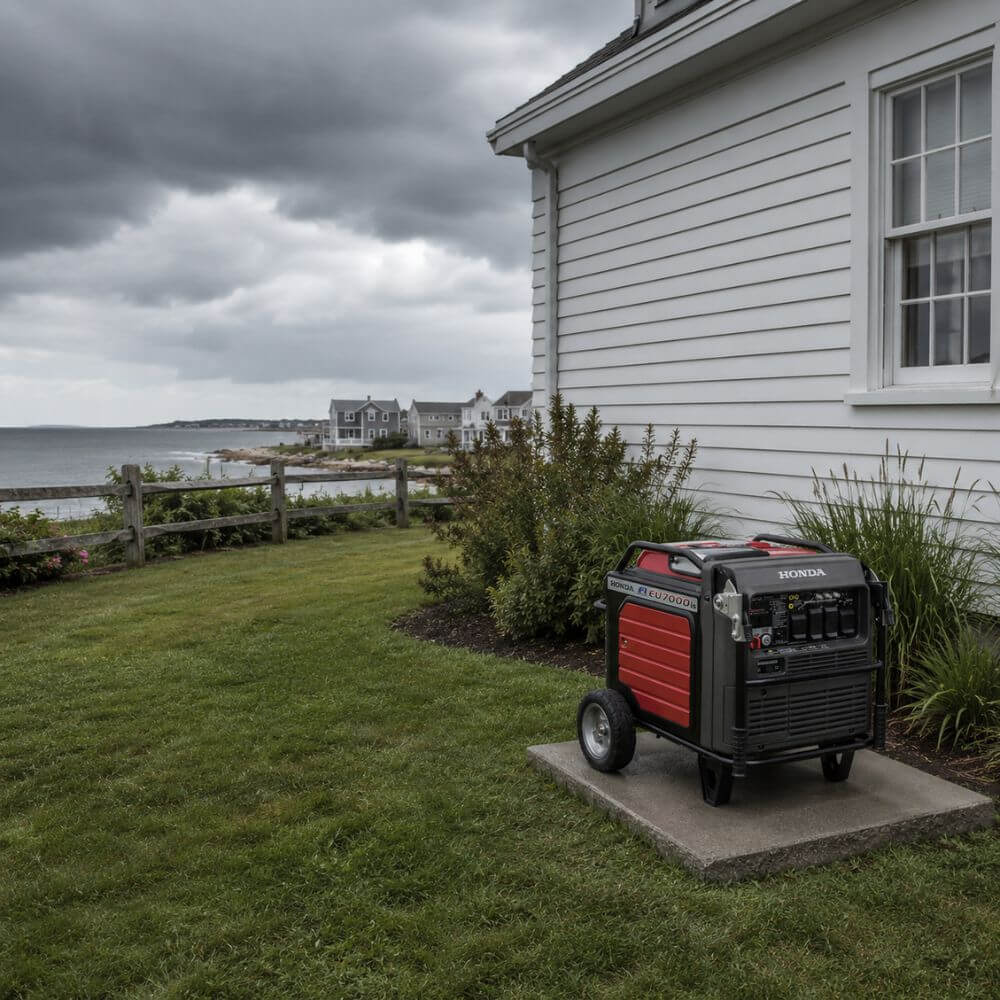
Hurricane season starts June 1st. Coastal New Hampshire sees power outages that last days, not hours, when tropical storms hit. Your generator either works when you need it or it doesn’t. There’s no middle ground when your sump pump stops running or your refrigerator starts warming up.
We’ve serviced thousands of generators across the seacoast since 1965. Every storm season, we see the same failures: dead batteries, gummed carburetors, and mice-chewed air filters. All preventable. All fixable in June before the rush starts. This generator maintenance checklist covers what actually matters.
Why June Generator Maintenance Can’t Wait Until August
August is when homeowners remember they own generators. That’s also when our service department books out 5-7 days instead of the 24-48 hours you’ll see in June.
The math is simple: June gives you three months before peak hurricane season (August through October). August gives you zero buffer when a tropical system forms off the Carolina coast with a five-day forecast track pointing at New England.
Parts availability drops in August too. Everyone needs the same carburetor rebuild kits, air filters, and spark plugs at once. We stock deep, but Honda EU7000iS carburetors don’t sit on shelves forever when fifty customers need them the same week.
The seacoast got lucky the past few years. That luck runs out. Fuel turns to varnish whether hurricanes hit or not. Batteries die on their own schedule. Mice don’t check the forecast before nesting in your air filter housing.
Generator Types on the Seacoast: What You’re Maintaining
Before jumping into maintenance, know what you have. Different generator types need different care.
Portable Generators
Common brands we service: Honda (EU2200i, EU7000iS), Champion, Westinghouse, Generac portables
Power range: 2,000 – 10,000 watts
Fuel: Gasoline (most common), propane, dual-fuel
Maintenance frequency: Before each hurricane season, every 100 hours of use
Portable generators power essential circuits through transfer switches or extension cords. Honda generators dominate the seacoast market because they start reliably after months of storage. As a Honda Premier Dealer, we stock parts for all Honda portable models and service every other brand homeowners bring us.
Standby Generators
Common brands we service: Generac, Kohler, Cummins, Briggs & Stratton
Power range: 10,000 – 25,000+ watts
Fuel: Natural gas, propane, diesel
Maintenance frequency: Twice yearly (spring and fall), monthly test runs
Standby generators connect permanently to your home’s electrical system and turn on automatically during outages. Commercial properties and larger homes typically run standby units. These need professional service because they involve fuel lines, automatic transfer switches, and local code requirements.
Inverter Generators
Popular for: RVs, sensitive electronics, backup for well pumps and medical equipment
Honda’s inverter line (EU series) delivers clean power that won’t damage computers, CPAP machines, or modern appliances. These are the generators we recommend for coastal homes with well water systems where power quality matters.
The June Generator Maintenance Checklist
This checklist separates what homeowners can do themselves from what needs professional generator service. Don’t skip the professional items trying to save money. We’ve repaired too many generators damaged by owners who thought they could handle carburetor work without the right tools.
DIY Maintenance (What You Can Handle)
1. Fuel System Check (Critical)
Old fuel causes 60% of generator failures after storms. Not “old fuel might cause problems” — 60% of no-starts trace back to fuel that sat too long.
Gasoline breaks down after 30 days without a stabilizer. It creates varnish. That varnish clogs carburetor jets smaller than a pin hole. Your generator cranks but won’t fire. Or it runs rough and dies under load. Both symptoms point to fuel.
What to do:
- Drain everything if the generator sat unused since last fall (tank and carburetor)
- Refill with fresh gas from a station that moves volume (not the seasonal marina pump)
- Add fuel stabilizer immediately (Honda Fuel Stabilizer or STA-BIL Marine for coastal conditions)
- Run the generator 10 minutes to push treated fuel through the whole system
Propane generators: Check your tank gauge. Propane doesn’t go bad like gas, but 15% tank level won’t run a generator through a three-day outage. If you’re under 30%, call for delivery now while trucks are available.
2. Oil Level and Condition
Low oil triggers automatic shutdown sensors. Your generator won’t even try to start. But dirty oil is worse because it damages the engine before you ever see a warning light.
Check now:
- Pull the dipstick. Oil should touch between the MIN and MAX marks.
- Look at the color. Fresh oil is amber. Old oil goes dark brown or black.
- Check for metal flakes. Any sparkle in the oil means internal wear, and you need professional eyes on it.
Change the oil if it’s been over a year or if the generator ran more than 50 hours since the last change. Most Honda generators take 10W-30. Your manual has the exact capacity and spec. Don’t guess.
3. Air Filter Inspection
Pop open the air filter housing. If you find mouse nesting material, you just prevented a no-start. Mice build nests in warm, protected spaces. Your generator’s air filter box is a rodent hotel from October through May.
A blocked air filter starves the engine. No air means no combustion means no power. A chewed filter lets dirt straight into the carburetor and cylinder. Either way, your generator won’t run or won’t run long.
Look for:
- Shredded paper, fabric, or insulation (nest material)
- Mouse droppings (small dark pellets)
- Dirt caked on foam or paper filter material
- Tears, holes, or teeth marks in the filter itself
Foam filters clean with dish soap and water. Rinse until the water runs clear, squeeze out excess, let them air dry completely, and then add a light coat of motor oil. Paper filters don’t clean; replace them. Filters run $8-$25. We stock them for every major brand at our North Hampton parts department.
4. Spark Plug Check
Pull the plug. Look at the electrode. Heavy carbon buildup or a worn, rounded electrode means you’re losing spark. A weak spark means hard starting or no starting.
New plugs cost $3-$8. They’re cheap insurance.
Replace if:
- The electrode has heavy black carbon deposits
- The electrode looks worn round instead of sharp
- You see cracks in the white ceramic insulator
- The generator is over 2 years old and you’ve never changed the plug
Simple swap. Most generators use a standard 13/16″ spark plug socket.
5. Battery Test (Electric Start Models)
Dead batteries are the second most common failure point. Generators with electric start won’t crank without battery power. Manual recoil pull-starts work, but if you bought an electric start, you probably want an electric start.
Batteries self-discharge during storage. Cold garage temps accelerate the drain.
Test now:
- Check voltage with a multimeter: 12.4-12.7 volts is good; under 12.0 needs charging
- Inspect terminals for white or green corrosion (clean with baking soda paste and water)
- Wiggle the connections (if they move, tighten them)
Charge low batteries with a standard automotive battery charger. If the battery won’t hold 12+ volts after charging, replace it. We stock batteries for all generator models.
6. Test Run Under Load
Starting the generator and letting it idle for five minutes proves nothing. You need to test it under actual load.
Warm it up for 5 minutes, then plug in something that draws power: a space heater works, shop lights work, or any resistive load. Run for 30 minutes minimum. This test reveals problems that won’t show up at idle.
Watch for:
- Generator maintains voltage under load (use a voltmeter if you have one, or watch for lights dimming)
- No unusual sounds (knocking, grinding, or vibration that wasn’t there before)
- Exhaust color: light gray is normal; blue smoke means oil burning; white smoke means water in fuel
- The engine doesn’t bog down or stall when you add the load
If anything seems off, bring it to us now. Finding problems in June beats finding them during a power outage.
Professional Service Items (Don’t DIY These)
Everything above is homeowner-maintainable with basic tools. Everything below needs our service department.
The line isn’t arbitrary. These tasks require specialized tools, testing equipment, or experience that prevents expensive mistakes. We’ve seen too many generators brought in after failed DIY carburetor rebuilds or valve adjustments. The original problem plus the repair damage costs more than the professional service would have cost in the first place.
1. Carburetor Cleaning
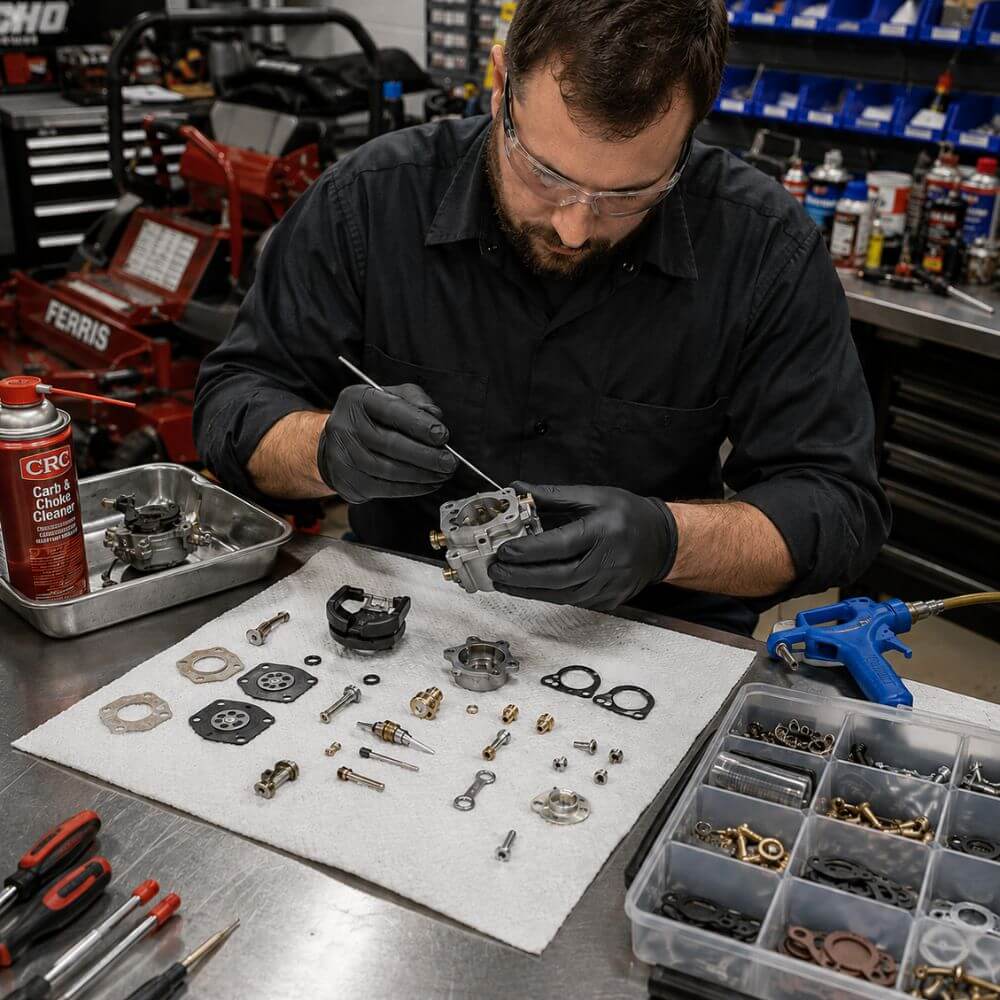
If your generator sat all winter with old fuel, the carburetor jets are varnished shut. Period. You can see it when we disassemble them: amber or brown coating inside passages meant to flow fuel. No amount of running fresh gas through will dissolve that buildup.
Symptoms: The generator won’t start, starts then dies, runs but won’t take a load, or runs rough with black smoke.
Why professional carburetor service matters: Carburetors need ultrasonic cleaning, compressed air, and precision jet sizing. We disassemble, tag every part, clean in an ultrasonic tank, blow out all passages, and reassemble to spec. The work takes 2-3 hours and requires tools most homeowners don’t own.
DIY carburetor spray from the parts store doesn’t cut it. We’ve rebuilt hundreds of carburetors that got the spray-cleaner treatment first.
Service time: 24-48 hours during June
Cost: $120-$250 depending on generator size
Cheaper than a new carburetor ($200-$400 for most models). Much cheaper than a new generator.
2. Automatic Transfer Switch Testing
Standby generators depend on automatic transfer switches (ATS) to detect power loss and start the generator. These switches need annual testing and contact cleaning.
Professional testing includes:
- Simulating power loss to verify automatic startup
- Checking transfer time (should be under 10 seconds)
- Inspecting electrical contacts for wear or pitting
- Testing manual override function
- Verifying proper phase rotation and voltage
Why this matters: A failed transfer switch means your generator runs but doesn’t power your house. We caught this problem in 15% of standby generators during last year’s pre-season checks.
3. Load Bank Testing
Generators need to run under load periodically or carbon builds up in the exhaust system. Load bank testing applies the generator’s rated capacity for 30-60 minutes.
This service:
- Burns off carbon deposits
- Verifies the generator can handle full rated load
- Identifies voltage regulation problems
- Tests cooling system under stress
Commercial properties with standby generators should schedule load bank testing annually. We offer this service at our North Hampton location with our portable load bank equipment.
4. Valve Adjustment (Overhead Valve Engines)
Honda generators and most modern standby units use overhead valve (OHV) engines that need periodic valve adjustment. Loose valves reduce compression and power output. Tight valves can burn and cause catastrophic engine failure.
When to service: Every 500 hours of operation or every 5 years for generators that run infrequently.
Why professional service: Valve adjustment requires feeler gauges, specific clearance specs for each model, and understanding of engine timing. This isn’t a DIY job unless you have small engine repair experience.
Fuel Storage Strategy for Coastal Properties
Hurricane evacuations happen fast. The National Weather Service issues warnings 48-72 hours out at best. Mandatory evacuation orders come 24-36 hours before tropical storm force winds arrive.
Gas stations run out fast. The ones that don’t run out lose power and can’t pump. Either way, you’re not getting fuel when you need it most.
Safe gasoline storage for portable generators:
- Store 10-20 gallons minimum in approved fuel cans (metal or plastic Jerry cans with proper venting, not milk jugs or random containers)
- Add stabilizer to every batch the day you fill them
- Rotate fuel every 3 months: pour old treated gas in your car, refill the cans with fresh gas, add stabilizer again
- Keep cans in detached garages or outdoor sheds. Never store them inside living spaces or in direct sun.
Propane for standby generators:
- Install a 250-500 gallon underground or above-ground tank if your generator runs propane
- If you’re on natural gas lines, add propane as backup (gas lines fail during flooding)
- Keep tanks at 50%+ all hurricane season (June through November)
- Schedule propane delivery in early June before demand spikes and delivery windows stretch out
Cost reality: A 500-gallon propane tank with installation runs $1,800-$3,500. Compare that to a flooded basement ($10,000+ in repairs), a freezer full of spoiled food ($500-$1,500), or lost business revenue (varies but adds up fast). The tank pays for itself the first time it keeps you running during a multi-day outage.
What We’re Seeing This Season: Supply Chain Update
Generator supply chain issues from 2023-2024 have mostly resolved, but Honda’s popular EU7000iS model still shows lead times of 3-4 weeks during peak demand. If you’re shopping for a new generator, June and July offer the best availability.
Current inventory at Seacoast Power Equipment:
- Honda EU2200i portable inverter generators: In stock
- Honda EU7000iS portable generators: 2-week lead time
- Generac standby generators (10kW-24kW): In stock for most models
- Generator transfer switches and accessories: Full parts department inventory
We also offer try-before-you-buy demos for homeowners deciding between portable and standby generators. Test a generator on your property before buying to make sure it handles your specific power needs.
Emergency Generator Service During Storm Season
When storms hit, we prioritize emergency generator repairs for customers without power. Our pickup and delivery service covers the entire seacoast from Portsmouth to Newburyport.
Emergency service availability:
- 7 days per week during active storm threats
- Same-day service for customers without power (when possible)
- Mobile repair for standby generator emergencies
- Loaner generators for commercial accounts with fleet programs
We can’t fix generators during the storm itself (technician safety comes first), but we staff up before and after major weather events.
Commercial Property Generator Maintenance
Property managers and business owners have different generator needs than homeowners. Multi-unit properties, medical offices, cold storage facilities, and server rooms can’t tolerate extended power loss.
Commercial generator service includes:
- Monthly exercise testing with documented logs
- Quarterly oil analysis to catch engine problems early
- Annual infrared thermal scanning of electrical connections
- Transfer switch contact inspection and cleaning
- Load bank testing to verify capacity
Our commercial fleet program offers 15-25% discounts on parts and service for qualified accounts. Contact us to discuss your property’s backup power needs and set up a maintenance schedule.

Book Your Pre-Hurricane Generator Service Now
June and July are the smart months to service generators. August is when everyone panics and our schedule fills up.
To schedule generator maintenance:
- Call our service department at (603) 964-7828
- Drop off portable generators at our North Hampton location (we offer pickup service too)
- Request standby generator service at your property
- Ask about our fleet maintenance programs for commercial properties
We’ve kept seacoast generators running since 1965. Our factory-trained technicians service all makes and models, not just brands we sell. Whether you bought your Honda generator from us ten years ago or picked up a Champion at a big box store last season, we’ll get it ready for hurricane season.
Service turnaround: 24-48 hours for most generator maintenance during June and July. Bring your generator in before the calendar fills up.
Final Checklist: June Generator Prep
Before hurricane season arrives, verify you’ve completed these items:
✓ Drained old fuel and refilled with fresh gas plus stabilizer
✓ Changed oil if over a year old or 50+ hours of runtime
✓ Cleaned or replaced air filter (checked for mouse damage)
✓ Tested battery voltage and cleaned corroded terminals
✓ Installed new spark plug if over 2 years old
✓ Ran generator under load for 30 minutes with no issues
✓ Scheduled professional service for carburetor cleaning if needed
✓ Tested automatic transfer switch (standby generators only)
✓ Stocked 15-20 gallons of stabilized fuel in approved containers
✓ Verified propane tanks above 50% capacity
✓ Located generator manual and proper extension cords
✓ Saved our number for emergency service
Tropical systems form fast. The Category 1 that forms off Africa on August 15th could be at your doorstep by August 22nd. The prep work you skip in June becomes the regret you live with during a four-day power outage in September.
We’re here. We’ve been here since 1965. Get your generator ready now while there’s still time.
About Seacoast Power Equipment: Serving New Hampshire’s seacoast since 1965, Seacoast Power Equipment is an authorized Honda Premier Dealer and full-service power equipment provider. Our factory-trained technicians service all generator brands at our North Hampton, NH location, with pickup and delivery available throughout the Seacoast region. Over $150,000 in parts inventory ensures we have what you need when you need it.