
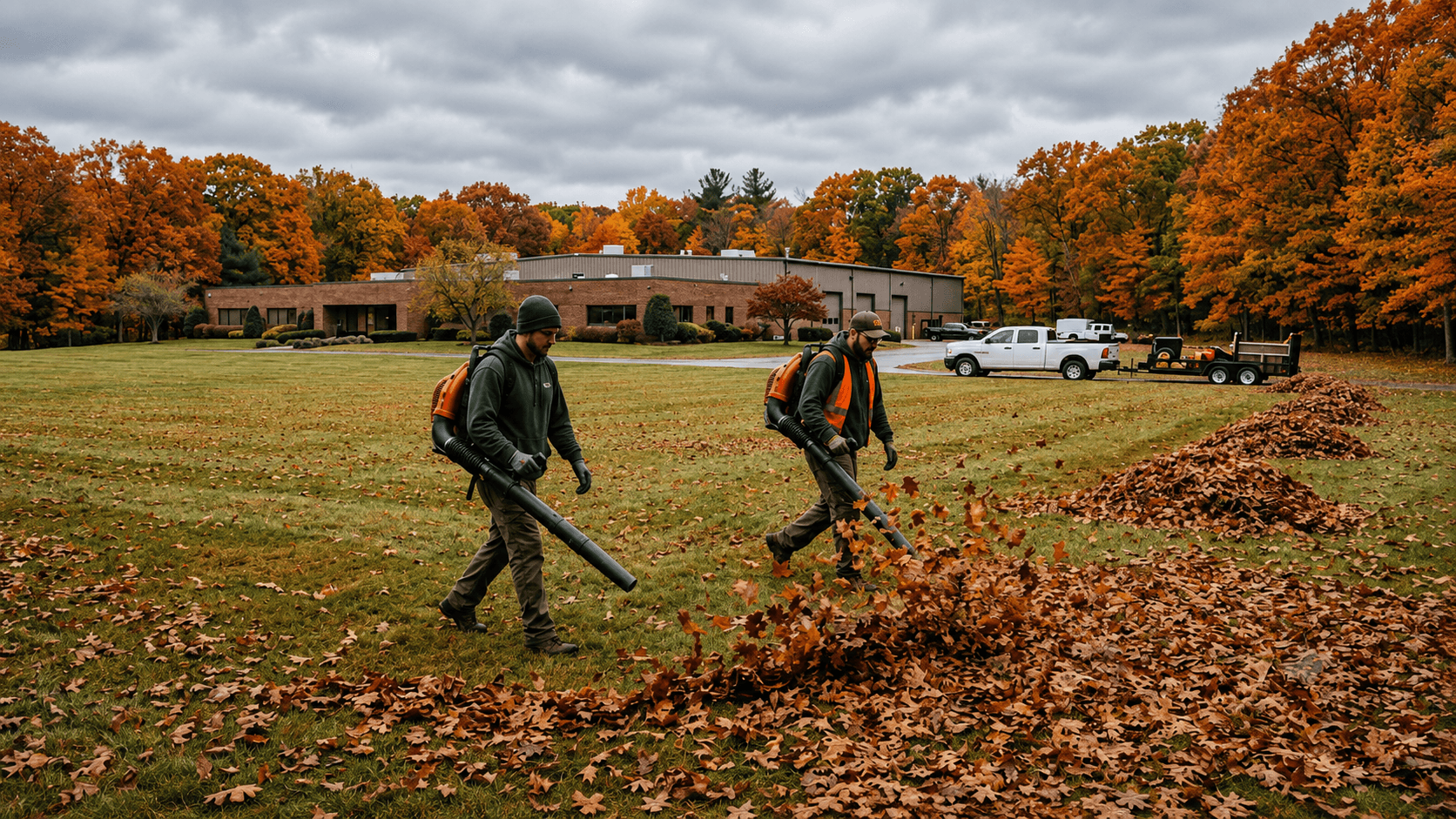
One crew running with a blown-out backpack blower or a leaf vacuum that keeps clogging doesn’t just slow down that crew. It slows down every job scheduled behind it that week. For a landscaping business or a property management company juggling multiple crews through fall cleanup season, the real cost isn’t the equipment itself. It’s the day a client’s lot doesn’t get cleared on schedule because a machine that should have been serviced in August broke down in October.
This is a checklist for getting a fleet fall-ready before that happens, not after.
What Underequipped Fall Cleanup Actually Costs
A single missed service call during peak leaf season can mean a client calling a competitor, and a competitor picking up a property management contract is a lot more expensive than a tune-up would have been. Run the math on your own crews: one lost half-day of billable work per crew, multiplied across however many properties get pushed to the next day, adds up fast during the six-week window when most of New Hampshire’s leaves come down at once.
Equipment that’s maintained on a schedule instead of run until it fails doesn’t just avoid breakdowns. It holds its resale value longer and needs fewer mid-season parts replacements, both of which matter more the bigger your fleet gets.
Put a rough number on it. If a crew loses half a day because a backpack blower dies mid-route, and that crew bills out at even a modest hourly rate, one breakdown can cost more than the tune-up would have across three or four units. Multiply that by however many crews you’re running and however many weeks are left in the season, and a fall service appointment stops looking like an expense and starts looking like insurance.
What a Fall Fleet Actually Needs
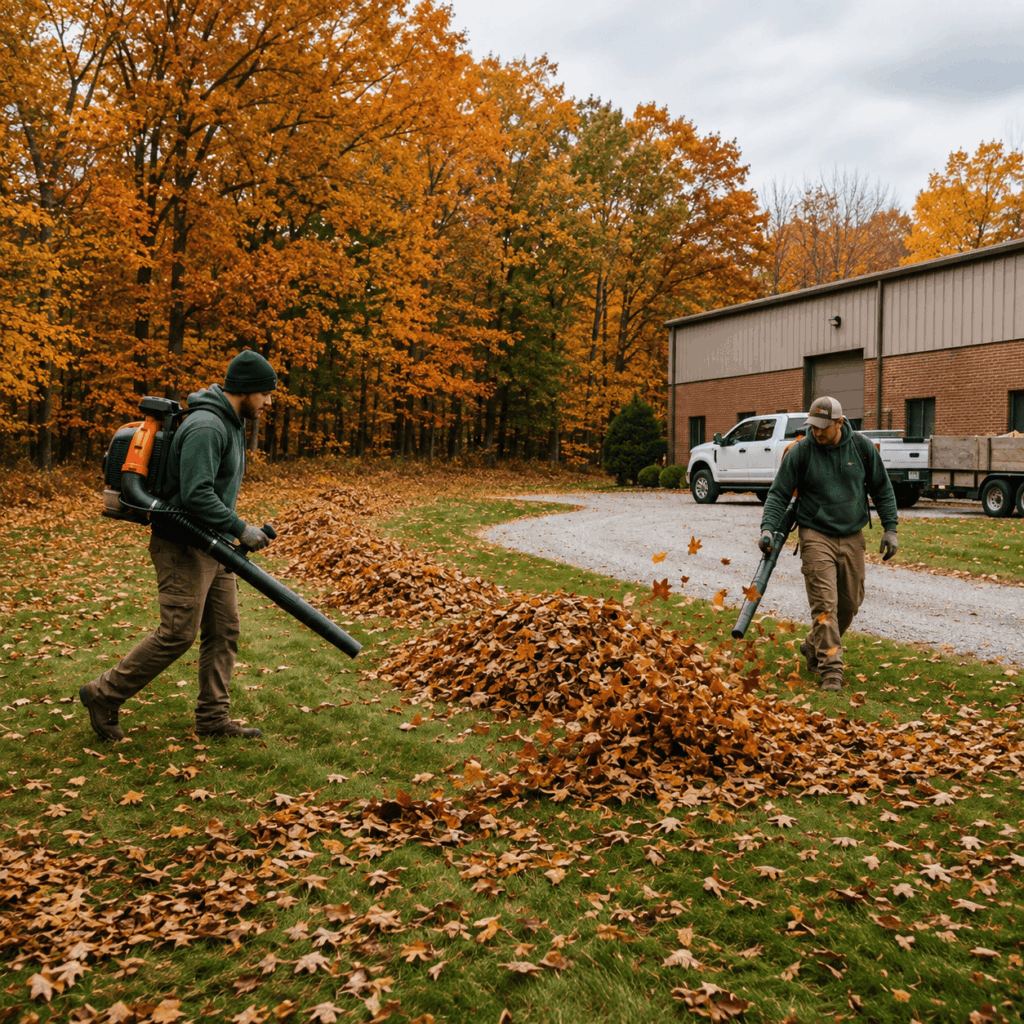
For a full walkthrough of CFM ratings, blade versus impeller vacuum systems, and what separates residential gear from commercial-grade equipment, see our leaf management tools guide.
Backpack blowers, in enough units to run every crew simultaneously. If two crews are sharing one spare blower because a third is in for repair, that’s not a fleet. That’s a bottleneck. Stihl and Echo backpack units are the workhorses most commercial crews rely on for repeated daily use, and buying in bulk through a fleet program is where the per-unit cost starts to make sense. If you’re weighing handheld models against backpack units for different parts of your route, the tradeoffs in weight, runtime, and power are worth working through before you order in bulk.
Walk-behind and tow-behind leaf vacuums for larger properties. For municipal contracts, HOA common areas, or any property where raking and bagging by hand would eat an entire crew day, a vacuum unit pays for itself in labor hours saved within the first few jobs of the season.
Bulk handheld inventory for smaller residential accounts. Not every property on a route needs heavy equipment. Keeping a stock of reliable handheld equipment on hand for quick residential stops keeps crews from over-deploying commercial-grade gear on jobs that don’t need it.
Backup units, not just backup parts. A spare filter doesn’t help mid-route if the whole engine needs a rebuild. Fleet accounts should carry at least one backup unit per equipment category so a single failure doesn’t take a crew off a job entirely.
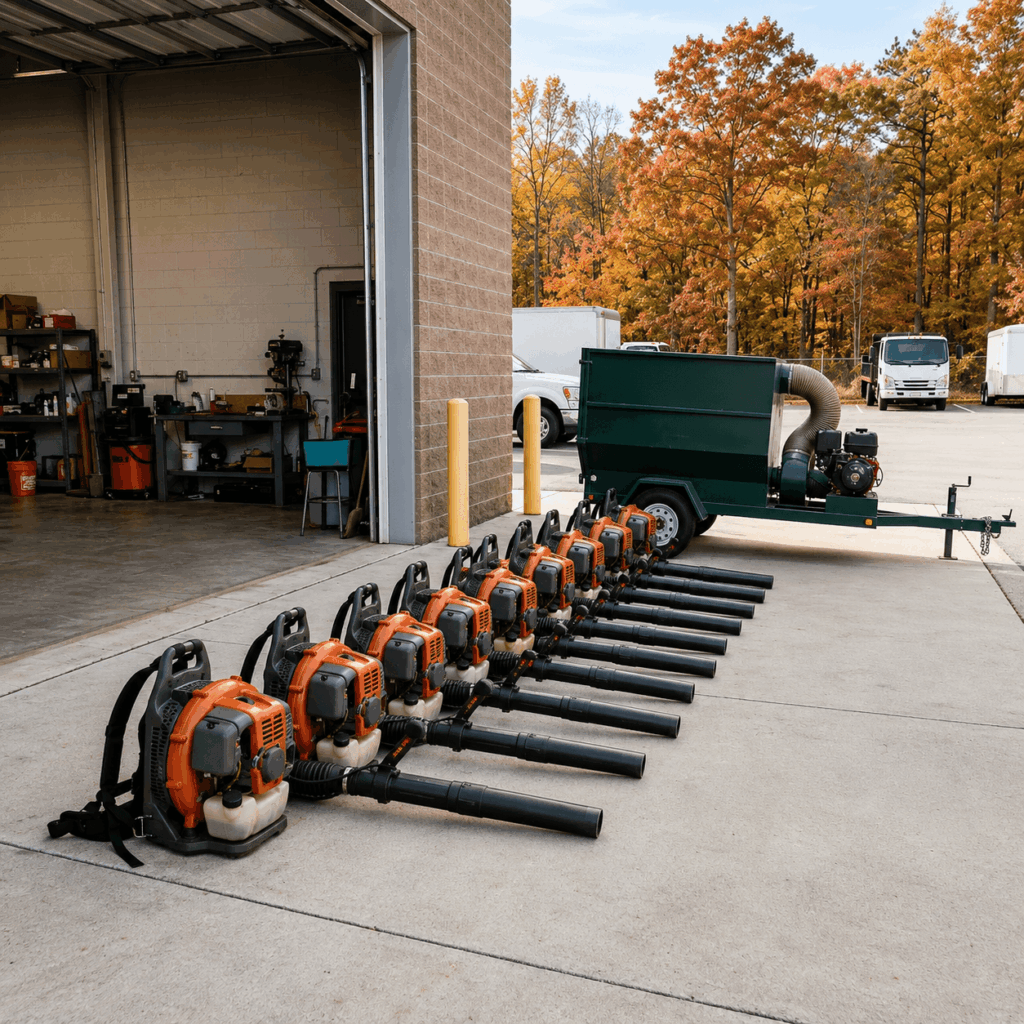
Not sure which blower or vacuum model actually fits your routes? Try before you buy lets you test equipment on your own properties before committing to a bulk order, so you’re not guessing at fleet fit from a spec sheet. For more on how this works for commercial buyers, our guide to testing equipment before a fleet purchase walks through the same idea for zero-turn mowers.
Landscaping Crews and Property Management Fleets Need Different Setups
A landscaping business running three to five crews and a property management company overseeing multiple sites face the same fall crunch, but the equipment problem looks a little different for each.
For a landscaping operation, the priority is usually having enough units that no crew is ever waiting on another crew to finish with a shared blower. Fleet size scales with crew count, not property count.
For a property management company, the priority tends to be staff training and consistency across whoever’s assigned to a given property that week. If staff rotate between properties, standardizing on the same equipment across the portfolio means less time spent explaining how a different blower or vacuum model works, and more time actually clearing the property. A bulk parts ordering system also matters more here, since a management company is often replacing the same wear parts across a dozen units rather than three or four.
Neither approach is more correct than the other. They’re just solving for different constraints, and it’s worth telling your account rep which one describes your business so the fleet plan actually matches how your crews work.
Fleet Pricing That Scales With Your Business
Seacoast Power Equipment’s commercial fleet program runs discount brackets from 15 to 25 percent depending on order volume, which means the math gets better the more your business grows, not worse. Beyond the unit discount, fleet accounts get priority service scheduling, so a fleet blower doesn’t sit in a general service queue behind residential walk-ins during the busiest month of the year.
Loaner equipment is available for qualified fleet accounts while a unit is in for repair, and extended payment terms are available for businesses that need to spread out a larger fleet purchase or expansion rather than paying it all upfront. None of that changes what the equipment costs to run. It changes how much it costs you when something goes wrong.
Keeping a Fleet Running Through Six Weeks of Peak Season
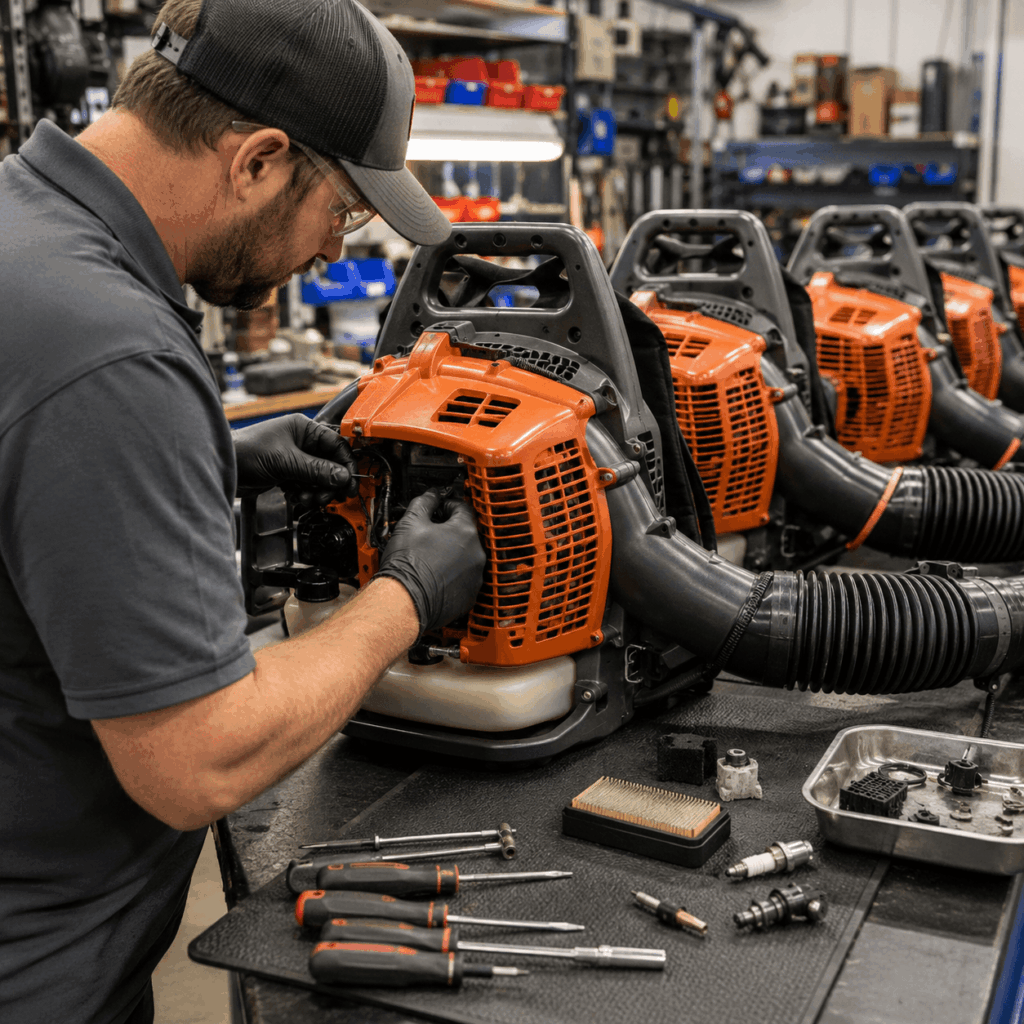
Seacoast Power Equipment has served the NH seacoast since 1965, and our factory-trained technicians see the same fall equipment failures every year: dirty carburetors, worn filters clogged from six weeks of continuous use, and drive belts that finally give out under commercial-duty hours. We carry a parts inventory of $150,000 or more specifically so a fleet account doesn’t lose days waiting on a shipped part during the six weeks when losing days matters most.
Most service jobs turn around in 24 to 48 hours, and for larger fleet accounts we offer bulk ordering on the parts that wear out fastest, filters, belts, and blades, so your crews aren’t waiting on a single unit’s repair before the next one needs the same part. Pickup and delivery are available throughout the NH seacoast and into southern Maine, which matters when a fleet truck is already fully loaded and doesn’t have room to detour to a service counter.
Fall Fleet Prep Checklist
- Service every backpack blower and leaf vacuum before the first heavy leaf drop, not after the first breakdown
- Confirm you have enough working units per crew, with at least one backup per category
- Stock filters, belts, and spark plugs for your specific fleet models before the season, not during it
- Review your fleet program discount bracket against this year’s planned order volume
- Confirm your priority service scheduling is set up before peak season, not once a crew is already stuck
- Walk through loaner equipment terms with your account rep so there’s no scramble if a unit goes down mid-route
Frequently Asked Questions
How does the fleet discount program work?
Discount brackets run from 15 to 25 percent based on order volume. Contact our commercial sales team to find out which bracket your business qualifies for and how it applies to both new equipment and bulk parts orders.
Can I get a loaner unit while my equipment is being serviced?
Yes, loaner equipment is available for qualified fleet accounts so a repair doesn’t take a crew off a job entirely.
Does Seacoast service equipment we didn’t buy from you?
Yes. Our factory-trained technicians service all makes and models, which matters for fleets that have accumulated equipment from multiple dealers over the years.
How far in advance should we schedule fall fleet service?
Ideally before the first heavy leaf drop, which for most of the seacoast region means getting equipment in during September rather than waiting until crews are already in the middle of peak cleanup season.
Do you offer extended payment terms for fleet purchases?
Yes, extended payment terms are available for qualified commercial accounts looking to expand or replace fleet equipment.
Ready to get your crews fall-ready before the leaves start piling up? Reach out to our commercial sales team to review your fleet program bracket and get your service schedule locked in before peak season hits.