
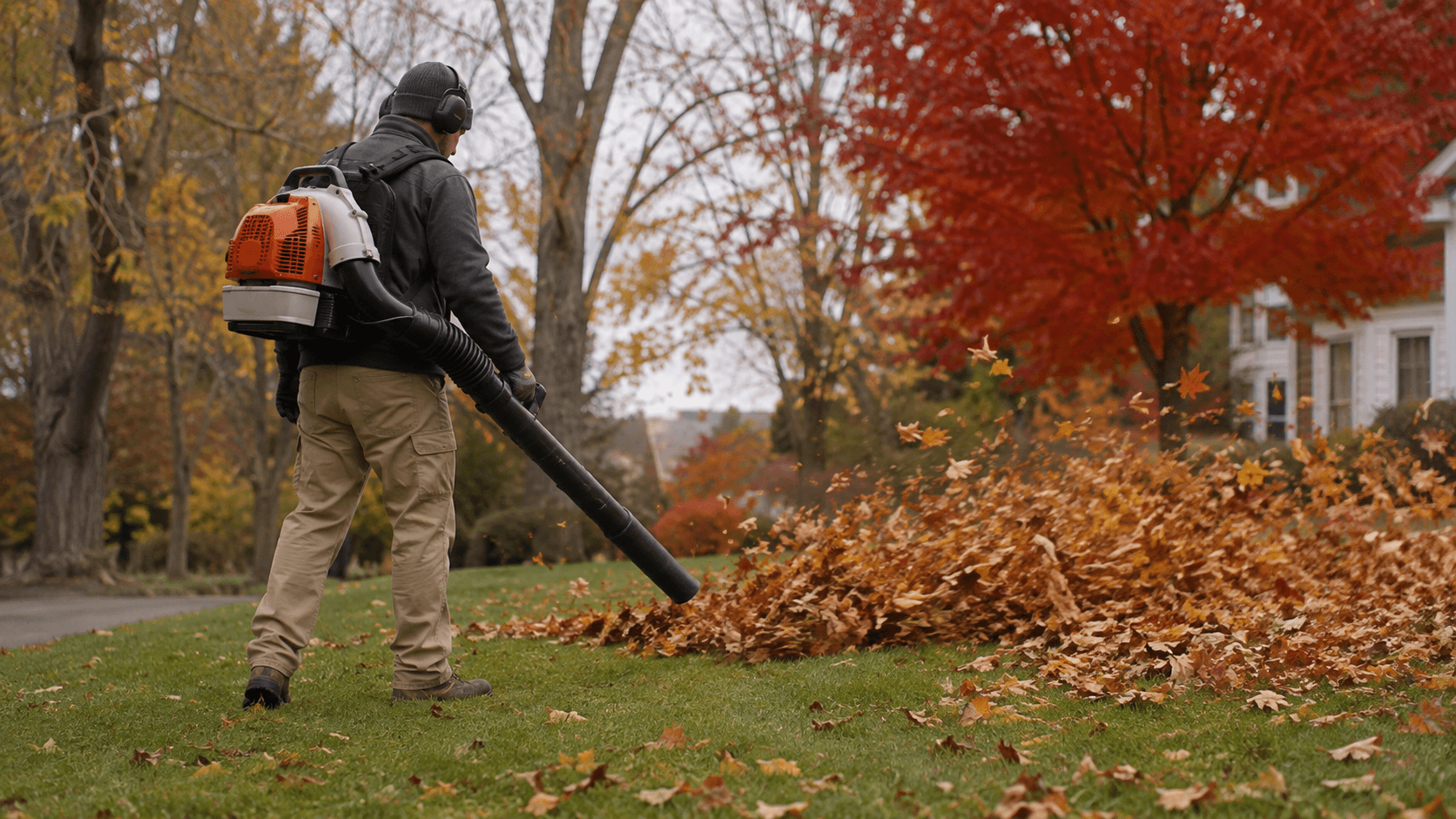
If you’ve stood in a driveway full of wet oak leaves wondering whether you actually need a leaf vacuum or if a decent blower will do, you’re asking the right question before you spend the money. The answer depends less on the brand name on the box and more on three things: how big your property is, how many mature trees are dropping onto it, and whether you’d rather deal with gas or a battery.
Big-box stores and national review sites will point you toward whatever’s selling well that week. We see the other side of it: what actually holds up through a real New Hampshire fall, and what comes back to our service department after one season because it was the wrong tool for the job.
Handheld, Backpack, or Vacuum? Start Here
Three basic categories cover almost every yard on the seacoast.
Handheld blowers are the lightest option and the easiest to store. They’re built for quarter-acre to half-acre lots with a handful of trees, not for clearing a densely wooded acre in one afternoon. If your arms are tired after ten minutes, you’ve outgrown this category.
Backpack blowers shift the weight to your shoulders and hips instead of your arm, which matters more than most people expect once you’re working a full lawn for an hour. Stihl and Echo both build backpack units that our service department sees far less often than the lighter handhelds, mostly because they’re not being pushed past what they’re designed for.
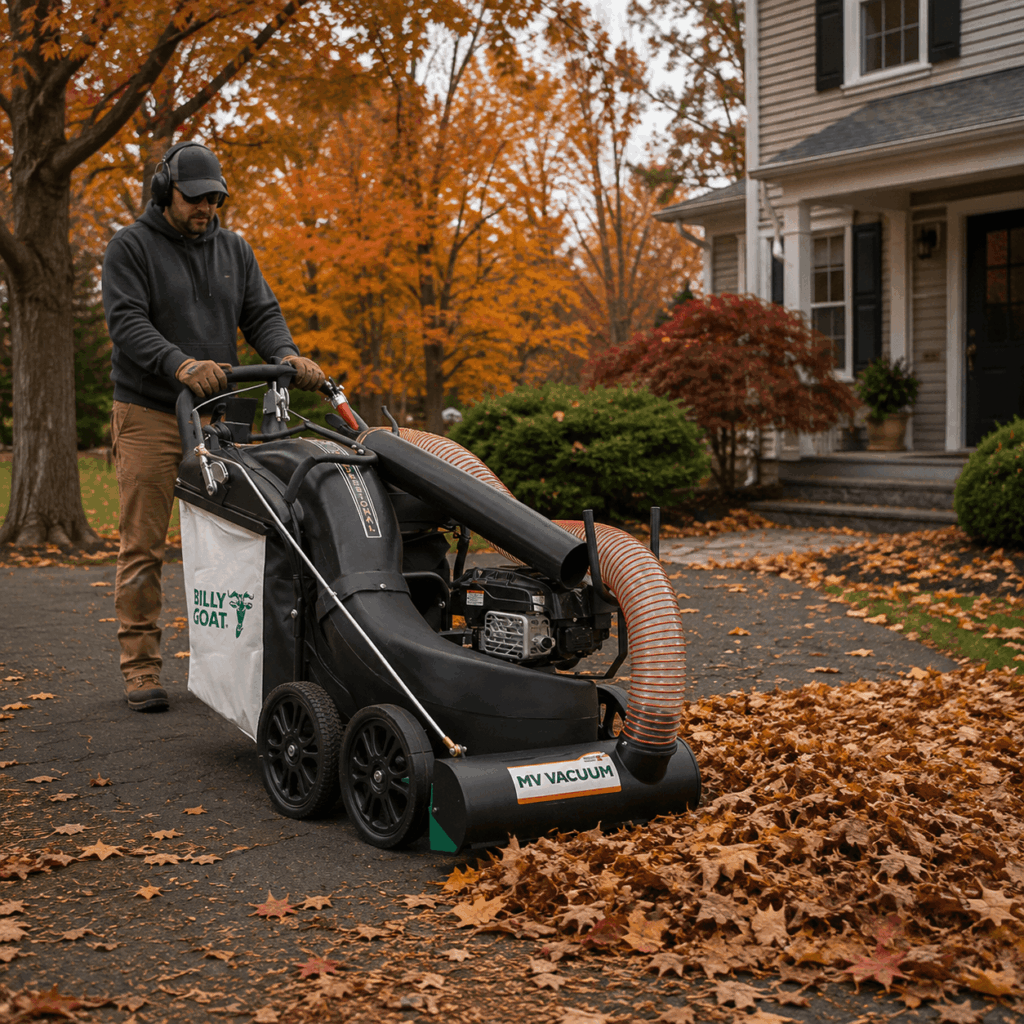
Leaf vacuums, walk-behind or tow-behind, are a different tool entirely. They don’t just move leaves into a pile, they collect and often mulch them, which cuts down on bagging time. Billy Goat is the brand most homeowners haven’t heard of until they see one in action on a half-acre lot with three or four big maples. Take a look at our leaf vacuum inventory before you assume a blower is your only option.
The tradeoff with a leaf vacuum is storage and price. A walk-behind unit takes up real space in a garage or shed, and it costs more upfront than a blower. For a property with one or two shade trees, that cost doesn’t make sense. For a property that generates several tarps’ worth of leaves every weekend from mid-September through November, it can pay for itself in saved time within a single season.
Gas or Battery: What Actually Holds Up Here
This is where a lot of online buying guides give generic advice that doesn’t account for a New England fall. A few things to know before you decide:
Battery blowers have come a long way over the last few years, and for a smaller property with one cleanup session per weekend, a battery handheld is often enough. But run time drops in cold weather, and by late October in New Hampshire, you’re not working in July conditions anymore. If you’re planning a full afternoon of cleanup in 40-degree weather, budget for a spare battery or lean toward gas. We’ve had customers bring back a battery unit in November confused about why it’s not lasting as long as it did in September. It’s not a defective battery. It’s just cold lithium-ion chemistry doing what cold lithium-ion chemistry does.
Gas backpack blowers and vacuums don’t have that limitation, and for bigger properties or repeated weekend use through October and November, that consistency usually wins out. The tradeoff is more maintenance: fuel system upkeep, mixing oil correctly for two-stroke engines, and the kind of engine tune-ups our technicians handle every fall.
Matching Equipment to Your Property
Quarter-acre to half-acre, a few shade trees. A quality handheld blower, gas or battery, covers this. You don’t need a vacuum or a backpack unit unless you specifically want the mulching benefit.
Half-acre to one acre, moderate tree cover. This is where a backpack blower starts to make sense, especially if you’re doing the cleanup yourself rather than hiring it out. A leaf vacuum is also worth considering here if you’d rather collect and mulch in one pass instead of blowing, raking, and bagging separately.
One acre or more, heavy tree cover, or a property you’re maintaining for someone else. A walk-behind or tow-behind leaf vacuum earns its space in the garage at this size. It’s the difference between an afternoon and a weekend.
If you’re not sure which bucket you fall into, that’s a normal question, and it’s exactly what our team walks through when you come in. We’d rather talk you out of overbuying than sell you something that sits unused after the first frost. For a broader look at rakes, tarps, and mulching options alongside powered equipment, our guide to leaf management tools covers the full lineup.
Doing this for a living, or for a client’s property. If you’re a landscaper or you’re maintaining several properties for other people, this guide is really a starting point rather than an answer. Commercial-grade backpack blowers and larger tow-behind vacuums built for repeated daily use are a different conversation, one that usually involves fleet pricing rather than a single unit off the shelf. If that’s your situation, it’s worth a separate conversation with our commercial sales team about what a full fleet setup looks like for your crew.
Keeping It Running Past This Fall
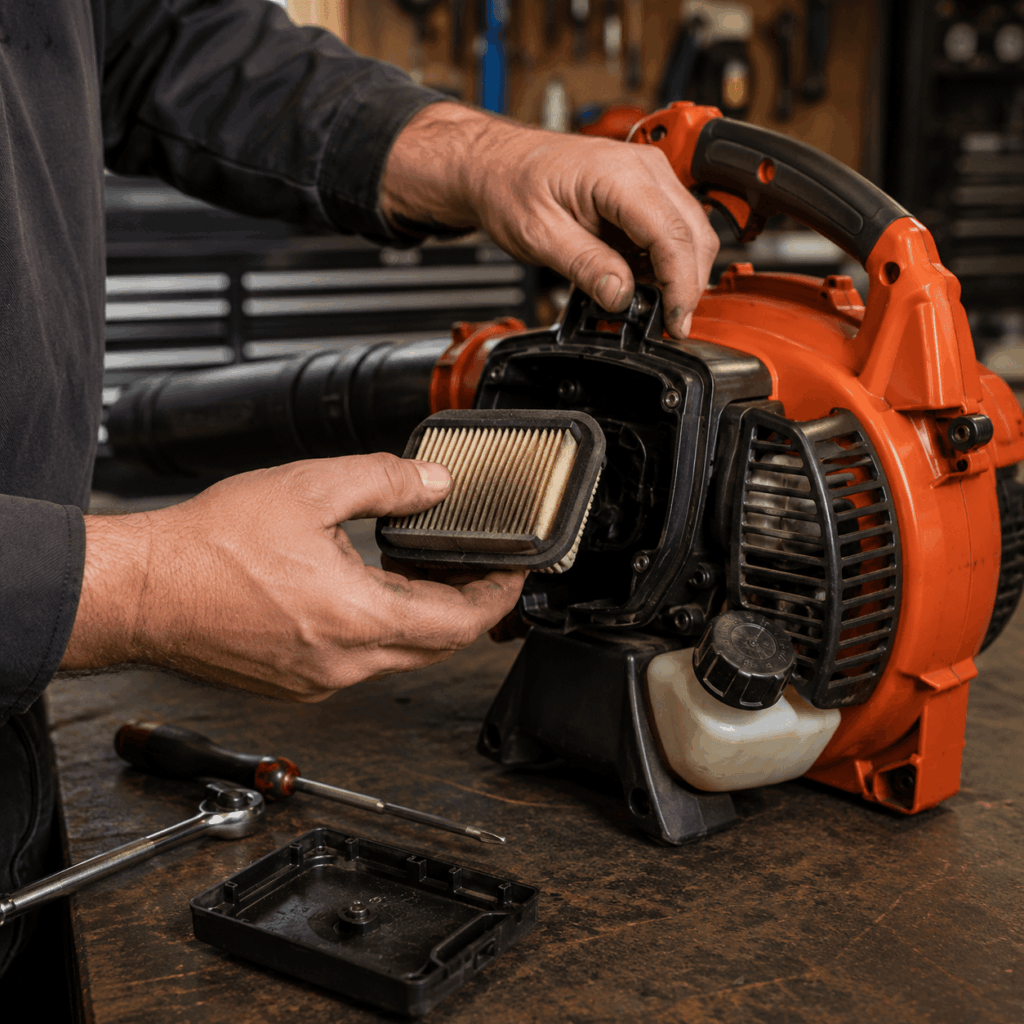
Whatever you buy, the equipment that lasts is the equipment that gets serviced. Seacoast Power Equipment has been factory-trained on the brands we carry and serving New Hampshire’s seacoast since 1965, which means when your blower won’t start next October, we’ve likely already seen the exact problem on a dozen other units that season.
We carry a $150,000-plus parts inventory on hand, so a stuck primer bulb or a worn air filter usually means a same-day fix rather than a two-week wait for a part to ship. Most service jobs turn around in 24 to 48 hours. And if you’re not sure which model actually fits your property, our Try Before You Buy program means you can test equipment before committing, rather than guessing from a spec sheet. For a full rundown of what else needs attention before winter, see our complete fall equipment maintenance checklist, which covers mowers, generators, and chainsaws along with blowers.
Pickup and delivery are available throughout the NH seacoast and into southern Maine, which matters more than people expect once they’re trying to get a 60-pound tow-behind vacuum home from the shop. Details on service area and scheduling are on our pickup and delivery page.
Frequently Asked Questions
Do I need a leaf vacuum if I already have a mower with a bagger?
For light leaf cover, a bagging mower can handle it. Once you’ve got multiple mature trees dropping at once, a dedicated blower or vacuum will clear the yard faster and won’t scalp wet grass the way repeated mower passes can.
How long does a battery backpack blower run in cold weather?
Run time drops as temperature drops, and the exact number depends on the battery and the unit. If you’re planning extended fall cleanup sessions, ask our team about the specific runtime for the model you’re considering before you buy.
Can Seacoast service a leaf blower or vacuum I didn’t buy here?
Yes. Our factory-trained technicians service all makes and models, not just what we sell.
What’s the difference between mulching and just blowing leaves into a pile?
Mulching shreds the leaves as they’re collected, which reduces the volume you’re bagging or hauling and can be used as groundcover. A basic blower just moves leaves without reducing their volume.
Is a two-stroke or four-stroke engine better for a backpack blower?
Two-stroke engines are lighter and simpler, which is why most backpack blowers use them, but they need the fuel mixed with oil at the correct ratio. Four-stroke engines run on straight gas and tend to run cleaner and quieter, though the units themselves are usually heavier. Either holds up fine with regular maintenance; the bigger factor is usually weight and noise preference, not durability.
Do you deliver leaf equipment, or do I need to pick it up?
We offer pickup and delivery throughout the NH seacoast and into southern Maine for both new equipment and service.
Ready to figure out which leaf cleanup setup actually fits your property? Stop by our North Hampton location or reach out to our team, and we’ll help you match the right equipment to the right yard before the leaves start coming down.