
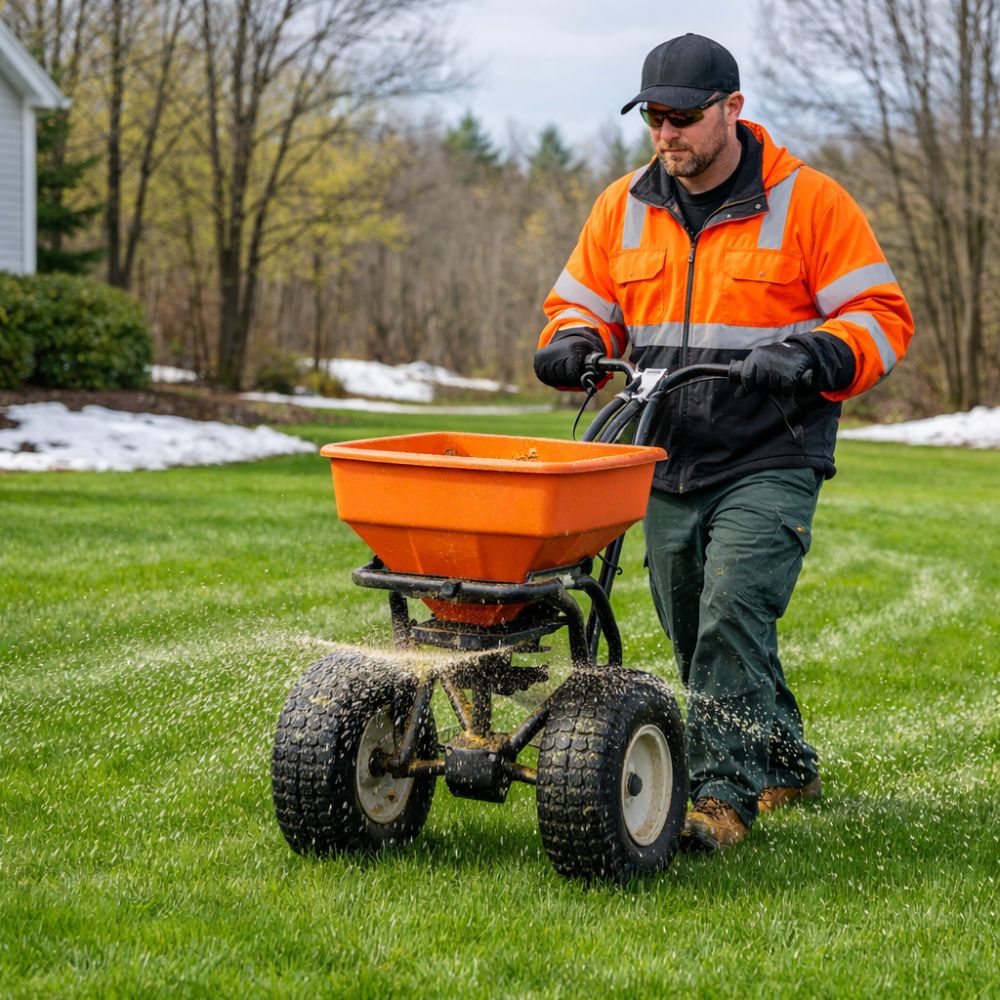
March arrives in New Hampshire with unpredictable weather patterns that make lawn care timing particularly challenging for homeowners and professional landscapers alike. You check the calendar, see that spring officially begins on March 20th, and assume it’s time to apply pre-emergent herbicide. However, this calendar-based approach often leads to wasted applications, poor weed control, and frustrated property owners wondering why crabgrass still invaded their carefully maintained lawns.
The reality is that successful pre-emergent herbicide application depends entirely on soil temperature, not calendar dates. While your neighbor might apply their treatment in mid-March, optimal timing for your property could fall anywhere from late March through early May depending on your specific location within New Hampshire’s diverse climate zones. Understanding this soil temperature principle transforms pre-emergent applications from guesswork into a science-backed strategy that delivers reliable results season after season.
After nearly 60 years serving the seacoast region, we’ve seen countless lawn care mistakes that could have been prevented with proper timing knowledge. This comprehensive guide explains why soil temperature monitoring is the single most important factor in pre-emergent herbicide success, how to measure it correctly, and what timing strategies work best for different New Hampshire locations and property types. For a complete overview of spring preparation tasks, see our spring lawn equipment checklist.
Understanding Pre-Emergent Herbicides and Their Critical Timing Window
Pre-emergent herbicides work by creating a chemical barrier in the upper soil layer that prevents weed seeds from completing germination. Unlike post-emergent treatments that kill existing weeds, pre-emergent products must be in place before target weeds begin their germination process. This narrow application window makes timing absolutely critical for effective weed control.
The chemistry behind pre-emergent herbicides requires soil incorporation through rainfall or irrigation within days of application. Once incorporated, these products form a protective barrier in the top 1-2 inches of soil where weed seeds germinate. This barrier remains effective for 8-12 weeks depending on the specific product formulation, environmental conditions, and application rate.
Feature Snippet: Pre-emergent herbicides create a soil barrier that prevents weed seed germination for 8-12 weeks. Application must occur before target weeds reach the germination stage, which begins when soil temperatures reach 50-55°F for three consecutive days. Missing this window by even one week can reduce effectiveness by 40-60% for the entire growing season.
Common Target Weeds in New Hampshire Lawns
Pre-emergent herbicides target annual weeds that germinate from seed each year. Understanding which weeds threaten your specific property helps determine optimal application timing and product selection.
Primary spring-germinating weeds:
- Crabgrass (smooth and hairy varieties)
- Goosegrass
- Foxtail (green, yellow, and giant types)
- Annual bluegrass (Poa annua)
- Spurge
- Purslane
Secondary concerns:
- Chickweed (germination begins in fall)
- Henbit and deadnettle
- Prostrate knotweed
- Yellow woodsorrel
Crabgrass represents the most significant concern for New Hampshire homeowners and professional landscapers. This aggressive annual grass thrives in the heat of summer but begins its germination cycle in spring when soil temperatures consistently reach 55°F. A single crabgrass plant can produce 150,000 seeds during one growing season, creating an exponentially growing problem if left uncontrolled. For comprehensive maintenance strategies during peak growing season, see our guide to lawn care during active mowing months.
Why Application Timing Determines Success or Failure
Pre-emergent herbicide effectiveness depends on establishing the soil barrier before weed seeds begin germinating. Apply too early, and the product may break down before target weeds start germinating. Apply too late, and weed seeds will have already sprouted, rendering the pre-emergent completely ineffective against those plants.
Research from university turf programs demonstrates that pre-emergent applications made one week after optimal timing show 40% reduced effectiveness. Applications two weeks late may provide less than 25% control. This dramatic effectiveness decline occurs because the herbicide cannot affect weeds that have already germinated and emerged through the soil surface.
Application Timing Impact on Effectiveness:
| Application Timing | Control Effectiveness | Cost-Effectiveness | Result |
| Too Early (February, soil 30-40°F) | 20-30% | Poor | Product breaks down before germination begins |
| Slightly Early (soil 45-50°F) | 60-75% | Fair | Partial barrier degradation, some breakthrough |
| Optimal (soil 50-55°F for 3 days) | 85-95% | Excellent | Full-season control with proper coverage |
| 1 Week Late | 40-50% | Fair | Significant early germination already occurred |
| 2+ Weeks Late | 10-25% | Poor | Most target weeds already established |
The economic impact of mistimed applications is substantial. Professional landscapers waste thousands of dollars annually on ineffective treatments applied at incorrect times. Homeowners spend $50-150 per application only to battle crabgrass all summer when a properly timed treatment would have prevented the problem entirely.
The Science Behind Soil Temperature and Weed Germination
Weed seeds remain dormant in soil until environmental conditions trigger germination. Temperature serves as the primary trigger, with each weed species requiring specific temperature thresholds before germination begins. Understanding these thresholds allows you to time pre-emergent applications with precision rather than guessing based on calendar dates.
Critical Temperature Thresholds for Common Weeds
Different weed species germinate at different soil temperatures, creating a germination sequence throughout spring and early summer. Understanding this sequence helps landscapers and homeowners target specific weed problems with appropriately timed applications.
Crabgrass germination temperatures:
- Germination begins: 55-60°F
- Optimal germination: 65-70°F
- Peak germination: 70-75°F
Other common weed germination temperatures:
- Annual bluegrass: 50-60°F
- Goosegrass: 60-65°F
- Foxtail: 55-65°F
- Purslane: 60-70°F
- Spurge: 65-75°F
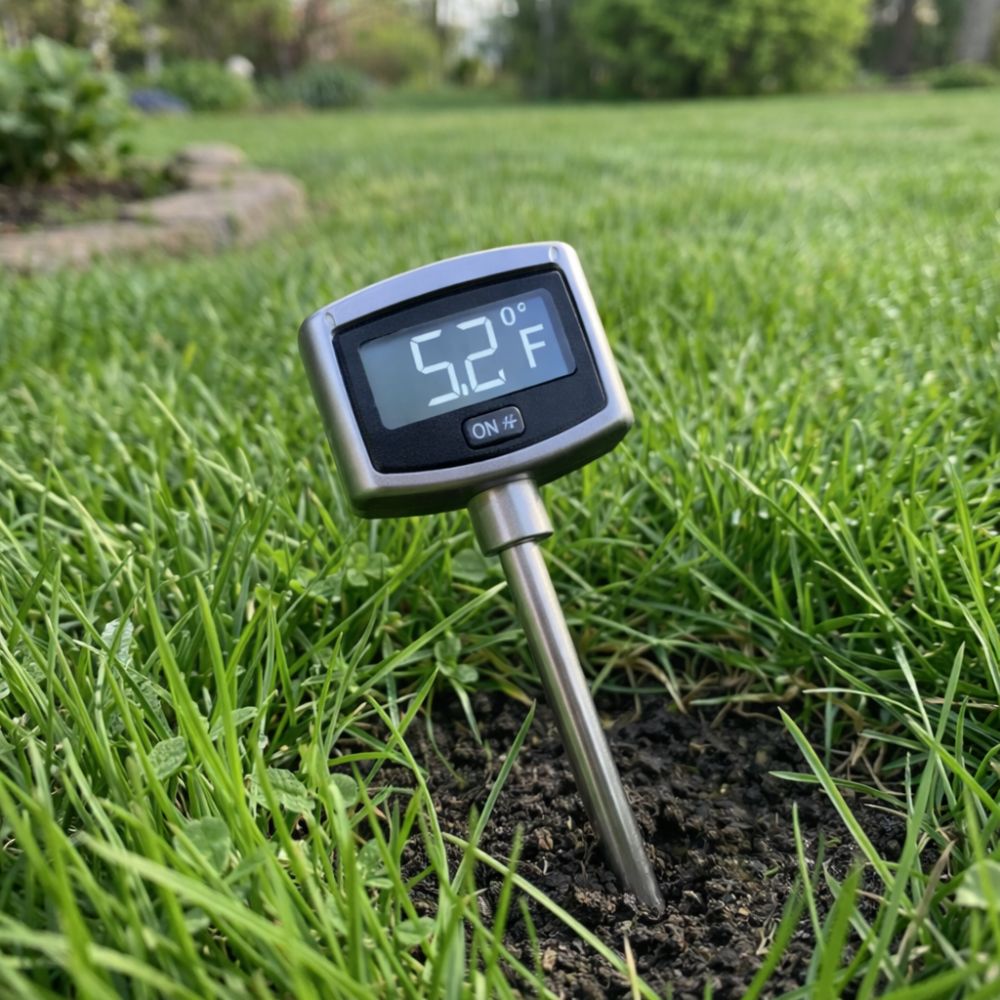
The 50-55°F soil temperature range represents the critical threshold for New Hampshire lawn care. When soil temperatures reach this range for three consecutive days, crabgrass and other annual grassy weeds begin their germination cycle. Pre-emergent herbicides must already be in place and properly incorporated into the soil before this threshold is crossed.
How Soil Temperature Differs from Air Temperature
Many homeowners make the mistake of using air temperature as a proxy for soil temperature, leading to mistimed applications and poor results. Soil temperature lags behind air temperature changes by several days to weeks depending on soil composition, moisture content, sun exposure, and existing vegetation cover.
A warm March day reaching 70°F air temperature does not mean soil temperatures have similarly increased. Soil acts as a thermal mass that warms and cools slowly. After a cold winter, New Hampshire soils may remain below 50°F even when air temperatures reach 60-70°F during sunny spring days. This lag period can extend for 2-4 weeks in heavily shaded areas or locations with deep snow cover that persisted into late March.
Factors affecting soil warming rates:
- Sun exposure (south-facing areas warm first)
- Soil moisture content (wet soil warms slower)
- Soil composition (sandy soil warms faster than clay)
- Vegetation cover (bare soil warms faster than turfgrass)
- Snow cover duration (areas with late snow melt warm later)
- Elevation (higher elevations warm later)
Geographic Variations Across New Hampshire
New Hampshire’s diverse topography creates significant soil temperature variations across the state. Coastal areas typically warm 1-2 weeks earlier than interior regions, while mountain areas may lag by 3-4 weeks. These geographic differences make statewide calendar-based timing recommendations completely unreliable.
Typical soil temperature timelines by region:
Seacoast region (Portsmouth, Hampton, North Hampton):
- Soil reaches 50°F: Late March to early April
- Optimal application window: March 25 – April 10
- Second application timing: Late May to early June
Southern interior (Nashua, Manchester, Concord):
- Soil reaches 50°F: Early to mid-April
- Optimal application window: April 5 – April 20
- Second application timing: Early to mid-June
Lakes region (Laconia, Meredith, Wolfeboro):
- Soil reaches 50°F: Mid- to late April
- Optimal application window: April 15 – April 30
- Second application timing: Mid- to late June
North country (Berlin, Colebrook, Pittsburg):
- Soil reaches 50°F: Late April to early May
- Optimal application window: April 25 – May 10
- Second application timing: Late June to early July
These regional differences highlight why calendar-based recommendations fail. An application perfectly timed for the seacoast region would be 3-4 weeks too early for northern New Hampshire, resulting in complete product breakdown before target weeds begin germinating.
How to Accurately Measure Soil Temperature
Proper soil temperature measurement requires the right equipment and correct measurement technique. Homeowners and professional landscapers need reliable data to make informed application timing decisions.
Selecting the Right Soil Thermometer
Several thermometer types work for soil temperature measurement, each with advantages and limitations for lawn care applications.
Digital probe thermometers offer the most versatility for lawn care professionals and serious homeowners. These devices provide instant readings, work in various soil conditions, and typically cost $15-40 depending on features. Look for models with 4-6 inch probes and clear digital displays readable in bright sunlight.
Dial soil thermometers represent the traditional choice for agricultural and horticultural applications. These analog devices cost $10-25 and provide reliable readings without batteries. The main limitation is slower reading time compared to digital models, requiring 60-90 seconds for accurate measurements.
Infrared thermometers measure surface temperature only and should not be used for pre-emergent timing decisions. These devices cannot measure soil temperature at the 2-3 inch depth where weed seeds germinate, making them unsuitable despite their convenience for other applications.
Correct Measurement Technique
Accurate soil temperature measurement requires following specific protocols that account for daily temperature fluctuations and measurement depth consistency.
Step-by-step measurement process:
Step 1: Choose representative locations. Measure soil temperature in 3-5 different areas of your property that receive varying sun exposure. Avoid measuring only in the warmest or coolest spots.
Step 2: Measure at the correct depth. Insert the thermometer probe 2-3 inches into the soil. This depth corresponds to where most annual weed seeds germinate and where pre-emergent herbicides create their protective barrier.
Step 3: Take measurements at consistent times. Soil temperature fluctuates throughout the day. Take readings between 8 and 10 AM for the most stable and representative measurements. Avoid measuring during the heat of the afternoon when surface temperatures may be misleadingly high.
Step 4: Wait for stable readings. Digital thermometers typically stabilize within 10-15 seconds. Dial thermometers need 60-90 seconds. Don’t rush the measurement, or you’ll record inaccurate data.
Step 5: Track temperatures over multiple days. Record soil temperatures for at least 5-7 consecutive days to identify trends. You need three consecutive days with temperatures at or above 50-55°F before crabgrass germination begins.
Step 6: Account for weather patterns. A single warm day followed by cold weather doesn’t trigger germination. Watch for sustained warming trends indicating spring has truly arrived.
Using Online Resources and Weather Stations
Several online resources provide soil temperature data for New Hampshire locations, offering convenient alternatives to manual measurement for homeowners who prefer not to purchase their own thermometer.
The NOAA National Weather Service maintains soil temperature monitoring stations across New Hampshire. These stations provide daily readings at standard depths, though the nearest station may be 20-30 miles from your property. Use these readings as general guidance but understand that your specific property may warm faster or slower depending on local conditions.
University of New Hampshire Cooperative Extension publishes regional soil temperature data during spring months. This information helps establish general timing windows for different parts of the state, though individual properties will vary based on specific site characteristics.
GreenCast Online and similar turf management platforms offer growing degree day calculators and soil temperature tracking tools designed specifically for lawn care professionals. These resources aggregate data from multiple weather stations to provide localized recommendations.
While online resources provide helpful guidance, nothing replaces actual on-site measurement for properties with unique characteristics like heavy shade, unusual soil types, or significant elevation changes.
Optimal Application Timing Strategy for New Hampshire
Creating an effective pre-emergent strategy for New Hampshire lawns requires understanding product characteristics, split application benefits, and how to adjust timing for specific property conditions.
The Three-Day Rule for Application Timing
Professional landscapers and university turf programs recommend the three-day rule for pre-emergent herbicide application. When soil temperatures reach 50-55°F for three consecutive days, you have approximately 7-10 days to apply your pre-emergent treatment before crabgrass germination begins in earnest.
This timing window provides enough advance notice to schedule applications while ensuring the product is in place before significant germination occurs. Waiting until soil temperatures reach 60°F or higher typically means you’ve missed the optimal window, though you may still achieve partial control if you apply immediately.
Practical application of the three-day rule:
Day 1: Soil temperature reaches 52°F
Day 2: Soil temperature reaches 54°F
Day 3: Soil temperature reaches 53°F
Day 4-10: Optimal application window
Day 11+: Germination likely has begun, effectiveness will be reduced
Split Application Strategy for Extended Protection
Pre-emergent herbicides remain effective for 8-12 weeks depending on product formulation, application rate, and environmental conditions. However, New Hampshire’s extended growing season means a single spring application may not provide protection through the entire period when weed seeds can germinate.
Split application strategies divide the total annual pre-emergent rate into two applications spaced 8-10 weeks apart. This approach extends the protective period while potentially reducing the environmental load from any single application.
Standard split application timing for New Hampshire:
First application:
- Timing: When soil temperatures reach 50-55°F (typically late March to mid-April in the seacoast region)
- Rate: 50-75% of the full annual rate
- Target: Early-germinating weeds including crabgrass and annual bluegrass
Second application:
- Timing: 8-10 weeks after first application (typically late May to early June)
- Rate: 25-50% of the full annual rate
- Target: Late-germinating weeds and any seeds that may have escaped the first application
This strategy provides continuous protection from early April through late August or early September, covering the entire period when annual grassy weeds germinate in New Hampshire.
Adjusting Timing for Different Property Characteristics
Not all areas of your property will warm at the same rate. Understanding these microclimate variations helps you decide whether to treat your entire property on the same day or stagger applications based on specific conditions.
South-facing slopes and beds warm 1-2 weeks earlier than north-facing areas. These locations may require earlier application to prevent crabgrass that germinates before cooler areas of the property.
Heavily shaded areas under tree canopies or near buildings warm significantly slower than open lawn areas. These locations can often wait 7-10 days longer for applications without sacrificing effectiveness.
Previously problematic areas where crabgrass was heavy in prior years should receive priority in your application schedule. Even if soil temperatures suggest you have another week before optimal timing, treating these areas first provides extra protection against the heaviest weed pressure.
Newly seeded or overseeded areas require special consideration. Most pre-emergent herbicides prevent grass seed germination just as effectively as they prevent weed seed germination. Wait 60-90 days after seeding before applying pre-emergent treatments, or plan to seed in fall after the pre-emergent barrier has broken down.
Product Selection Considerations
Different pre-emergent herbicide products offer varying characteristics that affect application timing and effectiveness.
Granular products require rainfall or irrigation within 7-10 days of application to move the active ingredient into the soil barrier zone. If you’re applying during a dry spell, plan to irrigate within a few days or wait for forecasted rainfall.
Liquid products can be watered in immediately after application, providing more control over timing and incorporation. Professional landscapers often prefer liquids for this reason, though homeowners may find granular products easier to apply with standard broadcast spreaders.
Product longevity varies by active ingredient. Products containing dithiopyr or prodiamine typically provide 12-16 weeks of control, while products with shorter residual periods may require earlier second applications.
Common Mistakes That Undermine Pre-Emergent Effectiveness
Even when soil temperature monitoring guides your timing decision, several common mistakes can reduce or eliminate pre-emergent herbicide effectiveness. Understanding these pitfalls helps both homeowners and professional landscapers achieve consistent results.
Calendar-Based Application Without Temperature Verification
The most common mistake involves applying pre-emergent herbicide based solely on calendar dates without verifying soil temperature. This approach works only if weather patterns follow historical averages precisely, which occurs less than 50% of the time in New Hampshire’s variable climate.
An unusually warm March can push soil temperatures above the germination threshold 2-3 weeks earlier than average. Conversely, a cold spring can delay optimal application timing by 2-3 weeks. Relying on “always apply around April 1st” guarantees mistimed applications in years when weather deviates from historical norms.
Professional landscapers who service hundreds of properties cannot practically measure soil temperature at each location. However, establishing several representative monitoring sites across their service area allows them to make informed decisions rather than following arbitrary calendar dates.
Applying During or Before Heavy Rainfall
Pre-emergent herbicides need to be incorporated into the soil, but too much water too soon after application can move the active ingredient below the critical 1-2 inch barrier zone where it needs to reside. Heavy rainfall (more than 1 inch) within 24-48 hours of application can wash the product deeper into the soil profile where it becomes less effective against surface-germinating weed seeds.
Check weather forecasts before scheduling applications. Light to moderate rainfall (0.25-0.5 inches) within a few days of application is ideal for incorporation. Heavy storms should prompt you to delay application until weather stabilizes.
Inconsistent Application Coverage
Pre-emergent herbicides only work where they’re applied. Skips, misses, and thin coverage areas will allow weeds to germinate and establish exactly where protection is needed most.
Common coverage problems:
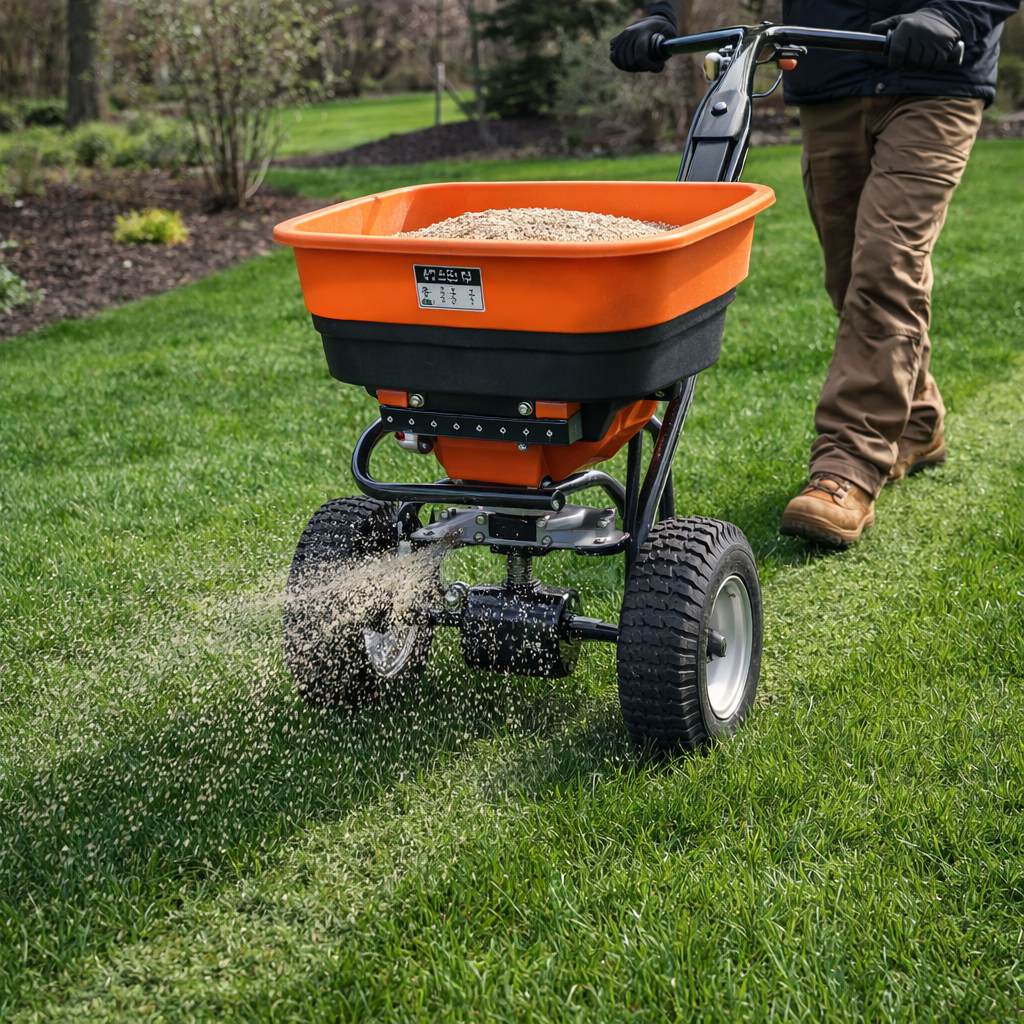
Spreader overlap errors occur when you don’t maintain consistent overlap between passes. Most broadcast spreaders distribute product in a pattern that requires 30-50% overlap between passes for complete coverage.
Irregular walking speed creates heavy and light application rates across the lawn. Professional applicators maintain a steady, consistent walking pace throughout the entire application.
Empty spreader corners happen when you fail to cover areas near obstacles like trees, gardens, or structures where turning the spreader is necessary.
Calibration failures result from never checking spreader settings against actual output rates. Spreaders wear over time, changing delivery rates even when settings remain unchanged.
Disturbing Soil After Application
Pre-emergent herbicides create a chemical barrier in the top 1-2 inches of soil. Any activity that disrupts this layer breaks the barrier and allows weeds to germinate through the gaps.
Activities to avoid for 8-12 weeks after application:
Core aeration punches thousands of holes through the pre-emergent barrier, creating perfect germination sites for crabgrass. Always aerate before applying pre-emergent, never after. Understanding when to perform soil-disrupting tasks is critical.
Dethatching or power raking severely disrupts the soil barrier. Schedule these aggressive lawn renovation practices for fall, not spring.
Heavy raking for spring cleanup should be done before pre-emergent application, not after.
Garden bed expansion or landscape renovation projects that disturb soil should be completed before applying pre-emergent or delayed until fall.
If you must disturb the soil after application, spot-treat those areas with post-emergent herbicides when weeds inevitably germinate through the broken barrier.
Pre-Emergent Application for Commercial Landscapers and Property Managers
Professional landscapers managing multiple properties across New Hampshire face unique challenges in pre-emergent timing and application. Success requires systematic approaches that balance efficiency with effectiveness.
Managing Multiple Properties Across Climate Zones
Commercial landscapers typically service properties across 30-50 mile service areas, creating significant variations in optimal application timing. A property on the coast may require treatment 2-3 weeks before a property 40 miles inland at higher elevation.
Professional timing strategies:
Zone-based scheduling divides your service area into 3-4 zones based on elevation and distance from the coast. Monitor soil temperature at representative properties in each zone to establish zone-specific application windows.
Client communication protocols inform customers when their property will be treated based on actual soil temperatures rather than arbitrary dates. This education reduces customer complaints about why their neighbor was treated two weeks earlier.
Flexible scheduling capacity maintains availability throughout a 4-6 week window rather than trying to treat all properties during a single week. This flexibility allows you to respond to actual soil temperature data rather than forcing applications to fit rigid schedules.
Weather contingency planning includes backup dates and crews ready to mobilize when weather windows open unexpectedly during variable spring conditions.
Equipment Calibration and Maintenance
Professional application equipment requires regular calibration and maintenance to deliver consistent results across hundreds of properties throughout the season.
Critical calibration procedures:
Pre-season spreader calibration verifies that equipment delivers the intended application rate. Test each spreader at the beginning of the season using the collection method to measure actual output against manufacturer settings. Proper calibration of broadcast spreaders requires understanding equipment maintenance fundamentals to ensure accurate, consistent application rates throughout the season.
Weekly verification checks during the application season confirm that spreader performance remains consistent. Wear on spreading mechanisms, wheels, and gates changes output rates over time.
Equipment cleaning protocols prevent product carryover between applications. Residual pre-emergent herbicide in spreaders can damage sensitive landscape plants if the same equipment is later used to apply fertilizer near ornamental beds. Professional landscapers requiring reliable, well-maintained spreaders and application equipment can explore our commercial power equipment selection.
Maintenance records document calibration dates, repairs, and performance issues to identify equipment that may need replacement before it fails during peak season.
Documentation and Quality Control
Professional landscapers need systematic documentation practices to verify application timing, rates, and coverage for each property.
Application records should include:
- Date of application
- Soil temperature at time of application
- Product used and application rate
- Weather conditions
- Crew members involved
- Any property-specific notes or concerns
This documentation serves multiple purposes: proving service delivery to customers, providing data for continuous improvement, supporting warranty claims if products fail, and demonstrating compliance with regulations or certification requirements.
Quality control verification includes post-application inspections to confirm complete coverage and proper incorporation. Walking properties 3-5 days after application allows you to identify any skipped areas while there’s still time to address them.
Commercial Fleet Program Benefits
Professional landscapers who partner with full-service power equipment dealers gain significant advantages during the critical spring application season. Priority service scheduling ensures equipment stays operational when timing windows open unexpectedly. Commercial landscapers can benefit from our fleet service programs offering priority equipment maintenance, loaner equipment during repairs, and dedicated service scheduling for commercial operators.
Commercial-grade spreaders require specialized parts and service that general hardware stores cannot provide. Authorized dealers stock OEM parts for Echo, Toro, and other commercial equipment, enabling same-day repairs that keep operations running. The difference between 24-48 hour service turnaround and waiting a week for parts can mean missing optimal application timing across dozens of properties.
Troubleshooting Poor Pre-Emergent Performance
When pre-emergent applications fail to prevent crabgrass and other weeds, determining the cause helps prevent repeated failures in subsequent years.
Diagnosing Application Timing Problems
Widespread breakthrough across the entire property typically indicates application timing was too late. If crabgrass appears uniformly across all areas of the lawn, you likely applied after germination had already begun.
Breakthroughs in specific areas only suggest coverage or incorporation problems rather than timing issues. Check whether problem areas correlate with spreader turning points, obstacles, or areas that may have been skipped.
Late-season breakthrough (July or August) indicates the pre-emergent barrier broke down before the end of the germination period. This problem calls for split application strategies or longer-residual products rather than earlier initial timing.
Adjusting Strategy for Following Year
Failed applications provide valuable learning opportunities when you analyze what went wrong and adjust your approach accordingly.
If you applied too early:
- Move application date 7-14 days later next year
- Consider split application strategy to extend coverage period
- Monitor soil temperature more carefully
- Annual lawn care planning should include pre-emergent application timing
If you applied too late:
- Begin monitoring soil temperature 3-4 weeks earlier next year
- Set up alerts based on weather forecast trends
- Consider early application to problem areas even if the rest of the property can wait
If coverage was the problem:
- Recalibrate spreader before next season
- Mark problem areas and pay special attention during application
- Consider switching to liquid application for more uniform coverage
Pre-Emergent Herbicide Application FAQ
When exactly should I apply pre-emergent herbicide in New Hampshire?
Apply pre-emergent herbicide when soil temperatures reach 50-55°F for three consecutive days, typically occurring between late March and early May depending on your location within New Hampshire. Coastal areas warm earliest (late March to early April), while northern regions may not reach optimal timing until late April or early May. Always measure actual soil temperature at your specific property rather than relying on calendar dates.
Can I apply pre-emergent too early?
Yes. Pre-emergent herbicides remain effective for 8-12 weeks. Applications made in February or early March when soil temperatures are still in the 30s or low 40s will break down before crabgrass germination begins in late April or May. The product will be gone when you need it most, wasting both money and the opportunity for effective control.
What happens if I miss the optimal application window?
Effectiveness declines rapidly once weed germination begins. Applications made one week after optimal timing show 40% reduced effectiveness. Two weeks late may provide less than 25% control. If you’ve missed the window, consider skipping pre-emergent application and focusing on post-emergent control or waiting until the appropriate timing for a second summer application.
How long does pre-emergent herbicide stay effective?
Most pre-emergent herbicides provide 8-12 weeks of control depending on the active ingredient, application rate, and environmental conditions. Products containing prodiamine or dithiopyr typically offer longer residual control (12-16 weeks) compared to shorter-acting formulations. Split applications extend total protection throughout New Hampshire’s full weed germination season.
Can I apply pre-emergent herbicide and grass seed at the same time?
No. Pre-emergent herbicides prevent grass seed germination just as effectively as they prevent weed seeds. Wait 60-90 days after seeding before applying pre-emergent treatments. For established lawns, plan seeding projects for fall after the pre-emergent barrier has broken down naturally.
Do I need different application timing for different parts of my property?
Possibly. South-facing slopes and open areas warm faster than shaded north-facing areas, creating temperature differences of 5-10°F on the same property. For properties with significant variations, consider treating problem areas (warm spots with previous crabgrass pressure) first, then treating cooler areas 7-10 days later.
Professional Pre-Emergent Application Services
Successfully timing and applying pre-emergent herbicides requires soil temperature monitoring, proper equipment calibration, correct product selection, and precise application technique. For homeowners and property managers who prefer professional expertise over DIY application, partnering with experienced lawn care providers ensures optimal results while avoiding the common mistakes that waste money and fail to prevent weeds.
Our factory-trained technicians monitor soil temperatures across the seacoast region to ensure applications occur at the optimal time for your specific property. We use commercial-grade spreaders regularly calibrated to deliver precise application rates, eliminating the coverage gaps and rate inconsistencies that plague homeowner applications. Our parts department maintains an extensive inventory of professional-grade herbicides and application equipment, ensuring we’re ready when weather conditions create narrow application windows.
With nearly 60 years serving New Hampshire’s seacoast, we’ve refined pre-emergent application timing through thousands of properties across varying soil types, exposures, and microclimates.
Ready to Protect Your Lawn This Season?
Contact our service department at (603) 964-8384 or visit our contact page to discuss pre-emergent application programs tailored to your property’s specific characteristics and lawn care goals. Spring application windows open soon based on soil temperatures—reach out today to ensure optimal timing for your property.
Located in North Hampton, NH | Serving the Seacoast Region, Southern Maine, and Northern Massachusetts