
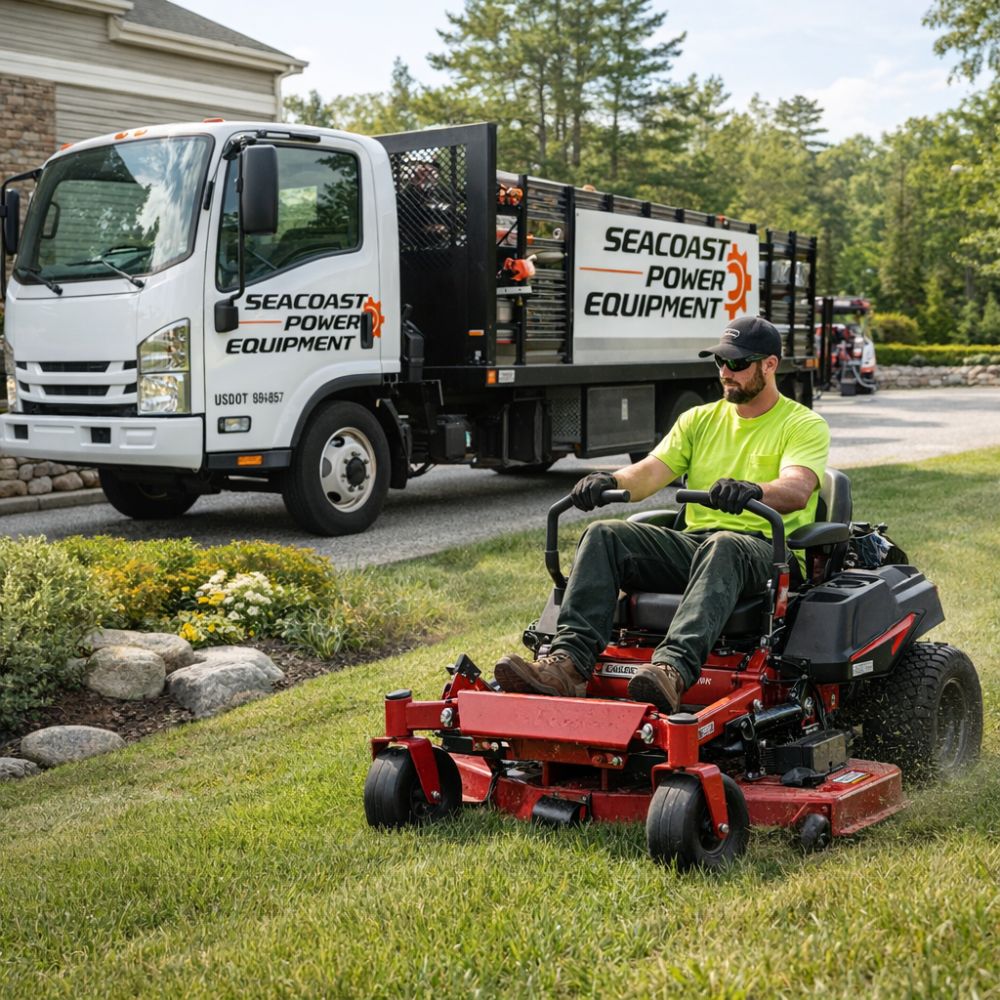
Buying a commercial mower represents a significant investment for any lawn care business operating in New Hampshire’s seacoast region. A single wrong decision can cost landscaping companies between $8,000 and $15,000, plus hidden expenses of reduced productivity and increased maintenance costs. Unlike residential equipment purchases, commercial mower selection requires matching specific equipment capabilities to actual property conditions—something manufacturers’ specification sheets cannot address.
Professional landscaping operations in North Hampton, Portsmouth, and throughout the seacoast face unique terrain challenges. Properties range from flat coastal lots to inland areas with significant elevation changes. Gate access varies from wide-open estates to properties with 36-inch restriction points. These variables make testing equipment on actual work sites essential rather than optional.
Why Commercial Mower Selection Cannot Rely on Specifications Alone
Equipment specifications provide valuable baseline information about engine horsepower, deck construction, and transmission type. However, these numbers fail to answer the critical question: will this specific commercial zero-turn mower perform efficiently on the properties your business services daily?
A 60-inch deck commercial mower delivers impressive productivity on open properties, but becomes a liability when navigating properties with multiple landscape beds, trees, and narrow passages. Commercial-grade equipment differs fundamentally from residential models in construction quality, duty cycle ratings, and component durability. Understanding commercial equipment maintenance requirements helps businesses calculate true ownership costs beyond initial purchase price.
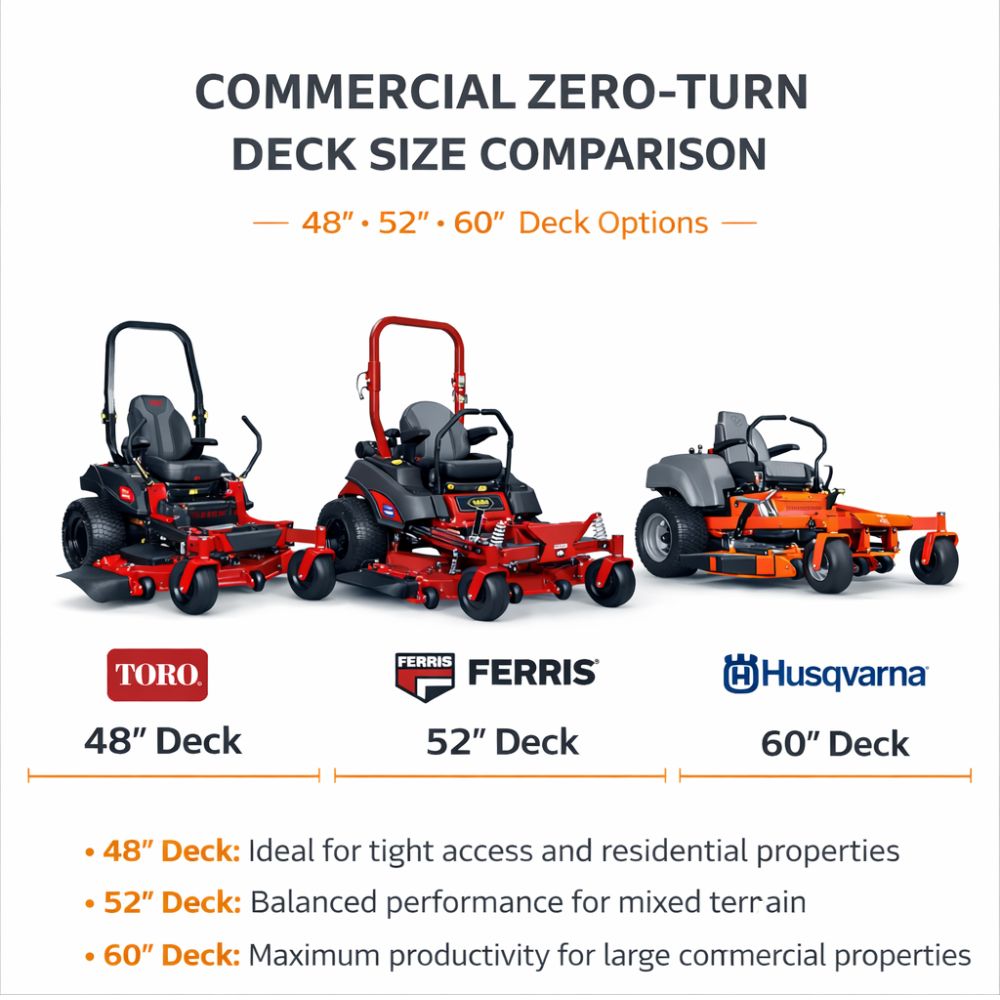
Deck size represents one of the most misunderstood specifications in commercial mower selection. Many lawn care businesses assume larger deck sizes automatically increase productivity. In reality, a 52-inch deck often outperforms a 60-inch deck when properties include numerous obstacles or tight spaces. The larger deck reduces maneuverability and increases trimming requirements around obstacles, negating theoretical time savings.
How do you choose the right commercial mower for your property?
Test commercial mowers on your actual property to evaluate maneuverability, cutting performance on your terrain, and operator comfort during full workdays. Property-specific factors like slope angles, gate widths, and obstacle density determine which deck size and commercial mower type deliver optimal efficiency better than specifications alone.
Understanding Property-Specific Equipment Matching
New Hampshire properties present distinct challenges that make property-specific equipment testing essential. Coastal properties near Hampton Beach and Rye typically feature sandy, well-draining soil, requiring different cutting approaches than inland properties with heavier clay content. Elevation changes common throughout Rockingham County demand equipment with strong hill-holding capabilities and operator platforms designed for slope work.
Gate access restrictions significantly impact equipment selection decisions. Properties in established neighborhoods often feature 36-inch to 48-inch gate openings that limit equipment access to backyards. Purchasing a 60-inch deck commercial mower for a portfolio heavy in gate-restricted properties forces crews to use smaller equipment or trim entire areas with walk-behind mowers, destroying productivity projections.
Terrain slope angles require careful evaluation during equipment testing. New Hampshire properties commonly include areas with 10 to 20-degree slopes for drainage management. Zero-turn mower safety becomes critical on sloped terrain, as equipment stability and traction characteristics vary significantly between models and manufacturers.
The Try Before You Buy Advantage for Commercial Equipment
Seacoast Power Equipment offers commercial operators a unique opportunity unavailable from big box retailers or online equipment sellers: testing commercial mowers on actual work properties before making purchase commitments. This try before you buy approach eliminates guesswork and reduces financial risk associated with major equipment investments.
The process begins with a consultation about your specific property portfolio, business growth plans, and current equipment challenges. Factory-trained sales specialists review property types, typical daily acreage, crew size, and operational requirements. This information guides initial equipment recommendations.
Testing occurs on your actual work properties rather than dealer parking lots or demonstration areas. This on-site approach reveals how equipment performs under real operational conditions: morning dew on grass, actual property obstacles, gate restrictions, slope challenges, and terrain variations your crews encounter daily. Testing periods typically span multiple properties and conditions, providing comprehensive performance data for decision-making.
Commercial operators test two or three different models during the evaluation process, enabling direct comparison between equipment options. Side-by-side testing reveals performance differences that become apparent only through hands-on operation: turning radius variations, cutting quality differences, operator visibility advantages, and control responsiveness.
Evaluating Commercial Zero-Turn Performance During Testing
Commercial mower testing should follow a structured evaluation process addressing operational factors most relevant to your business needs. Begin testing on properties representative of your typical workload rather than unusual or extreme conditions.
Maneuverability testing reveals how equipment handles in tight spaces, around obstacles, and through gate openings. Navigate the commercial zero-turn mower around trees, landscape beds, irrigation equipment, and architectural features common to your property portfolio. Pay attention to how closely equipment trims along edges and whether additional trimming passes become necessary.
Cutting quality evaluation requires testing across different grass conditions and property types. Morning operation with dew-covered grass tests suction and discharge capabilities. Afternoon testing on dry grass reveals blade speed and deck airflow efficiency. Testing across different grass types—from fine fescues common in coastal properties to tougher bluegrass mixes inland—shows versatility.
Operator comfort directly impacts productivity during full workdays. Spend extended periods operating test equipment to evaluate seat comfort, control accessibility, vibration levels, and visibility. Commercial operators spending eight hours daily on equipment need platforms designed for all-day use. Operating equipment safely requires clear visibility and intuitive controls.
Commercial Mower Size and Property Type Matching
Deck size selection represents a critical decision point in commercial mower purchases. The relationship between deck size and property characteristics determines productivity, cutting quality, and operational efficiency.
Properties under one acre, particularly residential lots and small commercial sites, typically achieve optimal results with 42-inch to 48-inch deck commercial mowers. These mid-size decks provide maneuverability around landscaping while maintaining reasonable productivity. Gate access on residential properties often restricts larger equipment.
Properties in the one to three-acre range accommodate 48-inch to 52-inch deck equipment effectively. This size range offers balanced productivity and maneuverability suitable for most commercial landscaping operations in the seacoast region. Equipment in this category handles mixed property types effectively.
Larger properties exceeding three acres benefit from 60-inch deck commercial zero-turn mowers when site conditions permit. Wide-open areas like athletic fields, large commercial properties, and estate grounds justify the reduced maneuverability of larger equipment through increased productivity.
Stand-on commercial mowers offer a compact alternative for crews that load and unload equipment frequently. These compact machines excel in properties requiring frequent equipment loading and unloading, such as landscape maintenance routes serving multiple locations daily.
Brand Comparison and Authorized Dealer Support
Commercial mower manufacturers each bring distinct engineering philosophies and feature priorities. Understanding brand differences helps commercial operators select equipment aligned with business priorities and operational requirements.
Toro commercial equipment emphasizes durability and dealer support networks. The company’s commercial zero-turn lineup includes models designed specifically for landscape contractor applications with reinforced components and simplified maintenance access.
Ferris commercial mowers incorporate suspension systems addressing operator comfort during extended operation. The company’s patented suspension technology reduces operator fatigue on rough terrain and allows higher operating speeds while maintaining cut quality.
Husqvarna professional equipment brings Swedish engineering traditions to commercial lawn care. The brand’s commercial zero-turn mowers feature robust cutting systems and heavy-duty construction suitable for demanding commercial applications.
Simplicity commercial mowers offer feature-rich options with attention to operational details. The brand balances productivity, durability, and operator-focused design elements in equipment packages suited to professional applications.
Authorized dealer status significantly impacts commercial equipment ownership experiences. Authorized dealers maintain factory-trained technicians, stock OEM replacement parts, provide warranty service support, and access manufacturer technical resources. Choosing local authorized service ensures proper service procedures and maintains equipment warranty coverage.
Parts availability through authorized dealers prevents extended equipment downtime during peak season. Seacoast Power Equipment maintains over $150,000 in parts inventory, providing immediate access to common replacement components. Understanding the difference between OEM and aftermarket parts helps make informed maintenance decisions.
Commercial Equipment Maintenance and Service Support
Equipment selection decisions should account for long-term maintenance requirements and service support availability. Commercial mowers operating in demanding applications require regular maintenance, periodic component replacement, and occasional repair services.
Commercial equipment maintenance extends beyond routine service to include component replacement as parts reach service life limits. Hydrostatic transmissions, PTO clutches, spindle assemblies, and cutting deck components require replacement based on operational hours rather than calendar time.
Service turnaround times significantly impact commercial operations during peak season. Equipment failures during spring and summer growth periods cannot tolerate week-long repair delays. Seacoast Power Equipment’s typical 24-48 hour service turnaround keeps commercial operations productive. Understanding repair timelines helps commercial operators set realistic expectations and plan around necessary service.
Mobile service capabilities provide additional support for commercial fleet operations. Mobile equipment repair services bring factory-trained technicians to commercial operations, performing maintenance and repairs at customer locations throughout the seacoast region.
Fleet Discount Programs and Commercial Support Services
Commercial operators purchasing multiple equipment units qualify for fleet program benefits, reducing acquisition costs and improving service access. Fleet programs recognize volume purchasing and provide incentives encouraging business growth.
Volume discount structures typically offer 15-25% reductions on equipment purchases based on annual volume commitments. Commercial operations planning significant equipment acquisitions or replacing aging fleet equipment achieve substantial savings through volume purchasing.
Priority service scheduling ensures commercial fleet customers receive expedited service during peak season. Fleet program members access reserved service capacity, enabling faster turnaround even during high-demand spring and summer periods.
Loaner equipment availability through fleet programs minimizes downtime impact during equipment service or repairs. Access to temporary replacement equipment maintains productivity while owned equipment undergoes service.
Understanding equipment financing approaches helps businesses acquire necessary equipment while maintaining financial flexibility for operational expenses and growth opportunities.
Seasonal Considerations for Commercial Equipment Purchases
Equipment purchase timing affects availability, pricing, and operational readiness. Understanding seasonal patterns helps commercial operators optimize equipment acquisitions.
Placing pre-season orders during winter months ensures equipment availability before spring demand peaks. Commercial operators replacing equipment or expanding fleets should finalize decisions and place orders during winter to ensure spring readiness.
Equipment preparation and operator training require time before operational deployment. New equipment needs proper break-in procedures, operators need familiarization time, and maintenance schedules need establishment. Purchasing equipment several weeks before essential operation allows proper preparation.
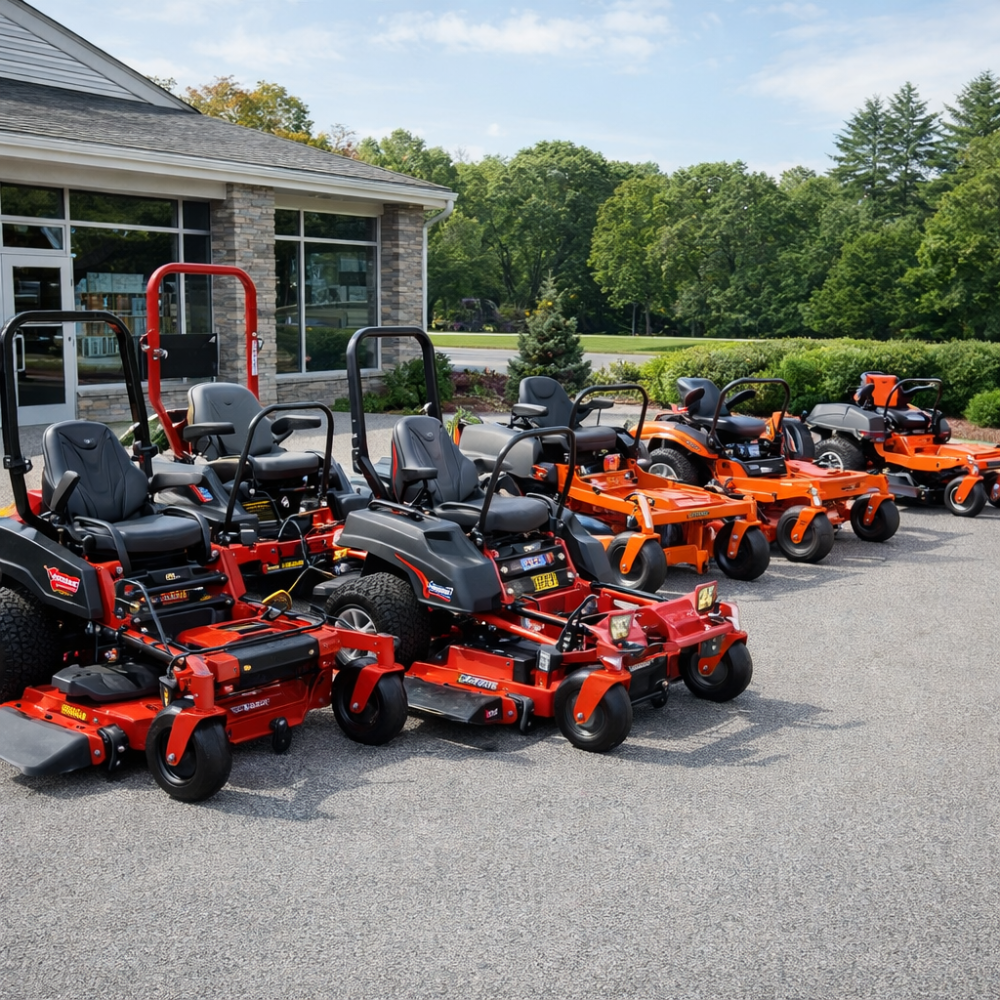
k size range balances productivity with maneuverability, handling both open areas and moderately landscaped properties effectively. Testing equipment on representative properties confirms appropriate deck size selections.
What makes commercial mowers different from residential zero-turn models?
Commercial mowers feature heavy-duty construction, commercial-rated engines designed for continuous operation, reinforced hydrostatic transmissions rated for 1,500+ hours, and operator platforms built for all-day use. Commercial equipment includes heavier gauge steel decks, improved component accessibility for maintenance, and durability specifications suited to daily professional use.
How long does commercial mower testing take through the try-before-you-buy program?
Testing periods accommodate business schedules and property access, typically spanning several hours across multiple properties. Comprehensive testing requires operating equipment on different terrain types, property conditions, and grass varieties representative of daily workloads. Seacoast Power Equipment works with commercial operators to schedule testing sessions meeting evaluation needs.
Do you offer fleet discount programs for landscaping companies?
Yes, commercial fleet programs provide 15-25% volume discounts based on annual equipment purchases. Fleet programs include priority service scheduling, potential loaner equipment access, and extended payment terms for qualified accounts. Fleet program benefits support commercial operations from growing single-crew businesses to established multi-crew operations.
Which commercial mower brands do you recommend for New Hampshire conditions?
Seacoast Power Equipment stocks and services premium commercial brands, including Toro, Ferris, Husqvarna, and Simplicity. Each brand brings distinct engineering approaches and feature priorities. Authorized dealer status ensures factory-trained service and OEM parts availability for all major brands.
What if equipment tested doesn’t work for my properties?
That situation represents exactly why try-before-you-buy programs exist. Testing reveals equipment mismatches before purchase commitments. When tested equipment proves unsuitable, Seacoast Power Equipment recommends alternative models addressing specific concerns identified during testing.
What maintenance support do you provide after commercial equipment purchases?
Seacoast Power Equipment provides comprehensive maintenance and repair services for commercial operators throughout New Hampshire’s seacoast region. Factory-trained technicians service all major brands with typical 24-48 hour turnaround times. The service department maintains over $150,000 in parts inventory for immediate access to common components.
Choose the Right Commercial Mower for Your Business
Commercial mower selection significantly impacts lawn care business productivity, operational costs, and service quality. Poor equipment choices result in wasted investment, reduced efficiency, and unnecessary operational challenges. Property-specific testing through Seacoast Power Equipment’s try-before-you-buy program eliminates guesswork and provides confidence in equipment decisions.
Testing commercial zero-turn mowers on actual work properties reveals performance characteristics that specifications cannot communicate. Maneuverability in tight spaces, cutting quality across grass varieties, operator comfort during extended operation, and terrain handling capabilities become apparent through hands-on evaluation under real conditions.
New Hampshire commercial operators deserve equipment truly suited to seacoast region properties and business needs. Generic equipment recommendations from online retailers or big box stores cannot address specific terrain challenges, property characteristics, and operational requirements unique to each business. Local dealer expertise, combined with hands-on testing opportunities, ensures equipment selections match actual business needs.
Contact Seacoast Power Equipment for Commercial Mower Testing
Seacoast Power Equipment invites commercial operators throughout New Hampshire’s seacoast region to experience the try-before-you-buy difference. Factory-trained sales specialists understand commercial equipment applications and help businesses identify equipment suited to specific operational requirements.
Schedule an on-property equipment demonstration to test commercial mowers under real working conditions. Contact Seacoast Power Equipment at their North Hampton location or visit seacoastpower.com to discuss commercial equipment needs. Nearly 60 years of serving New Hampshire businesses provides the experience and expertise commercial operators need for confident equipment decisions.
Commercial fleet operators, landscaping companies, property management firms, and grounds maintenance operations deserve equipment matched to actual business needs. Stop guessing about equipment performance. Test commercial mowers on your properties before making purchase commitments. Contact Seacoast Power Equipment today to schedule your try-before-you-buy equipment evaluation session.