
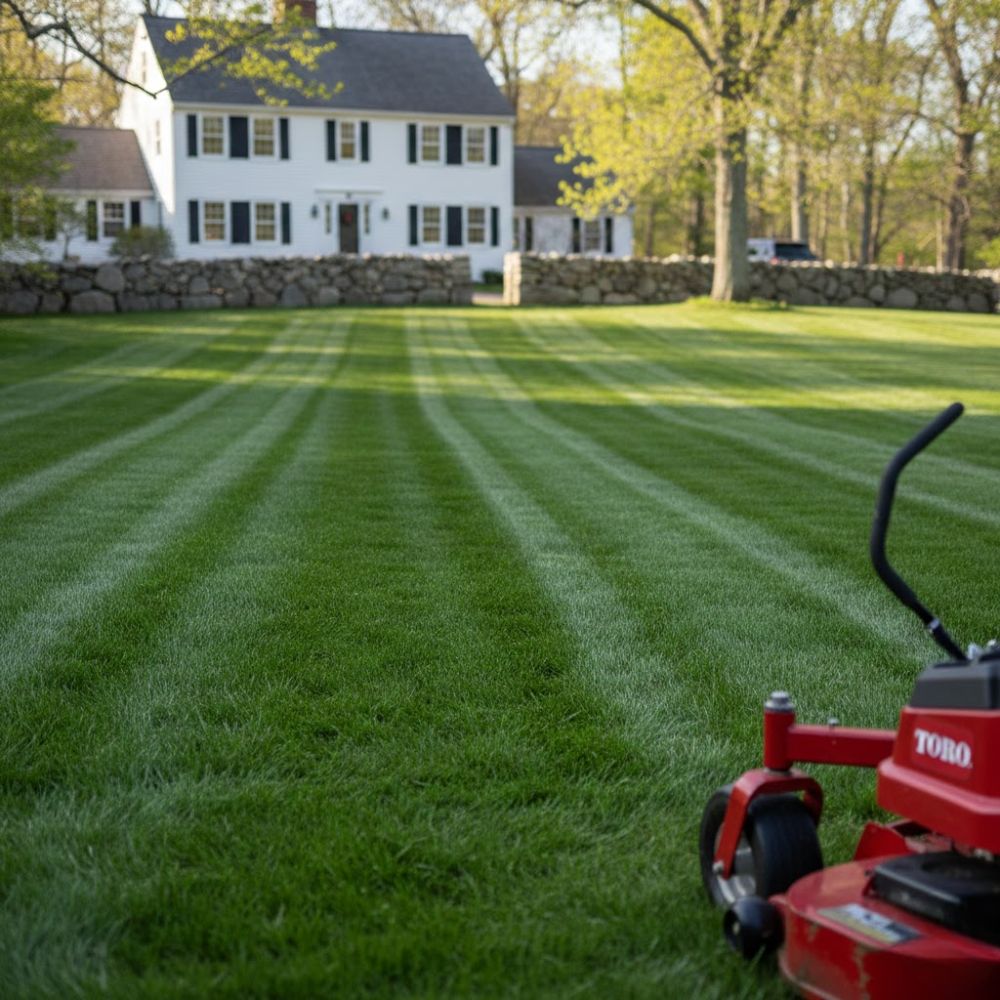
That first mow of spring marks an important milestone for New Hampshire property owners. After months of dormancy and snow cover, seeing your lawn come back to life signals warmer days ahead. But rushing into that first cut too early can damage your grass and strain your equipment.
The timing of your first spring mow depends on soil conditions and growth patterns, not calendar dates. Coastal properties in the seacoast region warm faster than inland areas, and New Hampshire’s wet spring conditions require patience. At Seacoast Power Equipment, we’ve spent nearly 60 years helping North Hampton area homeowners navigate these seasonal transitions with the right timing and properly maintained equipment.
This guide covers the soil temperature thresholds that trigger grass growth, essential equipment preparation tasks, proper cutting techniques, and signs that indicate it might be time to upgrade your mower.
Reading the Signs: When Your NH Lawn is Ready for Its First Cut
Soil Temperature Matters More Than Calendar Date
Grass enters active growth when soil temperature reaches 50°F at a depth of 2-3 inches. This temperature threshold triggers root development and blade elongation in cool-season grasses common to New Hampshire lawns, including Kentucky bluegrass, perennial ryegrass, and tall fescue.
In the seacoast region, soil typically reaches this 50°F threshold between mid-March and early April, though timing varies by microclimate. Properties near the ocean warm earlier due to maritime influence. Inland areas and shaded properties may lag by 1-2 weeks. Elevation also affects timing, with higher terrain staying cooler longer.
You can test soil temperature using an inexpensive soil thermometer, available at our parts counter in North Hampton. Insert the probe 2-3 inches deep and take readings at mid-morning for several consecutive days. Once the temperature stays consistently above 50°F, your grass roots are actively growing.
Three Growth Indicators Your Lawn is Ready
Beyond soil temperature, visible growth patterns tell you when mowing makes sense.
First, grass height should increase noticeably above dormant winter growth. Look for 3+ inches of new green growth coming up through last year’s tan dormant blades. This height indicates the plant has accumulated enough energy reserves to recover quickly after cutting.
Second, growth should be consistent across your entire lawn, not just the sunny southern exposure or sheltered areas. Patchy growth means some areas remain dormant. Wait until 80-90% of your lawn shows active growth before making that first cut.
Third, soil firmness matters significantly. Walk your property and check if your footprints sink deeply into the turf. You should be able to walk normally without leaving deep impressions or muddy tracks.
Morning dew behavior provides another reliable indicator. If dew dries within 2-3 hours after sunrise, your soil has good drainage and surface conditions are suitable for mowing.
Weather Window Considerations for New Hampshire
New Hampshire spring weather alternates between warm spells and cold snaps. Your timing needs to account for these fluctuations.
Wait 24-48 hours after heavy rain before mowing. Saturated soil compacts under mower weight, damaging root systems and creating ruts. Wet grass also clumps in the deck, clogs discharge chutes, and produces uneven cuts.
Check your 3-day forecast before that first cut. A hard frost predicted within 48 hours means you should delay. Freshly cut grass is more vulnerable to frost damage.
The best mowing window runs from 11 AM to 3 PM on dry days. By mid-morning, dew has evaporated, but grass hasn’t started collecting evening moisture.
Similar to preparing equipment for cold weather conditions, spring timing requires attention to temperature and moisture patterns specific to New Hampshire’s climate transitions.
First Cut Best Practices: Height, Technique, and Timing
Deck Height Settings for Spring Mowing
Your spring deck height should be 3-3.5 inches, significantly higher than typical summer settings of 2.5-3 inches. This increased height protects grass recovering from dormancy and promotes deeper root development.
Never remove more than one-third of the blade length in a single cut. This rule becomes critically important in spring when grass is putting energy into rapid vertical growth.
Plan to gradually lower your deck height over 3-4 consecutive mows. If you start at 3.5 inches, your second mow might drop to 3.25 inches, then 3 inches, eventually reaching your preferred summer height by late April or early May.
Cool-season grasses that dominate New Hampshire lawns prefer higher cutting heights throughout the growing season. These species develop stronger roots and better drought resistance when maintained at 3+ inches.
Featured Snippet: When should you start mowing in New Hampshire? Begin mowing when soil reaches 50°F at 2-3 inch depth (typically mid-March to early April in coastal areas), grass shows consistent 3+ inch growth across the entire lawn, and soil is firm enough to walk on without deep footprints. Wait 24-48 hours after heavy rain before cutting. Set your deck to 3-3.5 inches for the first cut.
Handling Wet Spring Grass Conditions
Wet grass creates multiple problems. The extra moisture weight causes grass blades to lay flat rather than standing upright, resulting in uneven cuts. Wet clippings clump together, blocking discharge chutes and leaving heavy piles that smother the lawn.
Raising your deck an extra half-inch above normal spring height helps when conditions are slightly damp. The increased clearance reduces clumping and improves airflow under the deck.
Slow your ground speed by 25-30% when mowing damp grass. Rushing through wet conditions mats grass down before mower blades can lift and cut it properly.
Switch to side discharge mode instead of bagging. Wet clippings are too heavy for effective bagging systems. Avoid using mulching mode in wet conditions.
Just as proper snowblower operation requires adapting technique to conditions, spring mowing demands flexibility based on moisture levels.
Mower Deck Cleaning After Spring Mowing
Spring grass has significantly higher moisture content than summer growth and sticks more aggressively to mower decks. Built-up grass reduces cutting efficiency, traps moisture promoting rust, and adds weight straining belts and bearings.
Scrape your deck immediately after each spring mowing while grass is still fresh. Grass releases easily when moist, but wait a few hours and it dries into a cement-like crust.
Apply a thin coat of silicone spray to the clean deck surface after scraping. This creates a slippery barrier that reduces grass adhesion on your next cut.
Maintain this weekly cleaning schedule through April and May, when grass grows fastest and moisture content is highest.
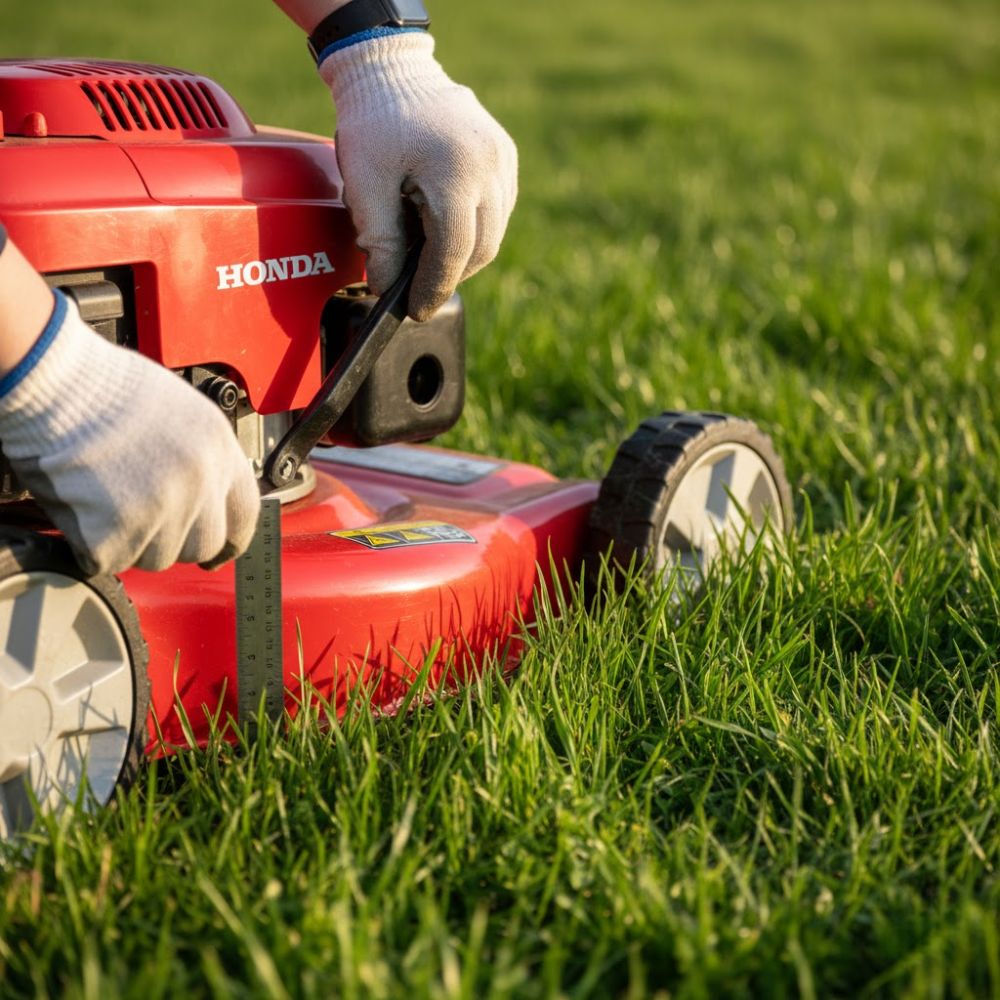
Spring Lawn Mower Tune-Up: Getting Your Equipment Ready
Critical Pre-Season Maintenance Tasks
Blade Sharpening and Inspection
Dull blades tear grass instead of cutting it cleanly, creating ragged wounds along blade edges. These torn tissues turn brown at the tips within 24-48 hours. Torn tissue also provides entry points for fungal diseases that thrive in spring’s damp conditions.
Sharp blades cut cleanly, allowing grass to heal quickly and maintain a healthy green color. Professional blade sharpening ensures proper cutting angle and blade balance. Unbalanced blades vibrate, causing excessive wear on spindle bearings and deck mounting points.
At Seacoast Power Equipment, our factory-trained technicians sharpen blades to manufacturer specifications. We also inspect blades for cracks, bent tips, or excessive wear. Bring your blades to our North Hampton location or schedule pickup service through our mobile repair service.
Know when to replace rather than resharpen. Blades worn down 3/8 inch or more from their original width have lost structural integrity. Any blade showing nicks, cracks, or bends should always be replaced immediately.
Oil Change for Reliable Starting
Fresh oil ensures reliable starts and proper engine lubrication. Winter storage allows condensation to accumulate in crankcase oil, especially in unheated garages. This water contamination reduces lubrication effectiveness and can cause starting issues.
Use 10W-30 or 5W-30 oil for spring conditions in New Hampshire. The lower viscosity number ensures good oil flow in cool morning temperatures typical of March and April.
Understanding small engine oil change intervals helps maintain equipment longevity through proper lubrication schedules.
Air Filter Inspection and Service
Winter storage accumulates dust, pollen, and debris in air filter housings. A dirty or restricted air filter reduces engine power and causes hard starting.
Remove and inspect your air filter before the first spring start. Paper filters should show light when held up to a bright light source. Foam filters can be cleaned and reused. Wash in warm soapy water, rinse thoroughly, squeeze out excess water, and allow to air dry completely.
Replace any filter showing tears, holes, cracks, or material degradation. Damaged filters allow unfiltered air containing dust to enter the engine, causing premature wear.
Spark Plug Inspection and Replacement
The spark plug is critical to reliable ignition, especially when temperatures are cool. Remove the spark plug and inspect the electrode condition. Check the gap using a wire feeler gauge. Most small engines require a 0.020 to 0.030 inch gap.
Replacing the spark plug annually is inexpensive insurance against starting problems. A new spark plug costs $3-8 but prevents frustrating starting issues.
Fuel System Preparation
Last season’s gasoline causes more spring starting problems than any other factor. Gasoline degrades over time, especially modern ethanol-blend fuels. Drain old fuel completely now before attempting to start the engine.
Use ethanol-free gas if available in your area. If only ethanol-blend fuel is available, use the lowest ethanol content (E10 rather than E15 or E85). Add fuel stabilizer to every tank of gas.
When Professional Service Makes Sense
At Seacoast Power Equipment, we provide comprehensive spring tune-ups with a typical 24-48 hour turnaround during early March. Our factory-trained technicians service all major brands, including Honda, Toro, Stihl, Husqvarna, Simplicity, and Ferris.
Complete spring tune-up packages include blade sharpening or replacement, full oil change, air filter service, spark plug replacement, fuel system inspection, and belt and cable inspection.
Pickup and delivery service is available throughout the seacoast region, including Portsmouth, Rye, Hampton, and Exeter.
Timing matters significantly. Early March means immediate availability. By early April, demand surges. Schedule service in late February or early March to avoid the rush.
Call our service department at (603) 964-8384 or schedule online through our website.
Similar to how pre-season snow equipment preparation prevents winter breakdowns, spring mower service ensures reliable operation through the growing season.
Understanding average repair timelines helps set realistic expectations for service scheduling.
Is This the Year to Upgrade Your Mower?
Red Flags Your Mower May Not Make Another Season
Sometimes repair costs and ongoing reliability issues signal it’s time to replace rather than continue repairing aging equipment.
Difficulty starting even after a complete tune-up indicates deeper engine problems. Uneven cutting despite sharp blades and proper deck height suggests structural deck problems. Excessive vibration or unusual noises point to mechanical failures. Frequent belt or parts replacement adds up financially. Deck rust compromising structural integrity cannot be repaired safely. Engine smoking or losing power signals internal wear.
2026 Equipment Models Perfect for Spring Purchase
Spring offers ideal timing for mower purchases. Full inventory selection is available before the peak summer season depletes stock. Manufacturer rebates often run through April or May.
Seacoast Power Equipment maintains over $1 million in new equipment inventory. As a Honda Premier Dealer and authorized retailer for Stihl, Toro, Husqvarna, Ferris, and Simplicity, we offer equipment across all price ranges.
Zero-Turn Mowers
Zero-turn mowers dramatically reduce mowing time on properties 1 acre or larger, typically cutting mowing time by 40-50% compared to traditional lawn tractors.
Honda zero-turns offer legendary engine reliability and precision cutting. Toro zero-turns range from the homeowner TimeCutter series to the commercial Z Master models. Ferris commercial zero-turns feature patented suspension systems.
Understanding the benefits of commercial zero-turn mowers helps determine whether commercial-grade features justify the higher initial investment.
Walk-Behind Mowers
Honda walk-behinds offer industry-leading reliability and easy starting. Toro walk-behinds range from basic push models to self-propelled units with variable speed control.
Exploring senior-friendly yard tools and easy-start mower features helps identify models with reduced physical demands.
Spring Equipment Buying Advantages
Try before you buy on your own property. This unique program allows testing equipment in your actual mowing conditions. Immediate delivery means you’re not waiting weeks for stock. Trade-in evaluation for old equipment offsets new purchase costs. Manufacturer rebates and early-season pricing provide substantial savings.
Understanding equipment evaluation criteria helps compare features across different brands.
Learning how to select the best zero-turn mower provides specific guidance for choosing among the many models available.

Frequently Asked Questions About Spring Mowing in New Hampshire
When should I start mowing my lawn in New Hampshire?
Start mowing when soil temperature reaches 50°F at 2-3 inch depth (test with a soil thermometer), grass shows consistent growth of 3+ inches across the entire lawn, and soil is firm enough to walk on without leaving deep footprints. In the New Hampshire seacoast region, these conditions typically align between mid-March and early April. Always wait 24-48 hours after heavy rain.
What height should I set my mower deck for the first spring cut?
Set your deck to 3-3.5 inches for the first spring cut, significantly higher than typical summer settings. Never remove more than one-third of the grass blade length in a single cut. Gradually lower the height over 3-4 consecutive mows until you reach your preferred summer height of 2.5-3 inches by late April or early May.
Can I mow wet grass in spring, or should I wait?
Mowing slightly damp grass is manageable with proper technique, including a higher deck setting, slower ground speed, and side discharge mode. However, genuinely wet grass should be avoided completely. Wait 24-48 hours after heavy rain. Wet conditions cause grass clumping, uneven cutting, soil compaction, and increased equipment strain.
What maintenance does my mower need before the first spring cut?
Essential spring mower maintenance includes blade sharpening or replacement, a complete oil change with fresh 10W-30 or 5W-30 oil, air filter inspection and service, spark plug replacement, and fuel system preparation. Professional tune-ups at Seacoast Power Equipment include all these services plus belt, cable, and safety system inspection.
How do I know if I need a new mower this spring?
Consider replacement if your mower has difficulty starting even after a complete tune-up, cuts unevenly despite sharp blades, shows excessive vibration or unusual noises, requires frequent part replacement, has deck rust compromising structural integrity, or produces smoke or loses power significantly.
What type of oil should I use in my lawn mower for spring?
Use 10W-30 or 5W-30 oil for spring conditions in New Hampshire. The lower viscosity rating ensures good oil flow in cool morning temperatures typical of March and April. Always check your owner’s manual for manufacturer specifications.
Should I use ethanol-free gas in my lawn mower?
Ethanol-free gas is ideal for small engines because it stores better and causes fewer carburetor problems. If only ethanol-blend fuel is available, use the lowest ethanol content (E10 rather than E15 or E85) and add fuel stabilizer to every tank.
How often should I clean my mower deck in spring?
Clean your mower deck after every use throughout April and May when grass has maximum moisture content. Scrape the deck immediately after each mowing while grass is still fresh. Apply silicone spray after cleaning to reduce adhesion on the next cut.
Get Your Equipment Spring-Ready at Seacoast Power Equipment
That first cut of 2026 deserves equipment that starts reliably, cuts cleanly, and handles New Hampshire spring conditions without issue. Proper timing protects your lawn. Thorough maintenance protects your equipment investment.
At Seacoast Power Equipment in North Hampton, we’ve helped Seacoast Region homeowners prepare for spring mowing for nearly 60 years. Our factory-trained technicians provide complete tune-up services with a typical 24-48 hour turnaround during early March. We service all major brands and offer convenient pickup and delivery service throughout Portsmouth, Rye, Hampton, Exeter, and surrounding communities.
Whether you need blade sharpening, complete spring service, or are considering new equipment for 2026, visit our showroom at 106 Lafayette Road Unit #1 in North Hampton or call (603) 964-8384 to schedule service. Our parts counter stocks filters, spark plugs, oils, and accessories. Our sales team can demonstrate 2026 models on your property through our try-before-you-buy program.
Don’t wait until your lawn is overgrown and equipment won’t start. Contact Seacoast Power Equipment today to ensure your mower is ready when your grass reaches that critical 50°F soil temperature threshold.
Seacoast Power Equipment
106 Lafayette Road Unit #1 North Hampton, NH 03862 (603) 964-8384
Hours: Monday-Friday: 8:00 AM – 5:00 PM Saturday: 8:00 AM – 4:00 PM Sunday: Closed
Serving the New Hampshire seacoast with equipment sales, service, and parts since 1965.