
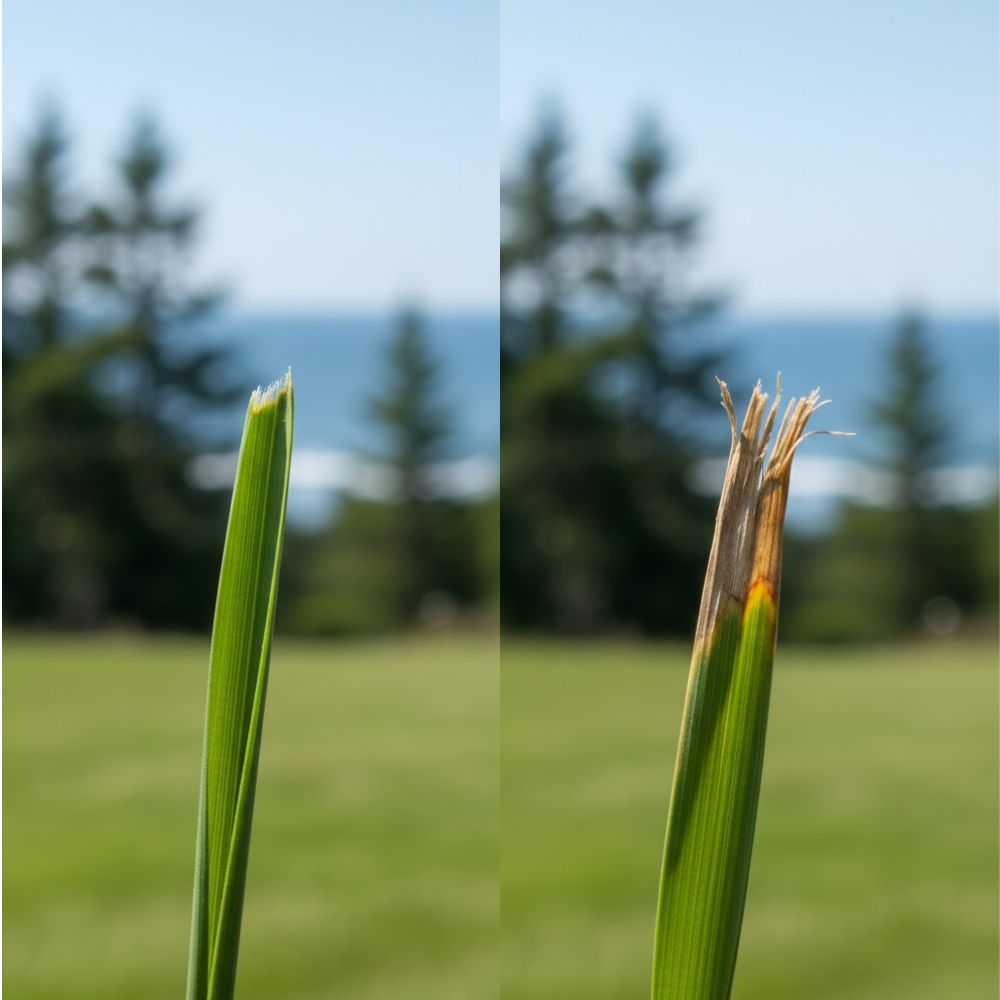
Most homeowners never think about their mower blade’s sharpness until brown, frayed grass tips appear across the entire lawn. By then, the damage is done. What seems like a minor equipment detail actually determines whether your lawn thrives or struggles through New Hampshire’s growing season.
The difference between sharp and dull mower blades isn’t cosmetic, it’s biological. Sharp blades make clean cuts that allow grass to heal within 24-48 hours with minimal stress. Dull blades tear and shred grass tissue, creating large wounds that take several days to heal while leaving grass vulnerable to disease, drought stress, and insect damage. In New Hampshire’s humid coastal climate, these torn grass blades become perfect entry points for fungal diseases.
How Grass Responds to Cutting: The Science Behind Blade Sharpness
Understanding how grass responds to cutting explains why blade sharpness matters for lawn health.
Grass blades consist of living plant tissue with a protective outer layer and internal cells that transport water and nutrients. When a mower blade cuts grass, it severs this living tissue, creating a wound. How that wound is created, clean cut versus ragged tear, determines how quickly the grass recovers.
Sharp Blade Cutting Action
A sharp mower blade functions like a razor, slicing cleanly through grass tissue with minimal cellular damage. The cutting edge separates cells cleanly rather than crushing them.
Clean cuts create minimal wound surface area. The grass blade is severed in a single smooth cut, exposing the smallest possible area of internal tissue. This limited exposure reduces water loss and minimizes entry points for disease pathogens.
Grass healing from clean cuts happens quickly. Within hours, grass begins forming protective tissue over the cut surface. Within a day or two, new protective layers have formed and water loss through the cut surface has stopped. The grass redirects energy toward growth rather than wound repair, maintaining the green appearance homeowners expect.
Dull Blade Tearing Action
A dull mower blade crushes and tears grass rather than cutting it cleanly. The blade edge has rounded from wear, creating more of a club than a knife. When this rounded edge impacts grass at high speed, it crushes tissue before eventually tearing it apart.
Torn grass tissue creates large, irregular wounds with much greater exposed surface area. This extensive tissue damage causes multiple problems simultaneously.
Water loss through damaged tissue is substantial. Grass loses water through crushed, torn tissue much faster than through clean cuts. This water loss stresses the plant, particularly during hot weather when grass already struggles to maintain adequate hydration.
Feature Snippet: Dull mower blades tear grass tissue instead of cutting cleanly, creating wounds that take several days to heal compared to 24-48 hours for sharp blades. In New Hampshire’s humid climate, these extended healing periods create favorable conditions for fungal disease infection that can damage lawns.
Wound healing takes considerably longer with torn tissue. During this extended healing period, the grass remains vulnerable and dedicates significant energy to wound repair rather than growth.
Brown, frayed tips appear within a day of mowing with dull blades. The extensive tissue damage causes cells to die back from the cutting point, making the entire lawn appear unhealthy even when the grass below the damaged tips is actually healthy.
Disease Entry Points in Coastal New Hampshire
The extended healing period and large wound surface area from dull blades create favorable conditions for disease infection. Fungal spores are commonly present in lawn environments, needing appropriate conditions to infect grass: stressed host, favorable environment, and entry point.
Dull blade mowing can create conditions conducive to fungal infection. The grass is stressed from tissue damage and water loss. The wounds provide entry points. New Hampshire’s coastal climate provides the moisture and moderate temperatures many fungi prefer.
Common fungal diseases associated with mowing stress include brown patch in tall fescue and ryegrass during humid summer weather, dollar spot in fine fescues, and rust diseases. These infections can establish in wounded tissue then spread throughout the lawn, creating brown patches and treatment requirements. Proper maintenance during the active mowing season helps prevent these problems.
Visual Signs Your Blades Need Sharpening
Recognizing dull blade symptoms allows you to sharpen blades before significant lawn damage occurs.
Brown, Frayed Grass Tips
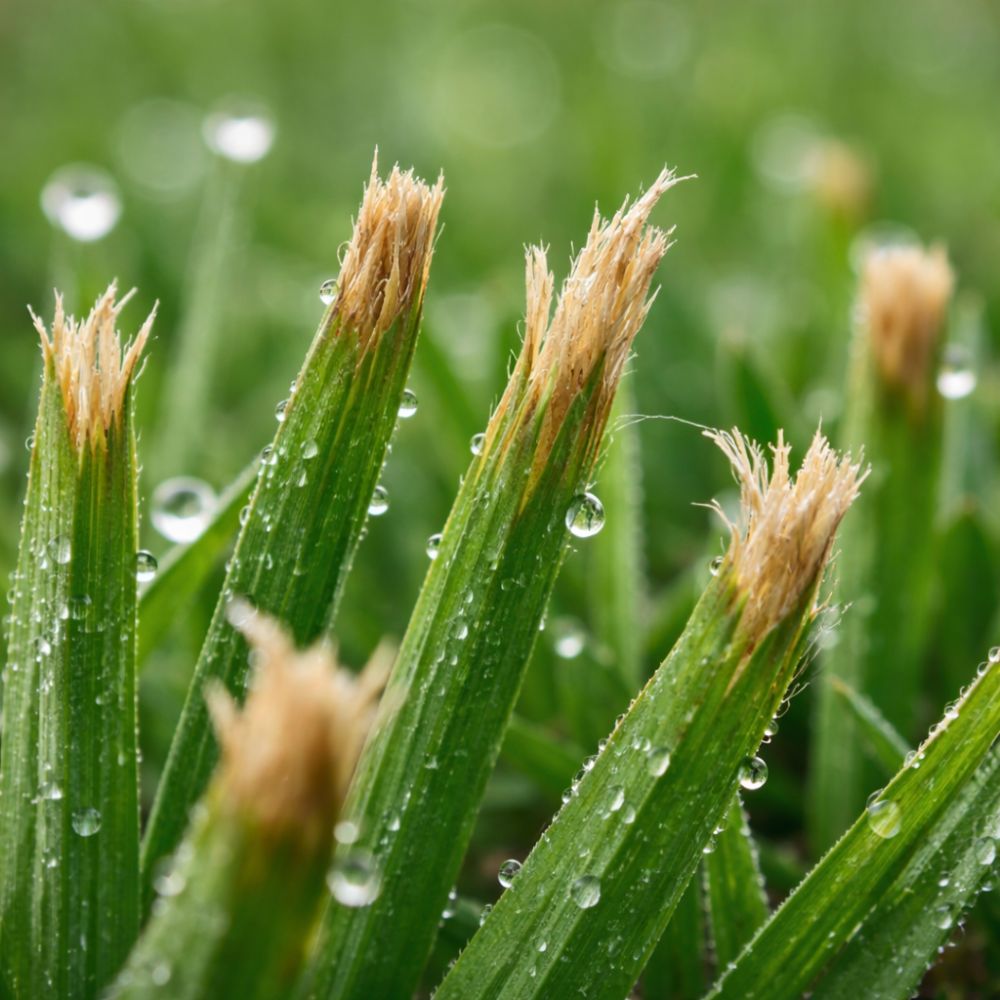
The most obvious dull blade symptom is brown, shredded grass tips visible across the entire lawn 24-48 hours after mowing. The browning occurs because damaged tissue dies back from the cutting point, creating a brown haze over the lawn rather than the clean, green appearance that should follow mowing.
If you examine individual grass blades closely, you’ll see shredded, irregular tips rather than clean, straight cuts. This shredding is visible to the naked eye and unmistakable once you know what to look for.
The brown tips don’t recover quickly. Unlike grass that greens up after normal mowing, grass damaged by dull blades stays brown at the tips until that damaged tissue is cut off during the next mowing.
Uneven Cutting Height
Dull blades sometimes fail to cut grass cleanly, instead pushing it down then allowing it to spring back up. This creates uneven cutting height with some areas cut properly and others barely trimmed.
Missed grass blades are particularly common with dull blades on wet or thick grass. The blade lacks sufficient cutting force to slice through dense grass, instead deflecting or pushing grass down without cutting it. This relates to broader performance problems that affect mowing quality.
Excessive Grass Clumping
Grass clippings that normally disperse evenly sometimes form dense clumps when blades are dull. This happens because dull blades don’t create the air lift needed to disperse clippings effectively. Large clumps on the lawn surface can smother underlying grass and create dead patches if not removed.
Increased Mowing Effort
Dull blades require more engine power to force through grass. You’ll notice the engine bogs down more easily, struggles in thicker grass, and generally works harder than when blades are sharp.
Slower mowing speed becomes necessary to prevent engine bogging. What used to take 45 minutes may now take 60 minutes or longer because you’re moving more slowly to allow the dull blade to tear through grass. Higher fuel consumption results from the engine working harder. Dull blades can noticeably increase fuel consumption compared to sharp blades.
How Often to Sharpen: Residential vs. Commercial
Sharpening frequency depends on usage hours, grass conditions, and equipment type.
Residential Lawn Care
Homeowners should sharpen mower blades every 20-25 operating hours for optimal performance. A quarter-acre property requires approximately 30-40 minutes of mowing time. Weekly mowing from April through October equals roughly 14-19 hours of total mowing, requiring one sharpening mid-season around late June or early July.
Larger properties require more frequent sharpening. A half-acre property with 60-75 minutes weekly mowing time accumulates 28-35 hours per season, requiring two sharpenings in early June and early August.
One-acre properties with two or more hours weekly mowing time need sharpening every 6-8 weeks during the growing season, typically April, June, and August. This aligns with regular service schedules for maintaining equipment
Commercial Operations
Professional landscapers should sharpen blades every 8-10 operating hours to maintain cutting quality across daily use. Commercial operations can’t afford the lawn damage and professional appearance issues that come with dull blades.
Daily use equipment needs sharpening 2-3 times weekly. A commercial mower running 6-8 hours daily accumulates 30-40 hours per week, requiring multiple sharpenings to maintain performance.
Many commercial operators maintain multiple blade sets for quick swapping. They remove dull blades daily or every other day, install sharp blades immediately, and sharpen the dull blades in batches. This approach minimizes equipment downtime while ensuring consistently sharp blades.
Conditions That Require More Frequent Sharpening
Sandy soil accelerates blade dulling significantly. Sand particles act as an abrasive, wearing blade edges rapidly. Properties with sandy soil may need 30-50% more frequent sharpening.
Rough terrain with rocks, roots, and debris dulls blades quickly through impact damage. Hitting rocks can roll the blade edge, creating immediate dulling that requires sharpening.
Spring growth conditions with thick, vigorous grass wear blades faster than summer maintenance mowing. The heavier cutting load during spring’s rapid growth accelerates edge wear, making proper preparation for the growing season particularly demanding on equipment.
The Right Way to Sharpen Mower Blades
Proper blade sharpening requires attention to technique, not just edge sharpness.
Blade Removal and Safety
Remove blades safely by disconnecting the spark plug wire before working under the mower. This critical safety step prevents accidental engine starting while handling blades.
Block the blade or use a blade holder to prevent rotation while removing the mounting bolt. The bolt is typically torqued securely and requires substantial force to loosen.
Inspect the blade for damage before sharpening. Look for cracks, especially near the mounting hole, severe bends, thin spots from excessive sharpening, and impact damage like large nicks or rolled edges.
Sharpening Technique
The factory blade angle is typically 30-40 degrees from vertical. Maintain this angle during sharpening rather than creating a steeper or shallower angle.
Sharpen from the top side of the blade, following the existing bevel. Never sharpen from the bottom side as this creates an incorrect angle that won’t cut properly.
Remove metal evenly along the entire cutting edge. Don’t concentrate sharpening on one area, as this creates uneven blade geometry. Sharpen both blade ends equally. Uneven sharpening creates imbalance that causes vibration and bearing wear.
Stop when a small burr forms on the bottom edge. This burr indicates you’ve sharpened through to a new edge. Remove the burr with a few light strokes on the bottom side.
Don’t over-sharpen to a razor edge. Mower blades need durable edges, not razor sharpness. Over-sharpening creates thin edges that dull rapidly. A properly sharpened mower blade should have a slightly rounded edge, not a knife-sharp edge. Understanding seasonal care requirements helps extend equipment life.
Blade Balancing
Balanced blades are as important as sharp blades. Unbalanced blades cause vibration that wears spindle bearings, creates uneven cutting, and can damage engine mounting points.
Use a blade balancer to check balance after sharpening. The blade should rest horizontally on the balancer. If one side drops, more metal was removed from that side during sharpening.
Correct imbalance by removing small amounts of metal from the heavy side. Remove metal from the back of the blade rather than further sharpening the cutting edge. Recheck balance after correction until the blade rests horizontally.
Blade Reinstallation
Install blades with the correct orientation. Cutting edges face forward and the sail faces up toward the deck. Reversed blades don’t cut properly and create dangerous situations.
Torque the mounting bolt to manufacturer specifications, typically in the range of 35-50 ft-lbs for most residential equipment. Under-torqued bolts can loosen during operation. Over-torqued bolts can damage threads or crack the blade mounting area.
DIY Sharpening vs. Professional Service
Homeowners can sharpen their own blades with proper tools and technique, but professional sharpening offers advantages.
DIY Blade Sharpening
Required tools include a socket wrench or impact wrench, blade balancer, bench grinder or angle grinder, and safety equipment including gloves, safety glasses, and hearing protection.
Total tool investment for occasional home sharpening runs approximately $75-150. This investment can pay for itself after several sharpenings. Time required per blade is about 15-20 minutes including removal, sharpening, balancing, and reinstallation.
Professional Sharpening Benefits
Professional sharpening services typically charge $15-25 per blade depending on size and condition. Many equipment dealers include sharpening with annual tune-ups.
Precision equipment produces consistent results. Professional shops use dedicated blade grinders that maintain correct angles automatically and can resurface damaged blades that home sharpening can’t fix.
Experience helps catch problems DIY sharpeners might miss. Professionals recognize blades that need replacement rather than sharpening and identify cracks or damage that could cause failure.
Time savings matter for busy homeowners. Drop off blades in the morning, pick up sharpened blades that afternoon. No tool investment needed.
Replacement vs. Sharpening
Blades don’t last forever. Eventually, repeated sharpening removes too much metal, compromising blade strength and performance.
Replace blades when blade width has decreased significantly from original width. Excessive sharpening removes metal over time, weakening the blade.
Cracks anywhere on the blade, especially near the mounting hole, require immediate replacement. Cracked blades can fail catastrophically at operating speeds, creating serious injury risk.
Blade replacement cost runs approximately $20-40 for residential mowers, $40-80 for commercial zero-turns. This represents a reasonable investment compared to safety and performance issues from damaged blades.
The New Hampshire Coastal Climate Factor
New Hampshire’s coastal climate creates specific conditions that make blade sharpness particularly important.
High humidity from ocean proximity keeps grass blades moist longer each day. Morning dew persists later. Evening dew forms earlier. This extended moisture period creates favorable conditions for fungal diseases.
Torn grass tissue from dull mower blades stays wet longer in humid conditions. The moisture can slow healing and provide favorable conditions for fungal spore germination and infection.
Fungal disease pressure is naturally higher in coastal regions due to consistent humidity. Brown patch, dollar spot, rust, and other diseases thrive in humid summer conditions. Any factor that increases disease susceptibility, like torn grass tissue from dull blades, can worsen disease problems.
Cool-season grasses dominate New Hampshire lawns. Tall fescue, perennial ryegrass, and Kentucky bluegrass are the primary species. These grasses can be susceptible to fungal diseases when stressed. Clean cutting from sharp blades reduces this stress and associated disease risk.
Professional Blade Sharpening at Seacoast Power Equipment
Professional blade sharpening provides precision results without requiring tool investment or time commitment.
Factory-trained technicians sharpen hundreds of blades annually. This experience produces consistent, quality results. Technicians recognize blade damage that requires replacement and identify problems homeowners might miss.
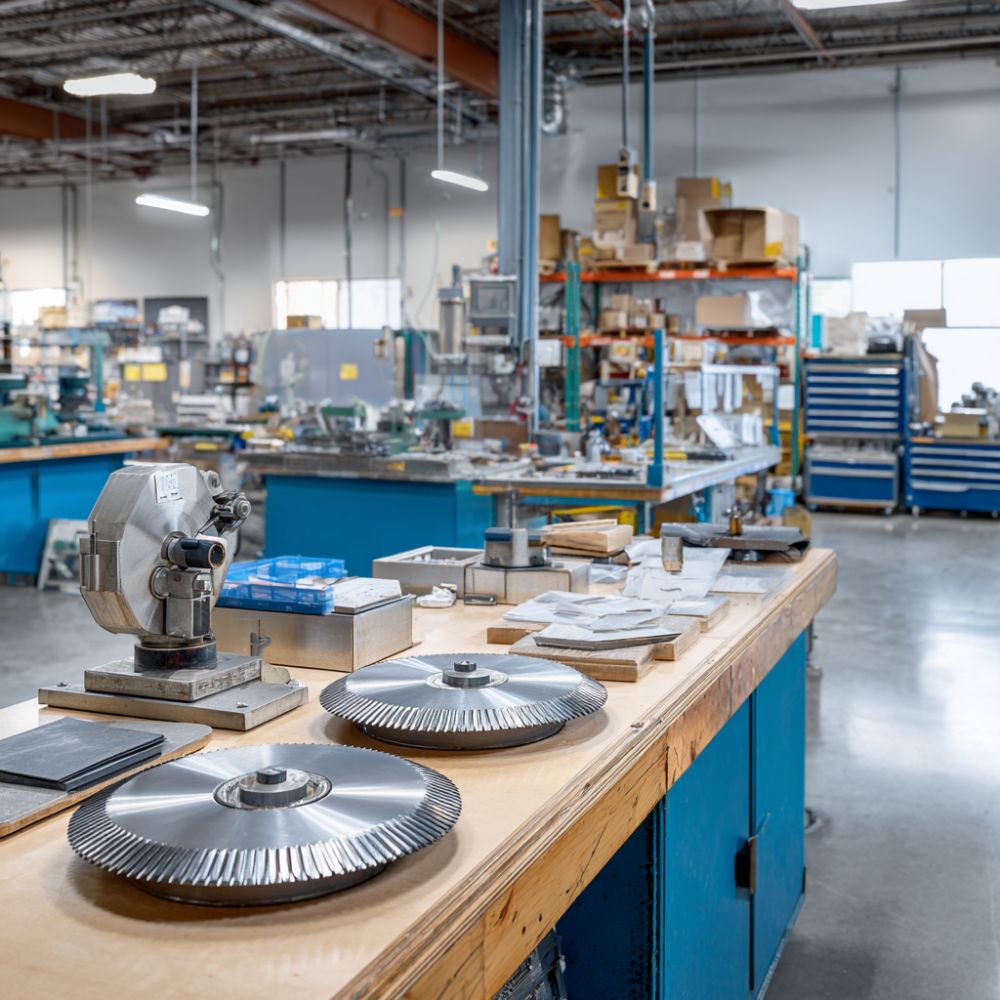
Dedicated blade grinding equipment maintains correct factory angles automatically. This precision equipment produces better results than hand-filing or using general-purpose bench grinders.
Blade inspection during sharpening catches developing problems. Technicians check for cracks, excessive wear, mounting hole elongation, and other damage. They’ll recommend replacement when necessary rather than sharpening a blade that should be retired.
Balancing is always performed after sharpening. Every sharpened blade gets balanced before return to ensure vibration-free operation.
Turnaround during off-peak season means drop blades in the morning and pick them up that afternoon. During peak season, typical turnaround is 24-48 hours. Blade sharpening is often included with spring tune-up service packages.
Service Area and Availability
Blade sharpening service is available throughout New Hampshire’s seacoast region including North Hampton, Portsmouth, Rye, Hampton, Exeter, and Stratham.
Walk-in blade sharpening is accepted during business hours. No appointment necessary for blade-only service. Blade removal is not required at drop-off. Bring your mower or just the blades.
Standard service costs $15-20 per blade depending on blade size and condition. Commercial multi-blade discounts are available for professional operators bringing multiple blades.
Your Blade Maintenance Action Plan
Maintaining sharp mower blades is one of the simplest yet most impactful maintenance tasks for lawn health.
Inspect blade condition monthly during mowing season. Look for brown grass tips after mowing, uneven cutting, and signs of blade dullness.
Sharpen every 20-25 hours for residential use, 8-10 hours for commercial operations. This frequency maintains optimal cutting performance.
Balance after every sharpening. Unbalanced blades cause vibration that damages equipment.
Replace blades showing cracks, excessive wear, or severe damage. Some problems can’t be fixed by sharpening.
Consider professional sharpening service. The modest cost provides precision results without tool investment.
New Hampshire’s humid coastal climate makes blade sharpness particularly important. Clean cuts from sharp blades heal quickly and resist disease. Torn tissue from dull blades creates entry points that can facilitate disease problems in humid conditions.
Schedule Professional Blade Sharpening Today
Don’t let dull blades damage your lawn this season. Sharp, properly balanced blades create clean cuts that heal quickly, resist disease, and maintain the professional appearance your lawn deserves.
Contact Seacoast Power Equipment at (603) 964-8384 or visit 106 Lafayette Road, North Hampton, NH for professional blade sharpening service. Our factory-trained technicians provide precision sharpening, blade balancing, and honest assessment of blade condition.
Walk-in service available, or include blade sharpening as part of your spring equipment tune-up. Nearly 60 years serving the seacoast region with factory-trained technicians, professional equipment, and quick turnaround for all major equipment brands.
Start the season with sharp, properly balanced blades ready for healthy, professional-looking results.