
How To Select The Right Replacement Parts For Equipment
If you depend on outdoor equipment for daily work, you know how frustrating downtime can be. A mower that slows in thick grass, a trimmer that bogs down, or a blower that stops mid-job all cost time and productivity. Many of these issues can be prevented with smart equipment parts selection. When you use parts that fit correctly, match your machine’s needs, and hold up well in New Hampshire conditions, you keep every tool dependable through busy weeks.
This guide explains how to choose the right parts, how to identify what your machine needs, and how to avoid common mistakes that shorten equipment life. You will also find practical steps you can use year-round.
Who This Guide Helps
You will find this guide useful if you:
- Run a landscaping crew
- Maintain equipment for municipal or commercial properties
- Manage outdoor tools for a small farm
- Use mowers, blowers, or generators for regular property care
- Want a simple, reliable way to choose parts that protect your tools
Whether you work with commercial zero turns, walk-behind mowers, snow blowers, trimmers, chainsaws, or generators, having the right parts at the right time keeps every machine dependable.
Why Equipment Parts Selection Matters
Equipment performance depends on each component doing its job. A worn belt, dull blade, or low-grade filter affects power, cut quality, and starting reliability. When you choose the right replacement parts, you extend the life of your equipment and keep your tools ready for daily use.
Here are the main reasons to focus on correct parts:
Reliable Performance
Correct parts match your equipment’s exact specifications. That means smoother operation, safer control, and more consistent results across long workdays.
Lower Wear On Other Components
A poorly matched blade or belt puts extra load on spindles, pulleys, and engine parts. Over time this leads to early failure. Choosing parts that fit helps keep your machine balanced and reduces stress across the system.
Better Safety For You And Your Crew
When replacement parts fit correctly, you prevent failures that can cause injury. Sharp blades, responsive brakes, strong belts, and safe control cables support safer operation.
Fewer Interruptions During Busy Seasons
Reliable equipment prevents delays during spring growth, summer mowing schedules, fall cleanups, and winter snow removal. Planning ahead with correct parts helps you avoid emergency repairs.
These benefits match the same reliability principles we outline in our commercial equipment maintenance guide, which helps you plan service before peak season.
How New Hampshire Conditions Affect Parts
New Hampshire weather shapes how your equipment wears. Understanding these patterns helps you choose parts that hold up well.
Moisture And Wet Grass
In spring, grass grows thick and stays damp. Blades dull faster, and belts slip when they are near the end of their life.
Sandy Soil And Coastal Wind
Sand acts like sandpaper. It wears blades, deck components, and air filters. If you work near the coast, this effect is even stronger.
Long Summer Days
Heat and long hours raise engine temperatures. Older belts glaze, and filters load up faster.
Fall Debris
Leaves and thick debris stress vacuum systems. Belts and bearings work harder during leaf cleanups.
Winter Salt And Cold
Salt accelerates corrosion on hardware, cables, and electrical components. Cold temperatures affect batteries and make weak parts fail more often.
You can see similar seasonal patterns in our winter equipment care resource, where we explain how cold, snow, and ice affect performance and wear.
Understanding OEM And Aftermarket Options
Choosing between OEM and aftermarket parts is a key part of equipment parts selection. Both options can be useful depending on your machine and the job ahead.
OEM Parts: Best Fit And Longest Life
OEM parts are made by the same manufacturer that built your equipment. They match your machine exactly.
Choose OEM when:
- You use the machine daily
- You manage commercial equipment
- You want consistent results
- Your machine is under warranty
- You rely on clean, sharp cut quality
OEM parts usually last longer and give you predictable performance.
Aftermarket Parts: Good For Older Tools
Aftermarket parts come from third party manufacturers. Quality varies, so choose them from trusted sources. These parts work well for older equipment or backup tools.
Aftermarket parts:
- Cost less than OEM
- Work well for basic needs
- Cover many common part types
Avoid very low-priced parts from unknown sellers. These often fail early or fit incorrectly.
You can compare both options in our OEM vs. aftermarket parts guide, which walks through cost, quality, and warranty differences in simple terms.
How To Confirm The Right Parts Fit
Choosing the right parts starts with verifying correct fit. This simple process helps you avoid mistakes and protects equipment performance.
1. Collect Model And Serial Information
Before buying any part, take note of:
- Equipment brand
- Exact model number
- Serial number
- Engine model
- Deck size for mowers
This information allows accurate part matching and helps the parts counter confirm what you need quickly.
2. Compare The Old Part
If possible, bring the worn part or a clear photo. Match:
- Length and width
- Hole pattern or mounting points
- Belt profile
- Cable ends
- Filter size
Seeing the part in person helps prevent ordering errors.
3. Use Parts Diagrams
Parts diagrams show how components fit together. Reviewing diagrams helps you confirm the correct part number and understand how the component installs.
4. Ask For Fitment Confirmation
If you want to double check fitment, you can use the parts request form. This is helpful when working with older units or machines with worn labels.
To choose the right replacement parts, start by matching your equipment’s model and serial numbers with the correct part specifications. Comparing worn components side by side with recommended replacements helps you confirm fit, material quality, and expected performance. Using this simple process prevents ordering mistakes and keeps your tools dependable throughout New Hampshire’s busy seasons.
Common Replacement Parts You Will Use Often
You will need certain parts regularly, especially during heavy mowing or leaf cleanup seasons. These parts affect performance the most.
Blades
Blades should stay sharp and balanced. Dull blades tear grass and leave ragged edges. If you notice uneven cutting or vibration, inspect your blades. Always shut the engine off, remove the key, and disconnect the spark plug wire before working near the blades. Wear heavy gloves when handling sharp edges.
Replace blades when:
- Edges are rounded
- Chips appear
- Grass tears instead of slicing
- Deck vibration increases
Belts
Belts stretch and glaze with use. A worn belt will slip under load or squeal.
Replace belts when you see:
- Cracks
- Fraying
- Glazing or shine
- Reduced deck speed
Filters
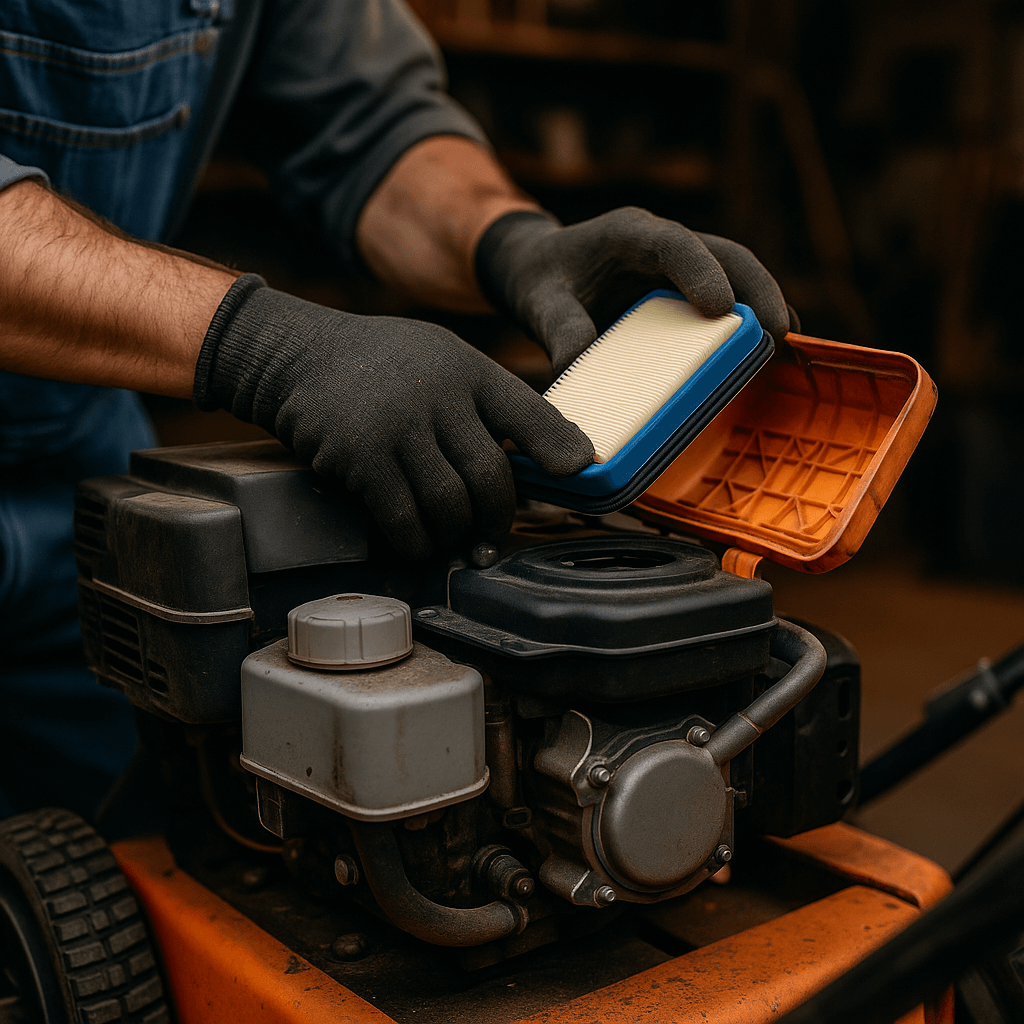
Air filters control airflow. Fuel filters protect the engine from contaminants. A blocked filter leads to weak performance.
For engine-specific timing, refer to our small engine oil and service interval guide, which explains how often to change oil and filters based on use.
Spark Plugs
Weak spark causes hard starts and rough operation. Replace spark plugs when they show heavy carbon or when the engine feels sluggish.
Cables
Throttle, choke, and brake cables wear slowly. Replace them if they feel stiff, stretched, or sticky.
Batteries
Batteries lose power in the cold and weaken with age. Replace weak batteries before they affect starting reliability.
You can find more seasonal parts guidance in our peak season maintenance guide, including which components to inspect or replace before demand spikes.
How To Shop For Engine Parts
Engine parts selection affects starting reliability, smooth operation, and long term performance. These habits help you make good choices.
Buy Through A Local Parts Counter
A local parts counter understands common failures across New Hampshire. This helps you choose parts that hold up in humidity, sand, and temperature swings.
Avoid Unverified Sellers
Online listings with unclear descriptions or very low prices often sell low grade parts. These parts cause repeat failures, wasted time, and unpredictable performance.
Track Service And Parts Dates
Keep a small notebook or digital log of all parts you install. Tracking patterns helps you understand which parts require earlier replacement.
Keep A Small Stock Of Common Parts
Many landscapers keep a box with:
- Spark plugs
- Air filters
- Fuel filters
- Belts
- Fuses
- Shear pins for winter equipment
This helps prevent downtime and keeps your crew productive.
Mistakes To Avoid When Selecting Parts
Even experienced operators make mistakes. You can avoid these problems with a few simple habits.
Guessing Part Numbers
Always verify part numbers with model information or diagrams. Guessing leads to ordering errors and wasted time.
Choosing Based Only On Price
Lower priced parts do not always last. Choosing parts based only on cost creates more frequent replacements.
Ignoring Seasonal Wear Patterns
For help planning ahead, use our fall equipment maintenance checklist to make sure your mower, tractor, and handheld tools are ready for winter.
Installing New Parts On Dirty Components
Always clean around the part before installing something new. Dirt affects fitment and life span.
When To Ask For Help
Some situations benefit from support at the shop. Here are a few examples:
Older Tools With Worn Labels
If your model number is unreadable, bring the machine or a clear photo. Fitment can be confirmed manually.
Multiple Problems At Once
If you notice belt issues, spindle noise, and vibration together, the machine may have deeper issues. Asking the service team for a diagnostic can prevent further damage.
Busy Weeks With Tight Schedules
If you want to keep your crew on the job, the shop can help with parts support, seasonal service, or pickup and delivery options.
Not Enough Time For Repairs
If repairs take too long or disrupt your workday, you can schedule service directly. Our average repair timeline guide gives you a clear sense of what to expect for common shop repairs, from diagnosis through pickup.
Frequently Asked Questions
How does equipment parts selection affect performance?
Correct parts keep engines strong, belts tight, blades sharp, and cables responsive. This gives you stable power and reliable operation.
How do you choose the right blades?
Match blades to your exact deck size and model. If uncertain, bring the old blade for comparison.
Should you choose OEM or aftermarket?
OEM works best for daily use and commercial units. Aftermarket parts can work well for older machines when purchased through trusted sources.
What should you bring to the parts counter?
Bring brand, model number, serial number, and a photo or sample of the worn part.
Can you do repairs on your own?
Yes. Many repairs are simple. For guidance, review our equipment maintenance article.
Your Next Step
Choosing the right parts keeps every machine dependable. When you use parts that fit well and hold up through tough workdays, you reduce downtime and make your job easier. If you have questions or need help finding the correct parts, you can use the links below:
Reliable equipment starts with reliable parts. You now have the steps to choose them with confidence.