
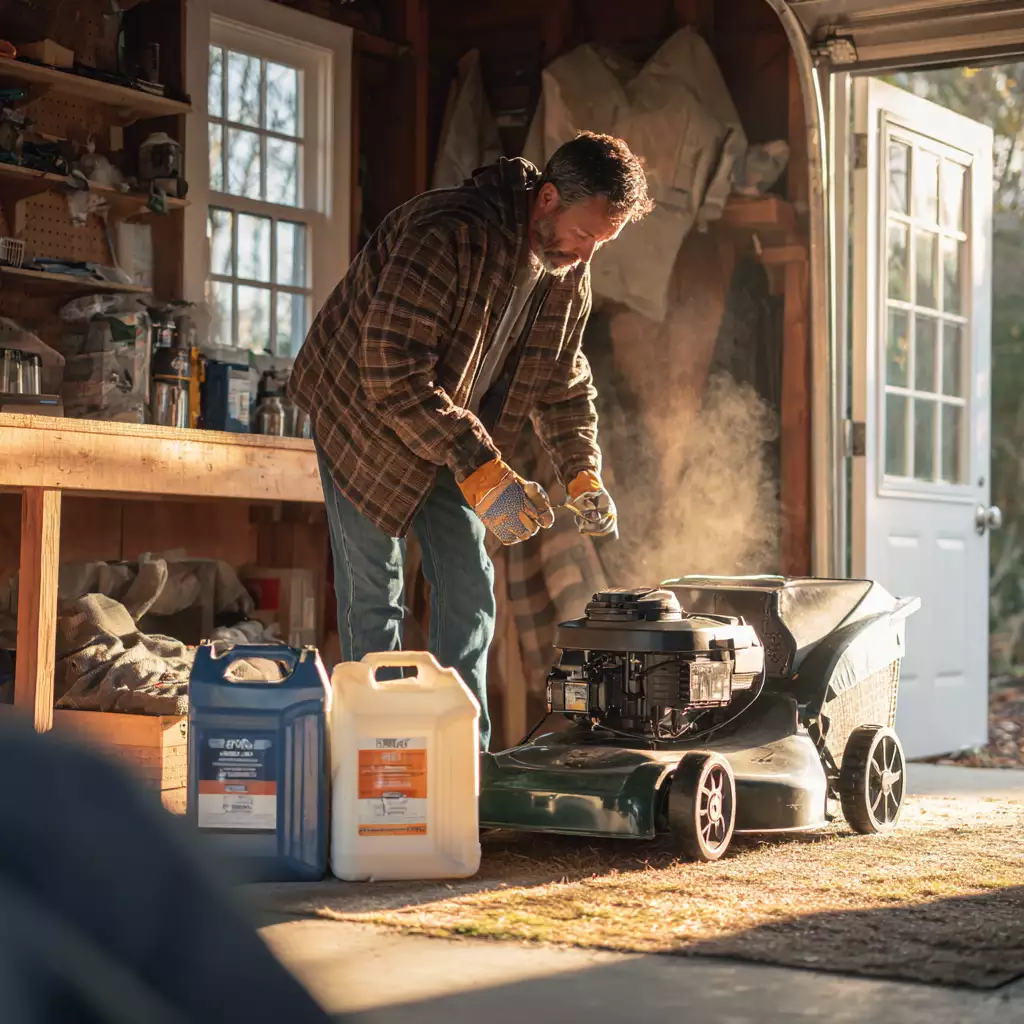
Preparing Equipment for New Hampshire Winters
Winter in New Hampshire brings salt spray, freezing rain, and heavy snow. Those conditions can wear down small engines, cables, and paint faster than most realize. This guide walks you through smart, practical ways to store your outdoor equipment safely before temperatures drop for good.
If you’d like professional help, Seacoast Power Equipment provides full seasonal service and storage prep across the state.
- Schedule work or pickup through the service page.
- Visit the winter hub for more cold-season care articles.
- Review the fall equipment maintenance checklist to make sure earlier steps weren’t skipped.
- Check portable generators if you need storm-ready power at home.
The Clean Start Most Owners Skip
Moisture is the number one cause of rust and starting problems. Before storage, focus on a clean and dry foundation.
- Rinse lightly and dry thoroughly. Remove grass, grit, and salt with low-pressure water. Wipe surfaces completely dry.
- Scrape residue safely. Use plastic tools to clean mower decks and snow chutes without scratching.
- Wipe down controls. Moisture hides under knobs and grips.
- Tighten bolts and screws. Vibration loosens hardware over the season.
- Cover smart. Breathable fabric prevents trapped condensation.
For added guidance, see our winter equipment care guide.
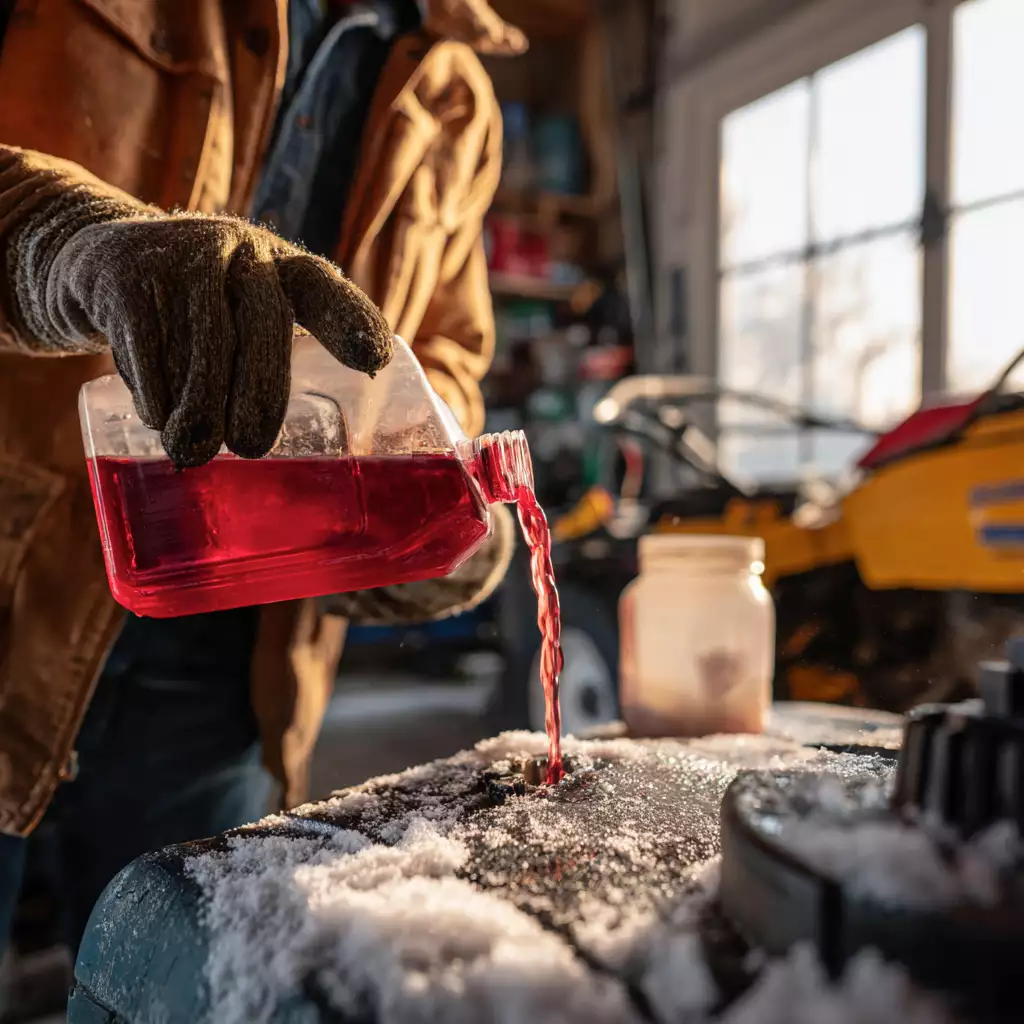
Fuel and Fluids: The Two Proven Paths
Old fuel turns gummy fast in cold weather. Decide between stabilizing or draining and label your equipment so you know your plan later.
Plan A: Stabilize
- Add a stabilizer approved for your engine type.
- Run the motor for about ten minutes to draw it through.
- Top off the tank to limit air space.
- Tag the machine “Stabilized on [date].”
Plan B: Drain
- Empty the tank into an approved container.
- Run until the engine stops naturally.
- If equipped, drain the carburetor bowl
- Tag it “Drained on [date].”
Oil Change Reminder:
Change oil while it’s warm so debris flushes out completely. Replace filters if your model uses one. For generators, changing oil before winter storage helps prevent varnish and buildup. Review the generator maintenance schedule for details.
Need extra help with proper oil grades or filter sizes? The service team can assist.
Battery Storage Done Right
Batteries handle winter best when kept indoors and at a moderate temperature.
- Remove batteries after the final use of the year.
- Store in a dry space above freezing, away from direct heat.
- Keep at partial charge until spring.
- Warm before charging. Let cold batteries reach room temperature first.
- Label storage dates. Rotate older packs to extend their life.
These general practices align with manufacturer safety standards for small-engine batteries.
If you’d like hands-off maintenance, set it up through the service page.
Rust Prevention and Hardware Protection
Rust begins wherever moisture settles, especially on exposed steel and bolt threads. Take a few minutes to protect high-risk parts.
- Apply a light film of oil or rust preventive on blade edges, chute seams, and skids.
- Touch up chipped paint to keep moisture from spreading underneath.
- Lubricate pivot points and cables so movement stays smooth next season.
- Replace worn belts or scraper bars before they fail.
For additional care steps, see Essential Winter Equipment Care Tips.
Mid-Season Quick Check: The 30-Minute Routine
The fastest winter storage routine for outdoor equipment in New Hampshire is simple: clean and dry surfaces, stabilize or safely drain fuel, change warm oil, remove batteries for indoor storage, protect bare metal, and set up safe garage spacing with ventilation. Doing these steps now prevents rust, cold-start failures, and safety risks later.
Set a quick 30-minute reminder midway through the season to check that covers stay dry, batteries hold charge, and oil looks clean. If you notice heavy condensation or corrosion, bring it in through the service page for a midwinter inspection.
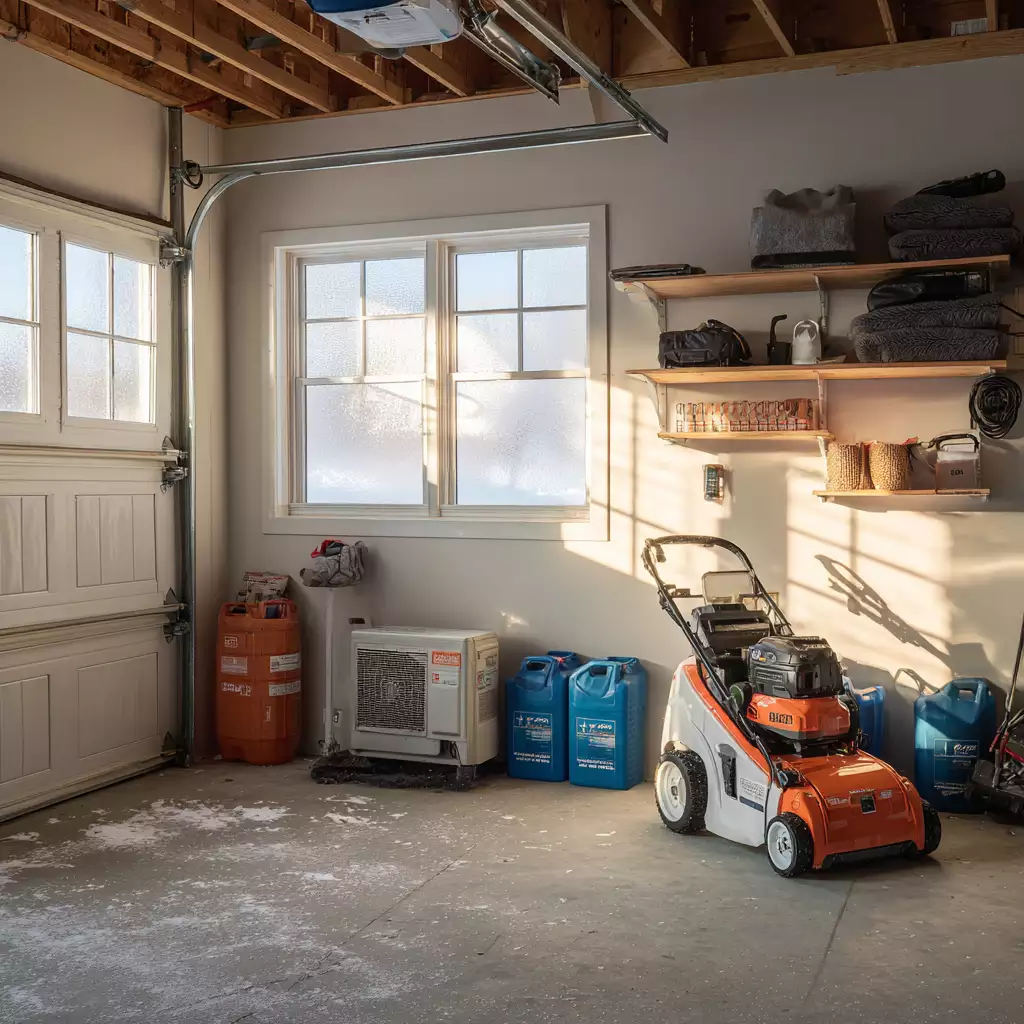
Safe Garage Setup for the Holidays
Smart spacing and ventilation protect both equipment and your home.
- Keep at least a few feet between fuel containers and any open flame.
- Never start or idle engines inside the garage.
- Use only certified fuel containers, sealed and upright on ground level.
- Keep chargers secure and cords clear of footpaths.
- Stage your generator where it can be rolled outside easily when storms hit.
These are best practices used by local repair technicians and align with standard fire safety guidance for small-engine equipment.
Ten-Step Winter Storage Checklist
- Clean and dry all decks, chutes, and controls.
- Choose a fuel plan and tag it.
- Change warm oil and replace filters.
- Remove and store batteries indoors.
- Lubricate joints and coat bare metal.
- Inspect belts, skids, and blades.
- Adjust tire pressure and cables.
- Space equipment safely in storage.
- Cover with breathable fabric.
- Add a spring restart reminder or book pickup through the service page.
Equipment-Specific Storage Steps
Walk-Behind or Zero-Turn Mower
- Blow off debris and dry fully.
- Change warm oil.
- Stabilize or drain fuel.
- Remove the battery.
- Wipe the blade with light oil.
- Check tire pressure.
- Cover securely.
See the fall equipment maintenance checklist for broader fall service steps.
Two-Stage Snow Blower
- Clear snow and grit.
- Inspect belts, skids, and scraper bars.
- Treat or drain fuel.
- Change oil if due.
- Wipe exposed seams.
- Remove electric-start batteries if fitted.
- Store on dry flooring.
Review Essential Snow Equipment Safety before your next storm.
Portable Generator
- Wipe and inspect housing.
- Change oil based on hours.
- Follow your chosen fuel plan.
- Store cords dry and coiled.
- Exercise outdoors periodically.
- Keep easy access for outages.
Check the generator maintenance schedule for interval guidance.
Early Spring Restart
When warmer days arrive, take ten minutes to bring your equipment back online safely.
- Reinstall batteries and check oil.
- Inspect belts, cables, and tire pressure.
- Start the engine outside and let it idle for a minute.
- Replace fuel only after verifying your previous plan tag.
If any system feels off, contact Seacoast Power Equipment through the service page.
Related Articles to Bookmark
- Generator Maintenance Schedule
- Snow Blower Safety Tips
- Top Professional Snow Equipment Guide
- Fall Equipment Maintenance Checklist
Ready for Winter? Talk With Seacoast Power Equipment
Need help storing or servicing your outdoor gear before temperatures drop? Seacoast Power Equipment offers professional tune-ups, pickup, and storage prep for homeowners across New Hampshire. Visit the service page, stop by our North Hampton shop, or reach us through the contact page. Our team keeps your equipment ready to perform year-round.